Picture this: A pipe bursts and your basement floods. Your electrical shorts out, leaving your family in the dark. Your furnace stops working -- in the middle of February. And there's no one to call.
That's not just a bad dream. In the very near future, it could be reality if we continue at this pace of losing skilled trade workers and not replacing them.
We take the work of skilled trades workers like plumbers, electricians and HVAC specialists for granted, until there's a problem. As long as our lights stay on and we can get water out of the tap, we don't think about it.
Have you driven by a new housing development -- and no one's on the job?
Contractors already can't find enough skilled workers to begin construction on major infrastructure projects like highways, hospitals and mass transit systems. Some provinces have billions of dollars of new construction projects slated to begin in the next decade -- if they can find the workers. Homeowners can't find qualified contractors to get essential repairs done, let alone 'dream' renovations and upgrades.
As early as 2020, we may be short one million workers. Skilled trades jobs are already in high demand. They offer great pay and job security. But we still aren't supporting the trades they way we should be. Maybe when we have to wait months for a carpenter or plumber, we'll pay attention.
Our skilled tradespeople are reaching retirement age. Who's going to replace them? We need to train the next generation of skilled workers -- now. There are tax incentives for employers who take on apprentices, grants for training, tax deductions for tools, investments in training. But not all provinces have addressed the shortages of skilled workers with programs and funding in their budgets... why not?
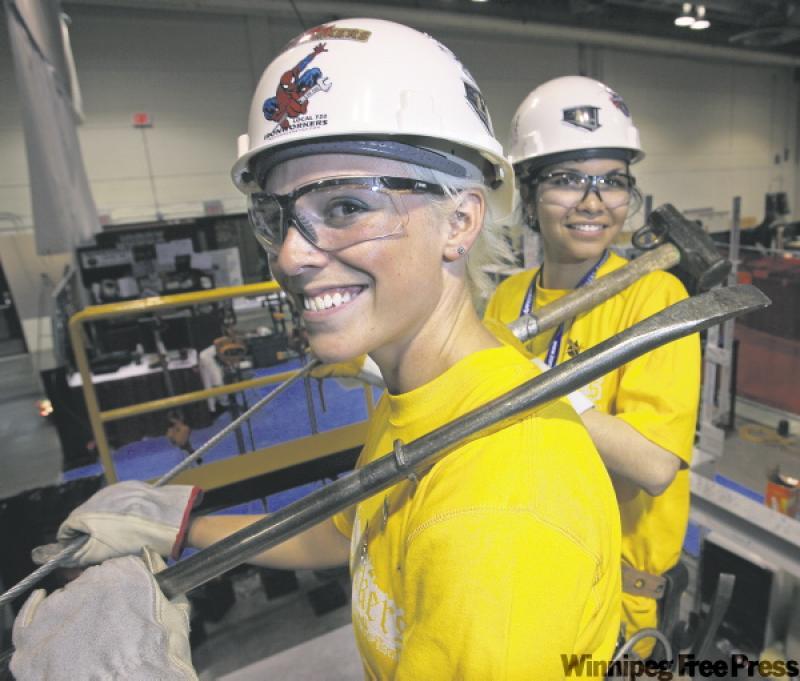
And it's long overdue that we promoted women in the skilled trades. Less than five per cent of skilled workers in the construction industry are women. Other trades have similar low numbers of women employed. Only about 10 per cent of registered apprentices are women. Why is that?
The women on my team, including my daughter, are great workers who are eager to learn and bring their talent to the job. The trades offer great pay, flexibility, variety and opportunity. Is it considered 'unfeminine', like you can't be a woman and be strong and capable? Give me a break.
Would you rather work in a cubicle?
This week I'm visiting the 15th Canadian Skills Competition in Charlottetown.
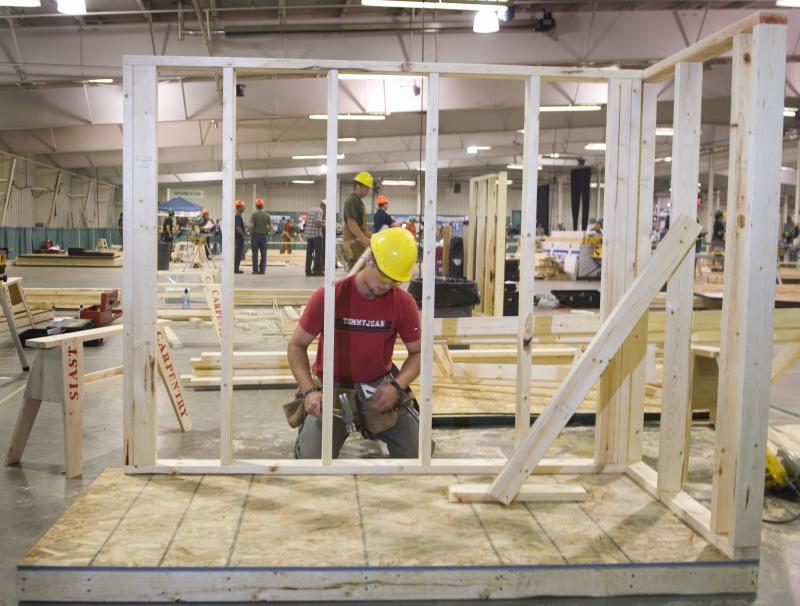
More than 500 young people compete first at the regional and territorial/provincial level, then they go for the gold, this year in P.E.I. The Canadian Skills Competition gives these young men and women a chance to be really tested in their field, and every time I see it, I'm blown away. These kids are working to professional industry standards and they are damn good. It's so impressive and I'm proud to see them achieve the success they do every year.
The students who won at last year's competition will be competing at the 40th WorldSkills competition in Calgary Sept. 1-7 this year. More than 1,000 competitors from 51 countries will participate and compete in 45 skill categories, including tiling, plumbing & heating, electrical, bricklaying, stonemasonry, painting & decorating, carpentry, landscape gardening, hairdressing, culinary, floristry, graphic design, web design, autobody, robotics, electronics, welding... just to name a few. And these students are judged rigorously by international industry standards. They are the best.
WorldSkills is one of the biggest events in Calgary this year; it's like the Olympics of skilled trades. It's an international competition, bringing the best of the best from around the world to compete. So why is no one talking about it?
No one pays attention because the trades are still considered a second choice for many young people. Parents still think their kids 'should' go to university, and guidance counsellors -- who went to university themselves, of course -- say the same thing. And, as a result, the majority of young people in schools still don't think first of a career in skilled trades. It's a 'fallback' plan after they rack up tens of thousands of dollars in debt after university. There's this myth that university is for 'smart' kids and the skilled trades is for students who don't do well in school.
To my mind, working in the skilled trades uses all facets of a person's intelligence: analytical and problem-solving skills, math, language and human relations. When I need to read building plans and figure out the best way to manage the job -- materials, crew, forecasting, budgets -- I'm using it all. And, it's creative.
Skilled trades jobs are 'hands on.' You are applying your intelligence and talents to a practical end and you see visible results every day. It's very satisfying. It's time we started telling our kids -- young men and young women -- to think outside the cubicle.
-- Canwest News Service
For more information on home renovations go to makeitright.ca.