Shelley Litman
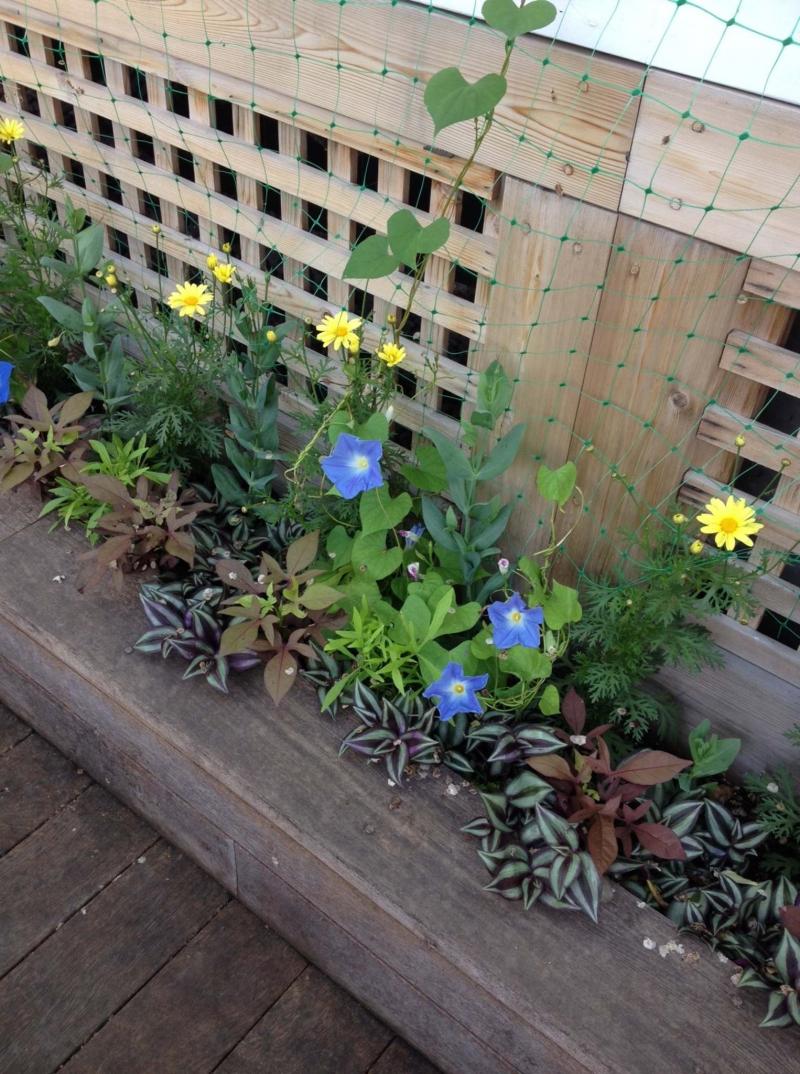
A fine example of the effect of repetition can be seen in this linear raised bed.
Peter Forster
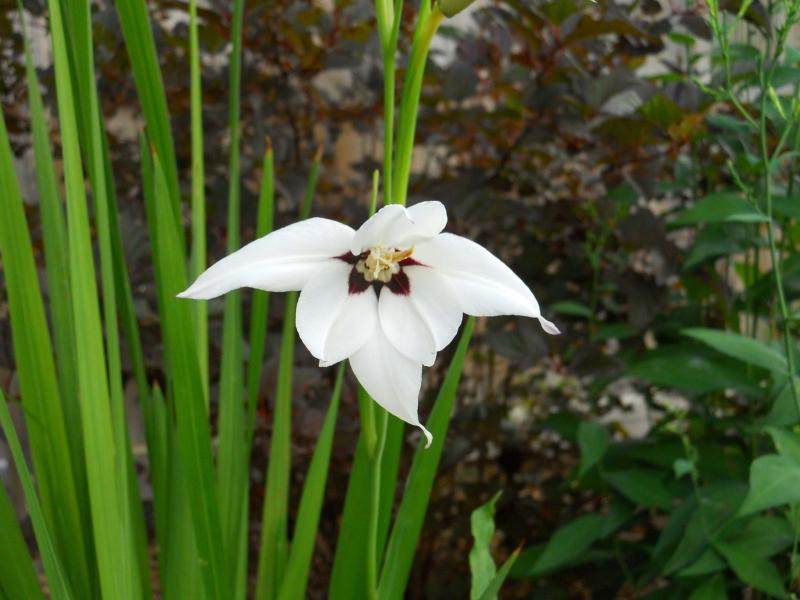
Abyssinian gladiolus provides scintillating late season colour.
Shelley Litman
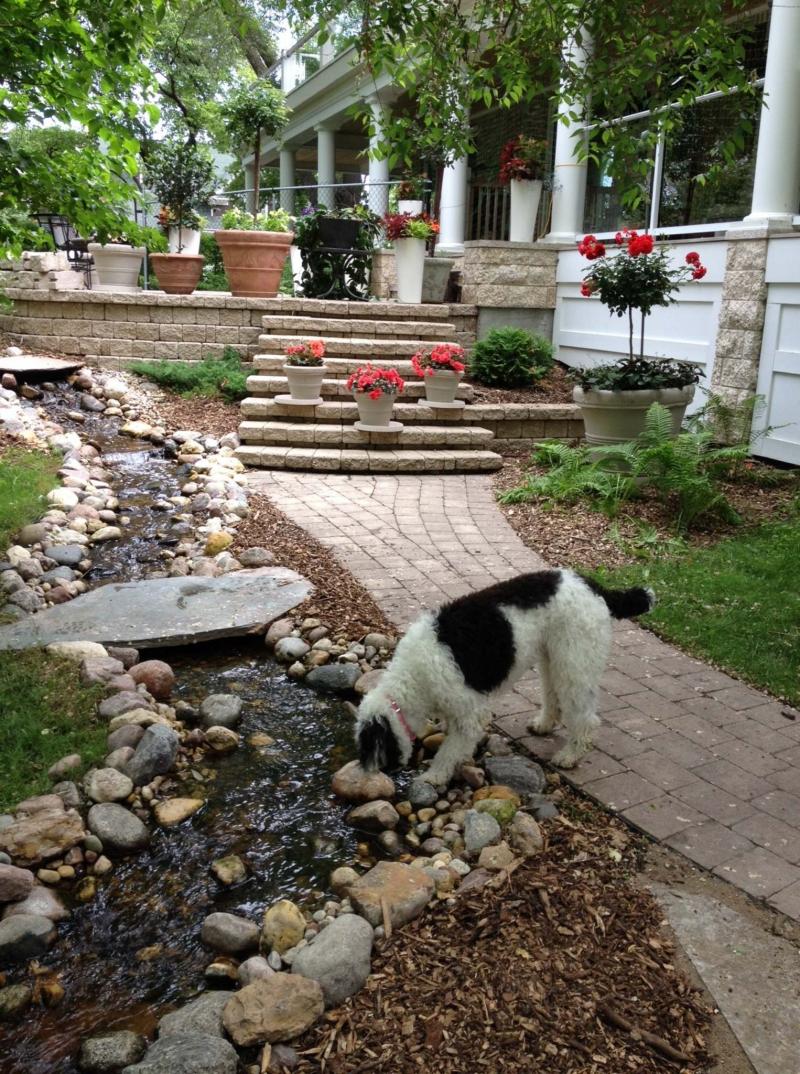
Potted annuals capitalize on streams of bright light in this shady garden.
Shelley Litman
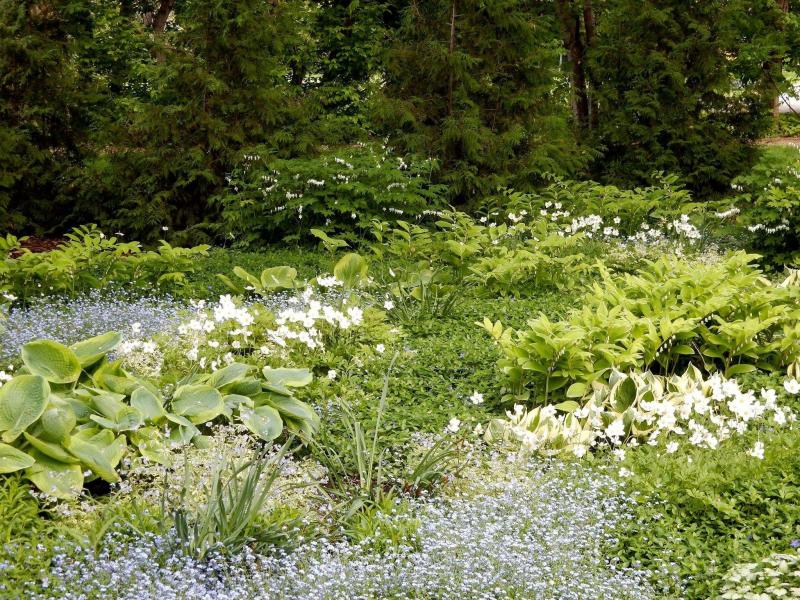
An east-facing shade bed is planted with a mix of groundcover in shades of green with white and blue blooms.
Becky Slater
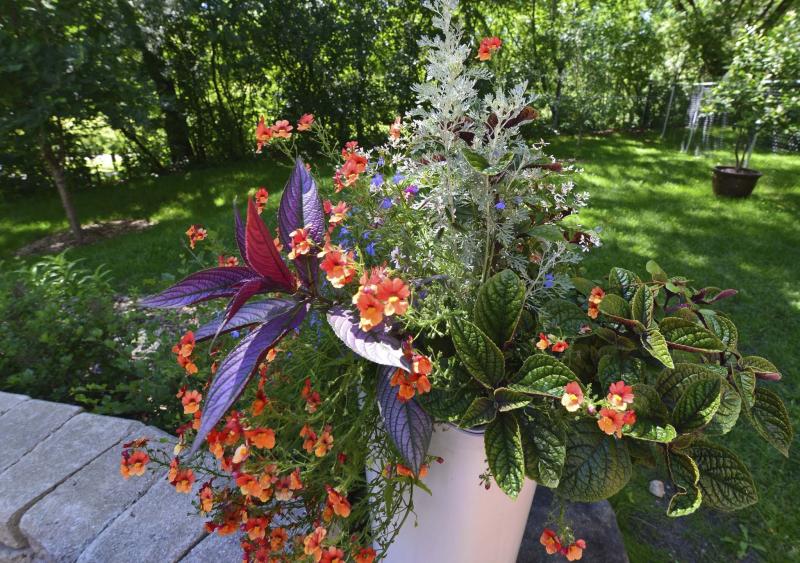
Sunlight glints off Persian Shield and Sunsatia Blood Orange nemesia in this stunning container design by Shelley Litman.
Shelley Litman
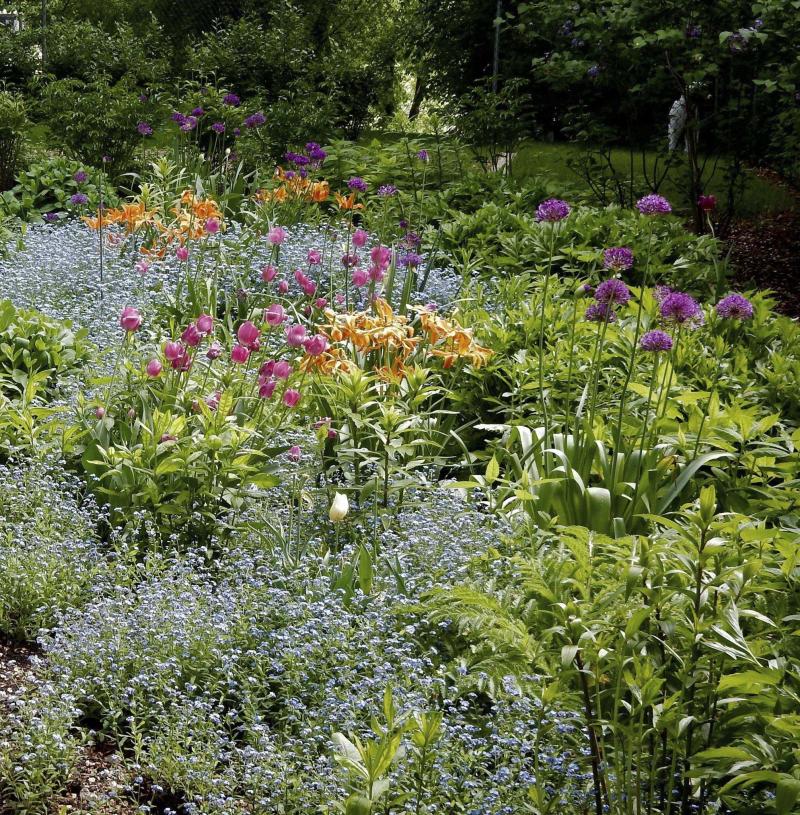
Can't grow anything beneath the shade? This lush, verdant planting shows otherwise.
You don’t need to spend a long time beneath a hot summer sun before you begin looking around for some shade. While built structures such as pergolas or gazebos provide a sheltered spot, they also store heat. In comparison, the evaporative cooling effect of shade trees that form high foliage crowns provides longer lasting relief not only to the people and plants that congregate beneath them but also by diminishing the build up of heat in nearby buildings, sidewalks and hard surface areas.
Trees improve our air quality by absorbing and storing carbon dioxide, slowing the rate that carbon dioxide accumulates in the atmosphere and thereby reducing our carbon footprint.
Author Ken Druse, in his book, The New Shade Garden: Creating a Lush Oasis in the Age of Climate Change (Stewart, Tabori and Chang, New York, 2015), says that for fiscal, historical, and environmental reasons, the garden of the future will be a shade garden.
Prolonged drought, milder winters, increased rainfall, erratic weather, earlier springs, warmer and longer autumns — all of these are likely to have considerable impact on our growing season as well as our landscapes. Admittedly, trees are just one of the solutions for adapting to a changing climate but they are a good, frontline defense. Plants that grow in shade, for example, make less demand on water resources. Druse says that planting for generations to come means planting for trees.
Druse refers to the degrees of shade — light, filtered, medium, full and woodland. Pruning lower branches, called limbing up, or opening up a tree canopy by judiciously thinning out some branches are useful methods for increasing the amount of light in a landscape. The vagaries, too, of dry shade and the resulting competition with tree roots for moisture dictate the need for solutions, indeed, sometimes compromise.
Deciding what to plant beneath the shady canopies of trees involves far more plant choices than most people realize and these form much of the basis for the remainder of Druse’s book.
When Shelley Litman, a landscape designer whose company, Attention to Detail House and Garden, undertook the development of a landscape project for a client whose property is located in one of Winnipeg’s most historic neighbourhoods, the heavily treed landscape presented both opportunity and challenge.
Assessing light patterns as well as the physical characteristics of the landscape, its natural undulations, steep slopes, drainage patterns, and proximity to boundaries were all aspects of the design process but designed to be in unison with the goal for an outstanding, visually appealing vista for the homeowners, visitors and passersby.
Litman’s ability to incorporate a diverse mix of plant material, some of which is sun-loving and others wholly shade dependent, into a landscape with a predominately leafy canopy, speaks to her skill and experience but also an intuitive understanding of both the landscape and her client’s preferences.
Litman chose to work from a palette of colour that emphasized quality over quantity. By planting a select number of plant varieties in large clumps, she was able to achieve an understated elegance. "Repetition gives a lot of impact in a big space," says Litman who used a colour scheme of varying shades of green with drifts of blue and white.
In a sizeable east facing bed, plants include Astilbe chinensis Milk and Honey with creamy white plumes, Dicentra spectabilis Alba (bleeding heart) with white flowers, Physostegia virginiana Miss Manners (obedient plant) which has spikes of showy white flowers in mid-summer, and Polygonatum odoratum var. pluriflorum Variegatum (Solomon’s seal) with white flowers and white leaf margins. These upright, finely textured plants are combined with the coarse texture of large-leaved hosta varieties including Frances Williams, Earth Angel, Empress Wu, and Olive Bailey Langdon, most of which have blue-green leaves and white flowers.
Densely planted drifts of Myosotis (forget-me-nots), Vinca minor, and Viola sororia Freckles provide an ocean of riveting blue colour which Litman has underplanted with puschkinia and several varieties of hyacinth, narcissus, and muscari for a mesmerizing display each spring.
With brighter and more direct sunlight available in a west facing bed, Litman continues the theme of blues and whites with plant varieties such as Delphinium Moonlight Blues, Phlox paniculata David, Leucanthemum superbum Becky (daisy) and Tradescantia Innocence (spiderwort). These are punctuated with vivid splashes of colour provided at different times throughout the season beginning with assorted tulips and allium, Papaver orientale Allegro, an Oriental poppy with scarlet-orange blooms and the gloriously magenta red blooms of Karl Rosenfeld peony and double crimson red peony blooms of General MacMahon. The parade of colour continues with Hemerocallis Pardon Me, a daylily with cranberry-red flowers, Echinacea Tiki torch, a pumpkin-orange coneflower, and Monarda Jacob Kline with its scarlet-red flowers, all bordered by a lengthy stretch of blue-flowered Nepeta racemosa Walker’s Low.
A patio area adjacent to the house receives an average of six hours of sunlight and this is where Litman has strategically situated a dozen or more annual containers brimming with a mix of colourful blooms and textures. In one example, the puckered, iridescent purple leaves of strobilanthes (Persian Shield) contrasts with Sunsatia Blood Orange nemesia interspersed with blue lobelia. The fragrant, silvery foliage of Artemisia Parfum d’Ethiopia serves as the thriller. The design is underplanted with coarsely textured Nico plectranthus, a vigorous grower. Potted rose standards, gardenias, and 1.5 metre tall lemon trees with luscious blooms and fragrant scent against the peaceful backdrop of a trickling pond and leafy trees complete the scene.
A striking linear arrangement that stretches almost four meters includes argyranthemum, morning glory, lisianthus, Tradescandia pallida, and Sweet Caroline Bronze ipomoea. The potted bulbs of Acidanthera (Abyssinian gladiolus) with their strongly sword-like foliage and white bi-coloured flowers will provide brilliant late season colour.
Prior to the landscape development, the homeowner had undertaken a massive home renovation that lasted three years. A magnificent American elm in the centre of the property was to dictate for the duration of the project which areas of the property would see construction, which portions would be used by contractors for heavy machinery, and which areas needed protection. Gerry Engel, ISA-certified arborist and owner of Tree Life Services, was contracted well in advance of the start of the project to preserve the elm as well as the property’s numerous other trees.
Tree roots grow outward from the tree within the first half meter of soil, says Engel, and they will extend outward from the tree as far as two or three times the height of the tree given the right conditions to grow. "Any disturbance of the soil within the root zone will have a negative impact on the tree," Engel says. Tackling a project of this nature after construction has started, only defeats the purpose, says Engel.
The strategy, therefore, is to protect as much root as reasonably possible. Using the drip line of the tree canopy determines limits.
Engel pruned the roots of the trees along the margin of the tree root protection zone (TRPZ) using a specialized air tool to expose the roots which he then hand cut. Next, a fence was erected to keep traffic away from the area of the roots he wanted to preserve. Ongoing consultation with the homeowners, architect, and construction crew was critical to ensuring that all trades respected the TRPZ, says Engel. Meanwhile, the grass within the TRPZ was allowed to grow tall in order to provide shade for the surgically shrunken root system.
Engel ensured the trees received adequate water. "Understanding that the trees were surviving on a limited root system," recounts Engel, "and depriving them of the essentials of water could have been devastating." Once Litman was ready to commence the landscape project, Engel’s team worked to relieve the soil compaction that had resulted in the construction areas by using high pressure air and large amounts of water. "In short we charged the soil with water," Engel says, "and then allowed the deep freeze of a Winnipeg winter to do the rest."
To improve soil structure Engel used organic waste such as natural wood chips and compost. Litman has introduced diverse vegetation, several of which absorb atmospheric nitrogen which then becomes available to surrounding plants including the trees.
Like most landscape projects, there is always more work to be done. Overlooking it all stands the mighty elm, protecting with its dappled shade for now and for the next generation.
colleenizacharias@gmail.com
Today, from 10 a.m. to 4 p.m., the Morden & District Horticultural Society and the Pembina Hills Arts Council present Grow your Roots Art and Garden Tour. Performances and presentations by local artists and musicians. Tickets are $10 and are available at 352 Stephen St., Morden.