Photos by Marc LaBossiere / Winnipeg Free Press
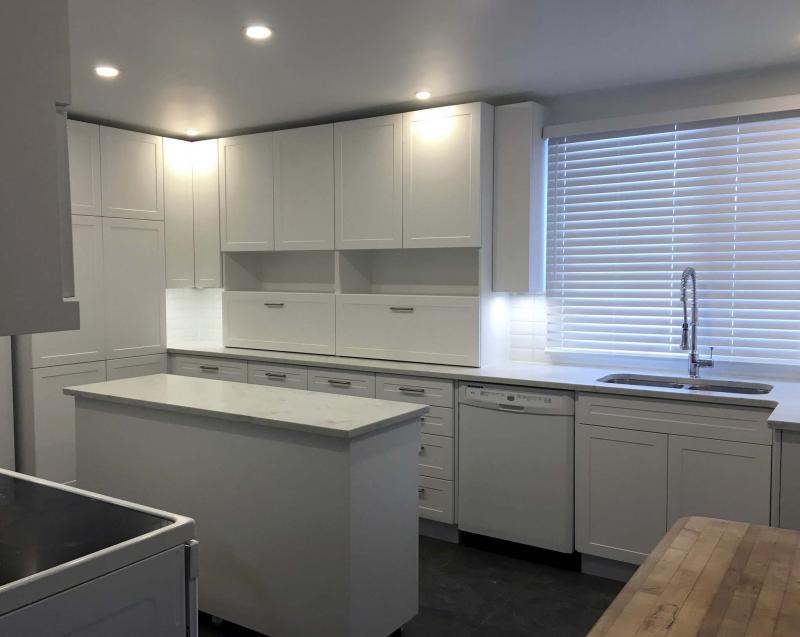
The arrangement of cupboards in a kitchen remodel takes precise measurements and accuracy to ensure installation elevations are consistent.
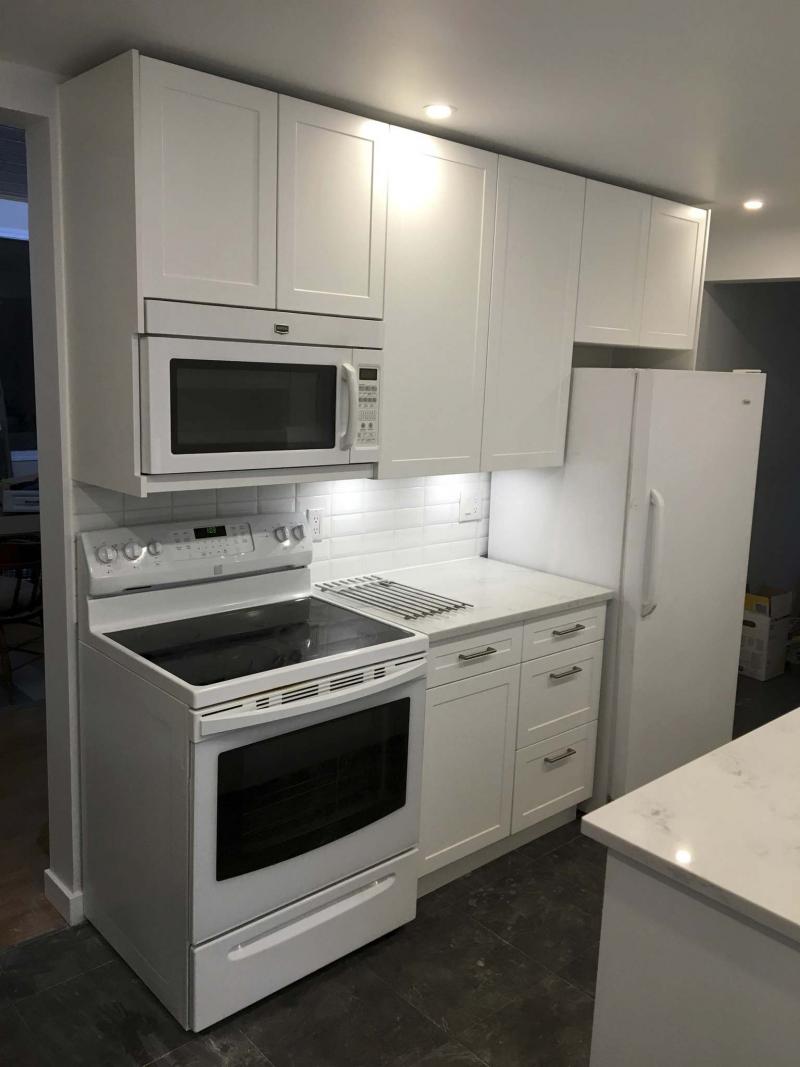
Cupboards are fabricated so that during installation, everything fits like a puzzle.
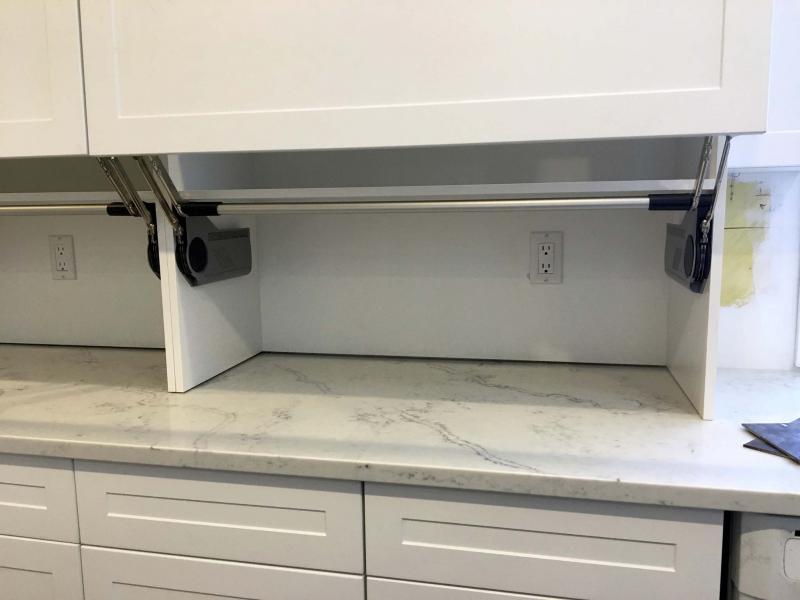
When the appliance garage is open, kitchen gadgets are easily accessible and ready to use.
Most kitchen gut and remodels follow a standard series of chronological steps. Once the old cupboards are removed and the empty shell is revealed, the revitalization process begins by prepping the space to accommodate the new kitchen design layout.
During a recent kitchen remodel, a plethora of cupboards was requested by the client, filling every available nook and cranny of the kitchen space. Two words which I had never heard consecutively until recently, created on-going installation anxiety: the "appliance garage."
Much time was spent on the kitchen design. Richard Rochon at Cabinet Corner did a fantastic job interpreting my client’s cupboard placement sketches. And despite reservations regarding a few areas of close proximity issues, the design layout was approved after a few revisions. The cupboards were ordered well in advance to ensure they would be fabricated and delivered by a pre-scheduled date, slightly before the completion of the kitchen shell.
Once on site, the lower cabinets are tackled first for a couple of main reasons: first, with the lower cabinets in place and level, the upper cupboards can then be easily mounted and levelled using the lowers’ placement as a guide; and second and most importantly, countertop installation measurements cannot be taken accurately until the lowers are permanently secured. From a time-management perspective, this process also proves effective because the upper cabs can be installed while awaiting the countertop installation.
The height of the upper cupboards is sometimes independent from the lowers. However, the general rule of thumb for the gap between the countertop and the lower edge of the upper cupboards is about 18 inches. It becomes more crucial if the cupboards include a pantry, spanning from the floor to top edge of the uppers — precise measurements must be taken to ensure the top edges all line up. In this instance, the pantry would likely be installed immediately after the lower cupboards, as the uppers’ elevation could then be determined by using the top edge of the pantry as a guide. Things become much more complicated when the floor contains areas that aren’t perfectly level, the walls aren’t straight and the room’s corners aren’t perfectly 90 degrees. In each of those instances, a series of shims can cheat the eye of any imperfections found within the kitchen shell, but it complicates the process.
The "appliance garage," an integral part of this particular kitchen design, introduced yet another challenge to the cupboard installation process. The garage is a cupboard set atop the countertop and directly below upper cupboards, that hides countertop kitchen appliances with a hinged door that lifts upwards. For this application, electrical outlets were pre-wired behind the appliance garage locations, allowing easy access to power for anything stored within. The installation of appliance garage cabinets takes much forethought, in that the lower cabinets would be installed first, to allow for precise countertop measurements to be taken, and that the upper cupboards would be installed while the countertops were being made. The appliance garage cupboards could not be installed until after the countertops were set in place.
Therefore, the height of the gap between the lower edge of the upper cupboards and the top of the countertop must be exact and consistent, within an eighth of an inch for a proper and convenient install. And because of the pantry, which dictates the elevation of the upper cupboards, was also located only a few feet from the garage on an adjacent corner, it was imperative that measurements be revisited throughout the cupboard mounting process along that wall to ensure that the gap distance remain true and consistent. No matter my measurement-taking efforts, it was still a slight gamble in that the ultimate gap distance would also depend upon how level the countertop would sit atop the lower cabinets — the anticipation was becoming unbearable. With all but the appliance garage cupboards in place, the white-marble quartz countertops were installed atop all lower cabinets and on the island the following week.
The moment of truth was at hand — would the appliance garage cabinets fit?
Ever-so-carefully, the right cab was set onto the countertop and while holding my breath, with a slight push, it slid effortlessly into position. After an audible sigh of relief, the process was repeated for left cab, with the same result — only an eighth of an inch separated the garage cabinets from the lower edge of the uppers, as planned. They were both affixed to the back wall, as well as to the adjacent cupboards, thus concluding the cupboard installation process.
The white, bevelled subway tile was then installed beneath the upper cupboards throughout to serve as backsplash and the finishing touches would complete the remodel a few days later, after a full eight weeks on site from start to finish.
In retrospect, it was the appliance garage cabinets that caused the greatest anxiety. Despite having taken accurate measurements on several occasions, the possibility of having overlooked something became prevalent in my mind during those final weeks leading up to the cupboards’ installation.
Fortunately for me, Rochon is very proficient at establishing exact cupboard sizes from his 3D renderings, based on the kitchen design. And even though any one of the quirks found throughout this kitchen’s empty shell (flooring that dips, walls that bow and four corners that are nowhere near being square) could have halted this project in its tracks, the cupboards went in rather smoothly overall. Repeated measuring sure pays off! And with this recent and novice appliance garage installation under my belt, maybe my level of anxiety can be kept to a minimum next time ‘round.
bossenterprise@outlook.com