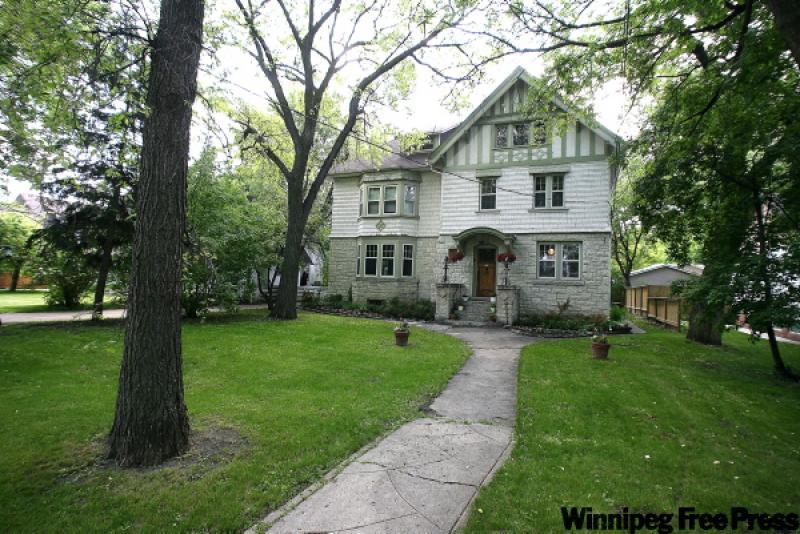
One of the city's most exclusive gated communities is opening its doors to the public for the first time ever next Saturday.
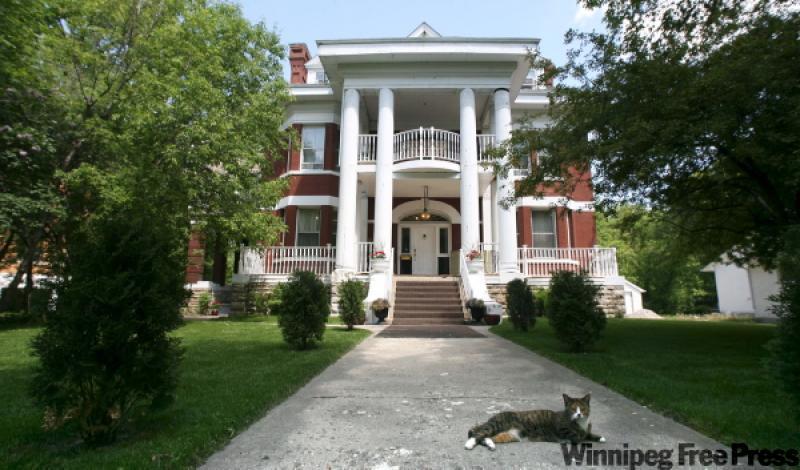
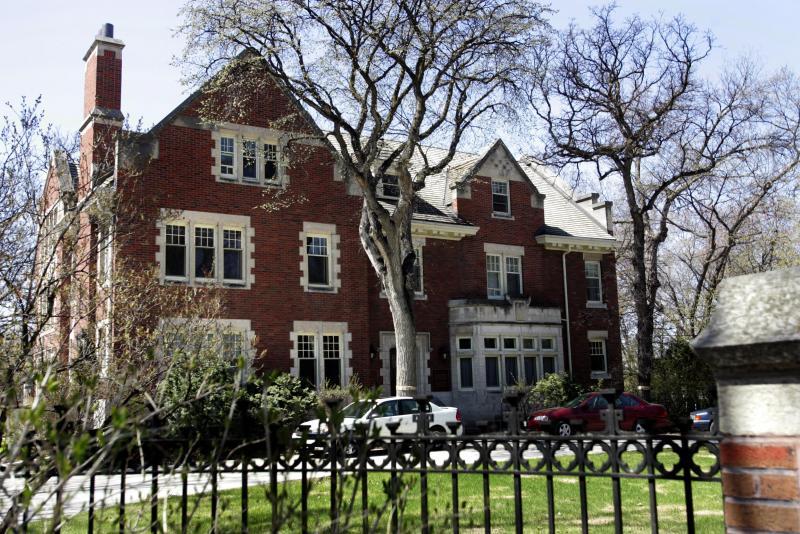
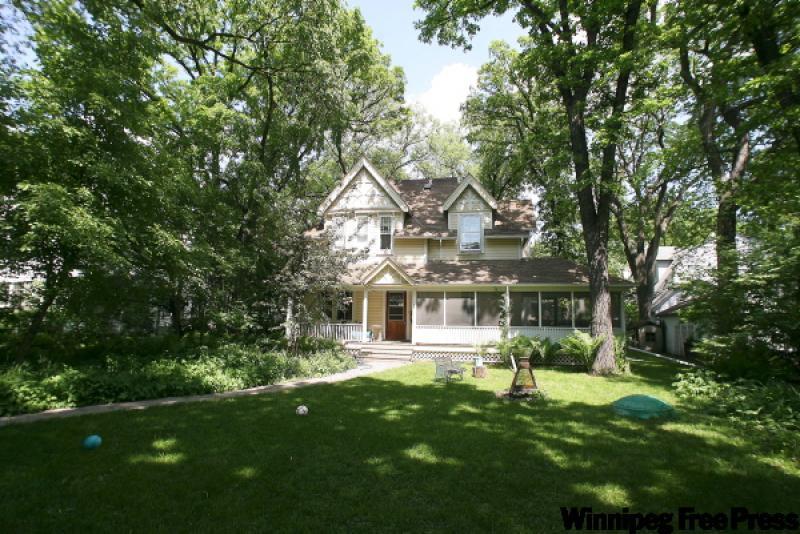
Known affectionately as "The Gates", Armstrong's Point is a neighbourhood of extraordinary heritage homes. Since the 1800s, the area has been home to Winnipeg's elite -- grain barons, industrialists, and other professionals.
Today, it's also home to the bed-and-breakfast. Five quaint, homey inns already do a brisk business in The Gates, with a potential sixth on the way.
One of the bed-and-breakfasts is included in the Armstrong's Point Heritage House Tour, which will be open on June 27 from 12 noon until 4 p.m. A total of seven homes will be open to the public during the tour.
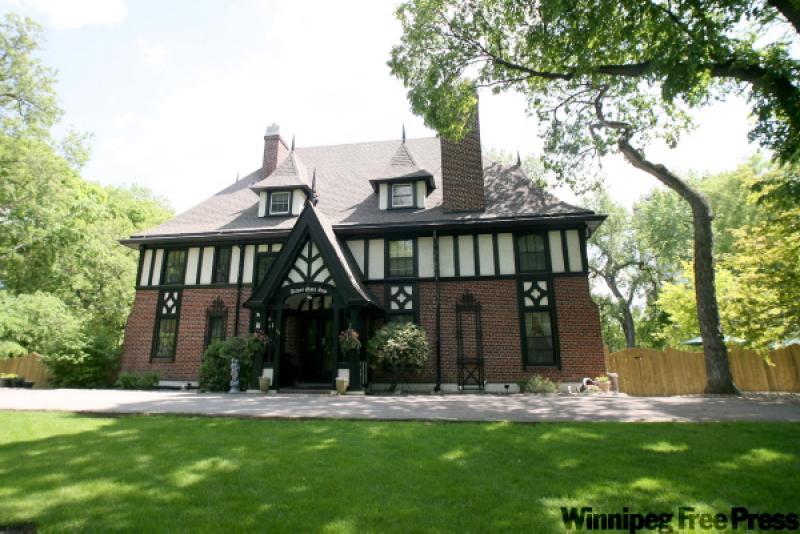
The River Gate Inn at 186 West Gate, otherwise known as the Riley House, was built in 1920 and converted to a bed-and-breakfast in 2001. Michelle Sanheim and her husband Keith have been running it since 2005.
Keeping the inn in character requires a lot of estate-sale and antique-store shopping, as every stick of furniture in the place is accurate to the time period. The Sanheims proudly display a desk from Winnipeg's first Legislative Assembly and a collection of Icelandic books that date back to the mid-1800s.
River Gate is a lot lighter and brighter inside than most visitors expect. The traditional Tudor-style mansion's main floor has been decorated in the bright colours that were popular at the time: mustard seed, grass, straw and berry. On the second floor, each guest room is named for a different province. Decorated with care, all rooms are filled with natural light. The four main suites boast private bathrooms with jet tubs.
"We're hoping that this tour will increase awareness of the neighbourhood. A lot of people don't know that we exist," Michelle says. "I'd like the public to see how we take pride in our neighbourhood and properties, so they recognize how important it is to keep these houses up."
Maintaining a heritage home like the ones prevalent in Armstrong's Point requires constant dedication, attention to detail and a steady influx of capital. The faint-of-heart need not apply.
April McDonald-Kassum, chair of the Heritage House Tour Committee, says several homeowners balked at the idea of a tour, due to their unfinished renovation and construction projects.
"I told them, 'you can't wait until your renovations are finished, because then no one would ever see these houses!' The renovations are never done," she laughs. "I have a project going on in my house that isn't going to be finished in time, but I'm showing it anyway. These are not show homes -- these are people's family homes, and on-going construction is a part of that."
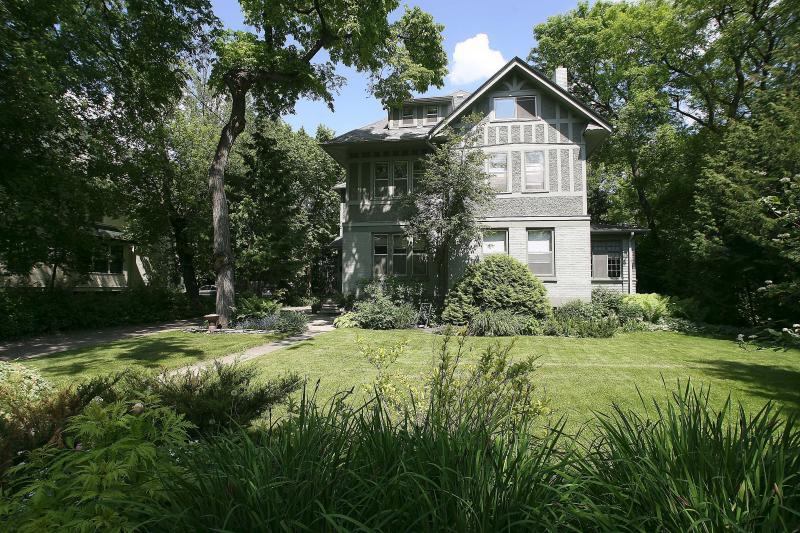
Leigh Taylor can attest to that. His stunning ivy-covered home at 99 Middle Gate has seen its fair share of renovations.
Taylor and his wife recently converted their 1970s-style kitchen into a striking focal point that is more faithful to the era of the home, which was constructed in 1910.
To mimic the appearance of a kitchen from that time period, all modern appliances are hidden behind customized cabinets and drawers. Even the dishwasher, refrigerator and freezers are tucked out of sight.
The star attraction is a cherry-red, cast-iron stove by AGA that weighs several tons. Taylor says the rest of the kitchen was built around it.
"Our goal was to make the kitchen look as it originally would have, so it would fit in a 1910 house," he said. "You have to really love restorations to live in a place like this. It's constant work, so you have to enjoy doing it."
The couple has spared no expense to be true to their home's original style. During a renovation of the front foyer, tiles were salvaged and used to restore the fireplace in the library.
A company specializing in heritage fixtures and tiles was hired to restore the main floor bathroom to its former grandeur.
"They were able to find tiles that exactly matched the original," says Taylor.
Though each Armstrong's Point home is dramatically different from its neighbours, some features remain constant. Visitors can expect to see flooring, ceiling beams, wainscoting and stairs in original oak. Most of the homes also feature stained-glass windows in a dazzling array of patterns, shapes and sizes.
Libraries with built-in bookcases of gleaming wood are common, as are sunrooms in various styles. Jocelyne Hullen's home at 6 East Gate is notable for its solid limestone sunroom.
"We looked at a few places before we bought our home, but we fell in love with this house almost immediately," Hullen smiled. "This house really has soul."
Part of the charm of a heritage-house tour is the opportunity to step back in time to a bygone era. Hullen's home still has a butler's corner, while McDonald-Kassum's has separate sitting rooms for men and women.
"After dinner, the men would go to their room to drink and smoke, and the women would go to theirs," explains McDonald-Kassum. "They never sat together."
Tickets for the Armstrong's Point Heritage House Tour are available by calling April at 510-4803, or at the McNally Robinson Bookseller in Grant Park. Tickets are $25, and all proceeds will be used by the Armstrong's Point Neighbourhood Association to beautify the neighbourhood.
THE HOMES
5 East Gate: Constructed in 1906, the original home of Thomas Ryan. Ryan, a boot and shoe merchant, came to Winnipeg in 1874 with little or no capital. By the early 1880s, he was prominent in the city's business and political affairs. He became mayor of the city in 1889.
54 West Gate: The Ralph Connor House, constructed in 1913. Under the pen name Ralph Connor, Dr. Charles Gordon won great fame as an author. He lived in the 11,000-sq.-ft. home with his wife and their seven children. It is now the site of the University Women's Club.
186 West Gate: The River Gate Inn, constructed in 1920. River Gate opens at 2 p.m. instead of noon. Known as the Riley House, the inn was also home to the Ashdown family before it became a popular bed-and-breakfast.
43 Middle Gate: Constructed in 1909, original home of T.A. Hunt, who became City Solicitor in 1905. The next owner, R.M. Pinfold, was a manager at Eaton's.
123 Middle Gate: Constructed in 1882, the original home of William M. Ramsay, a director of the Winnipeg Water Works Company.
6 East Gate: Constructed in 1913, original home of Dr. Jasper Halpenny. Halpenny held the Chair of Surgery at the Manitoba Medical College. He co-wrote the book "How to be Healthy" with Lillian Ireland, whom he later married. The home was later used by Great-West Life as a rental property and rooming house until 1952.
99 Middle Gate: The Ryan House, constructed in 1910. After James Ryan Jr. left the home in 1944, it passed to the Anglican Church of Canada and became the rectory for Reverend Canon George R. Colvert. The Anglicans owned the house until 1971, when it was sold to television evangelists Willard and Betty Thiessen.