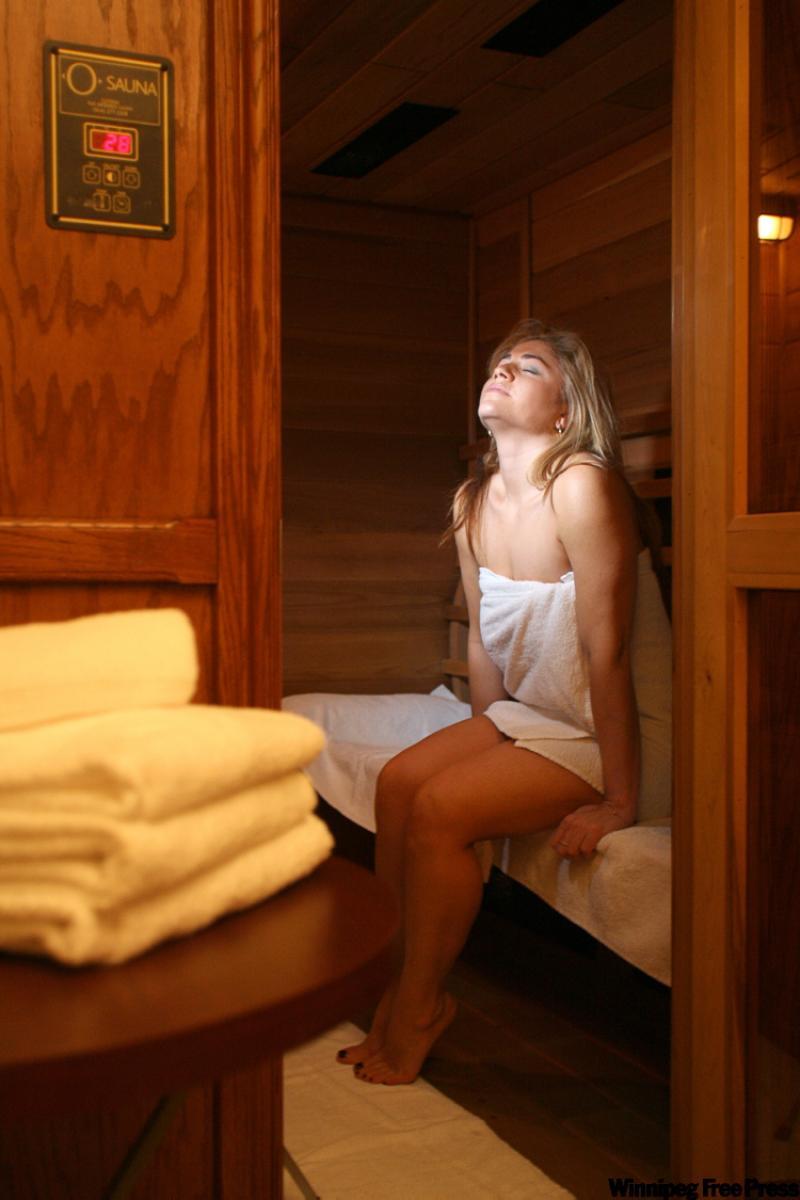
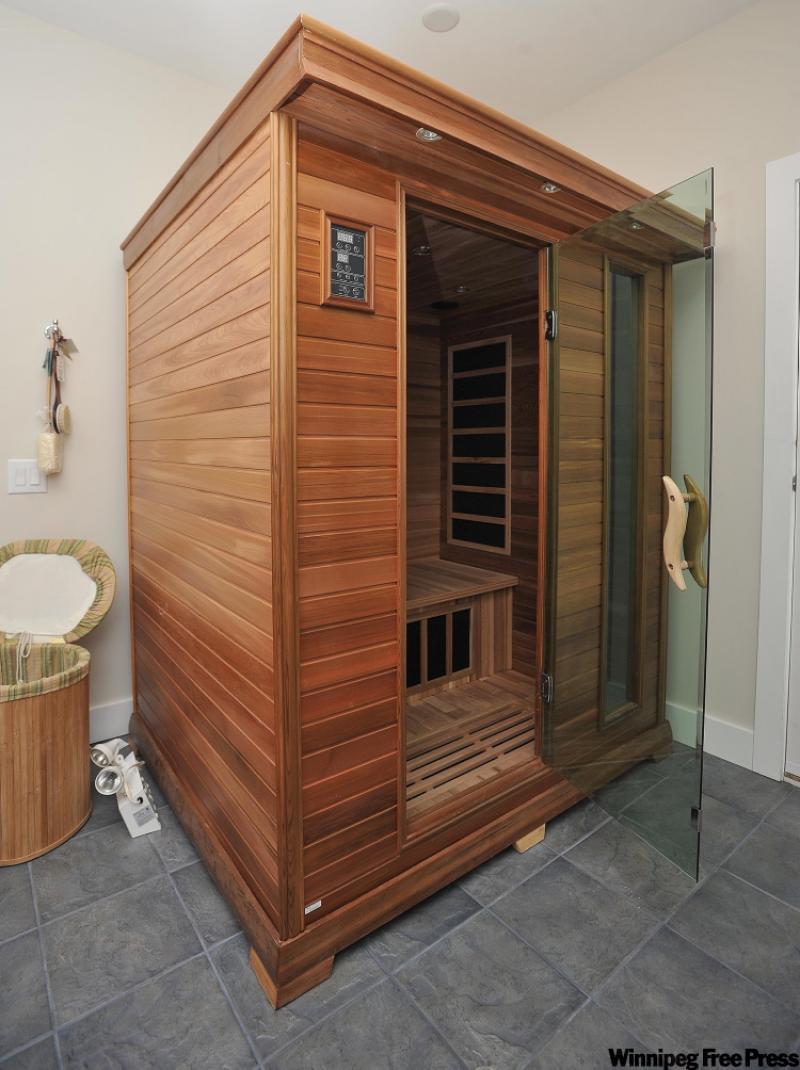
Saunas that need no more power than a hair dryer and can be plugged into a regular household outlet are changing the industry.
The benefits of inducing a heavy sweat in a sauna to detoxify the body is well-known to cultures around the world. Most sauna aficionados swear (and sweat) by traditional heated-rock saunas. But for people who can't take the high heat environment (temperatures range from 80 to 90 degrees), saunas that are heated by infrared waves now give people an alternative.
Infrared refers to a segment of the light spectrum -- below red -- invisible to the human eye. This form of light/energy naturally occurs in the form of the sun's rays. Most of the heat from the sun is from infrared waves. These rays heat objects rather than the surrounding air. The body naturally absorbs the rays and is warmed by them.
Infrared saunas use infrared heaters to create infrared radiant heat to warm occupants, unlike conventional saunas that heat the air, resulting in a milder environment. Both cause the human body to heat up and perspire.
Daily use of a sauna can help detoxify the body and is beneficial for skin. People most likely to benefit would be those with chemical and environmental sensitivity. The heat is great for relaxing muscles and reducing stress. As the heat induces a high rate of perspiration, proper hydration is critical so drink lots of water.
Neophytes should start off slowly as the heat can be stressful for some people in the beginning. As temperatures rise, the heart rate can increase, so people with some medical conditions should consult with a health-care professional before use.
Because they don't require an electrician to hard-wire the units in place, the infrared saunas on the market today are portable. Easy-to-find sizes accommodate one to four people. The smaller units use only 1,600 watts of power and can be plugged into a household plug with a 15 amp circuit (the most common found in a house). Larger units may need an upgrade to a 20-amp circuit.
Although they can be custom-made with insulation and used outdoors, most infrared saunas are meant to be installed indoors. Some are sold in packages with prefabricated panels that the customer has to assemble.
While infrared saunas have been in existence for over 30 years, the market really took off when the alternative health and wellness practitioners recognized the health benefits of the units about 10 years ago. Interest in the saunas increased as prices dipped.
-- Canwest News Service