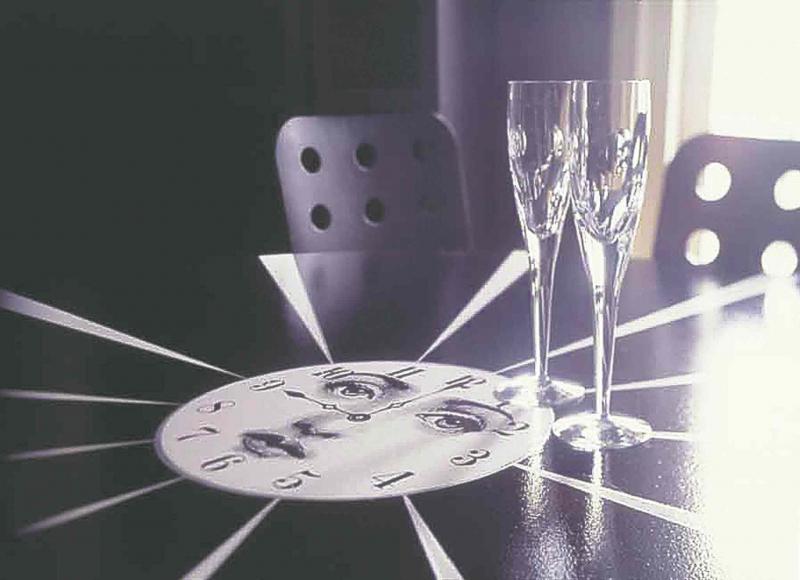
Recently, I heard from a reader who was looking for the instructions to a wonderfully unique tabletop revamp she had seen on one of my shows.
The table was fashioned around the room's theme, which celebrated famous Italian designer Pietro Fornasetti. His style was based on illusion, and his most famous image is that of a woman devoid of expression. He turned out more than 500 versions of this enigmatic face, most of them on dinner plates.
Go online to see plate ware and fabulous wallpaper patterns that celebrate Fornasetti's designs.
The homeowner had a small pine table I reinvented to be the centrepiece of the dining room. I extended the size of the top, so eight people could sit comfortably around it, by cutting a large circle from medium density fibreboard (MDF) and attaching it to the table base. Then I decorated it with paint and decoupage.
The entire surface was primed and painted with two coats of semi-gloss latex paint. Although the sheen of the paint is unimportant at this stage, matte black paint will show every fingerprint.
A black and white photocopy of a Fornasetti image was neatly cut out and adhered to the centre of the table with wallpaper glue. I used masking tape to block out sun rays of white paint radiating from the face. Once dry, each ray was outlined in silver. Six coats of water-based gloss varnish were applied for sheen and to seal the cutout.
It is the multiple varnish coats that create the illusion the image is hand-painted or drawn or even inlay work. The thin paper layer disappears under the varnish.
There are many imaginative ways to employ this cut and paste technique. The cutout pieces can be paper of all kinds, or even pieces of fabric. The cutouts are glued down using Mod Podge, decoupage glue or wallpaper glue. Many coats of varnish seal the paper, creating a smooth, hard surface on the decorated object.
The art of decoupage is customarily used to decorate small boxes and furniture pieces. You can combine paint and decoupage to refinish a dresser, adding cutout details to drawers around the handles, trimming the edges and transforming the top.
Add whimsical detail to the top of a chair back and the seat, great fun for a child's room. Wrap cutouts around plain picture frames, glue monograms onto storage containers, personalize jewelry boxes with an artistic touch that is not difficult to master.
Search for images online that can be downloaded and photocopied. Note inkjet printer ink will smear when you apply varnish, so use a colour printer or spray with a fixative. There's a wealth of inspiration in leftover wallpaper rolls, magazines, notepaper and wrapping paper. Themes are endless, covering any style you have in mind.
You can go one step further and use decoupage to add architectural detail to a room. Paste on panel frames or chair rails to divide up wall space. Glue small prints along a crown moulding to draw the eye up to a colourful ceiling... this works best with a high ceiling.
Decoupage is child's play refined and finished to last. Enjoy your project.
Debbie Travis' House to Home column is produced by Debbie Travis and Barbara Dingle. Please email your questions to house2home@debbietravis.com.