At its purest, gardening is about expressing yourself by using other life forms. Sometimes plants conform to your vision; often they do not. If your mental image of a planting design is blurry at its inception, its physical realization is even more hit or miss.
So when you have succeeded in growing a group of plants in a harmonious gathering after a few false starts, the impulse is to rest on your laurels. But the best gardeners I know are never quite content with what they’ve done or with what they know.
I could do with a bit more of the mania myself and have vowed, in this season of resolutions, to be more adventurous. Much of this resolve has to do with overcoming preconceived notions of what will work in the hot, humid mid-Atlantic climate and what will struggle. (I was wrong about calendulas, which do quite nicely in the right location and nasturtiums can be happy, too.)
I am resolved to try at least three new perennials in the season ahead.
Eryngium, or sea holly, is a stunning architectural plant — an electric blue, three-foot candelabra of globes with a collar of spiky bracts. You see them as dramatic plants in the flower borders of northern Europe, often varieties of a species named Eryngium giganteum. They don’t like the heat of our summers and they lose their intensity of colour as a result.
My second pick is the Texas red yucca, which isn’t strictly a yucca but is closely related. The Texas red yucca is smaller and more refined. Even better, the coral-red blooms are delicate but profuse and their flowering stems appear in late June and keep going until October. Friends who grow it say it is an absolute magnet for hummingbirds. Botanically, it is known as Hesperaloe parviflora and several garden varieties have been introduced. High Country Gardens sells one named Straight Up Red, developed for its robust flowering.
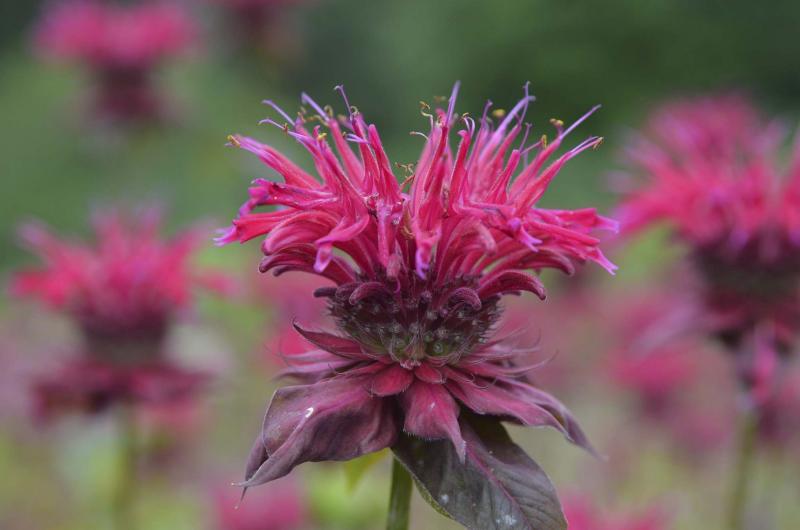
If your garden has the opposite problem — damp soil — my third choice may be for you. Monarda, or bee balm, which as a mint relative doesn’t like boggy conditions but needs even moisture.
If the weather turns dry and the plant isn’t watered, it will object by way of coating its leaves with powdery mildew. Think of a three-year-old dressing up and then, when told the show’s over, sprinkling herself with talcum powder.
— Washington Post