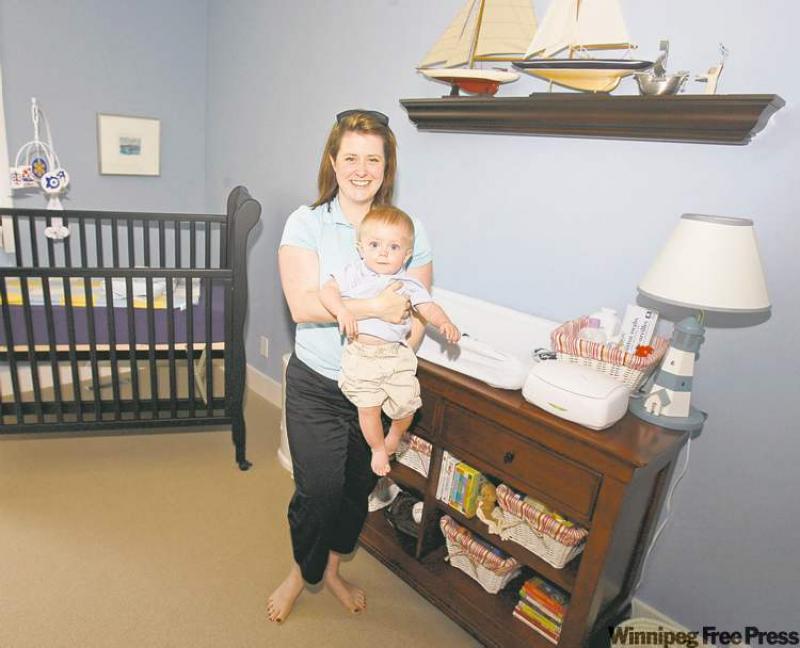
REENA Sotropa had her nursery picked out years before her daughter was even born.
An interior designer, Sotropa knew when it was time to have a baby, she would convert her spare bedroom into a nursery and didn't want to have to redecorate the space twice.
And this didn't mean she decked out the room in yellow duckies or blue clouds. In fact, Sotropa was ahead of the times when she decided not to make her baby room very baby at all.
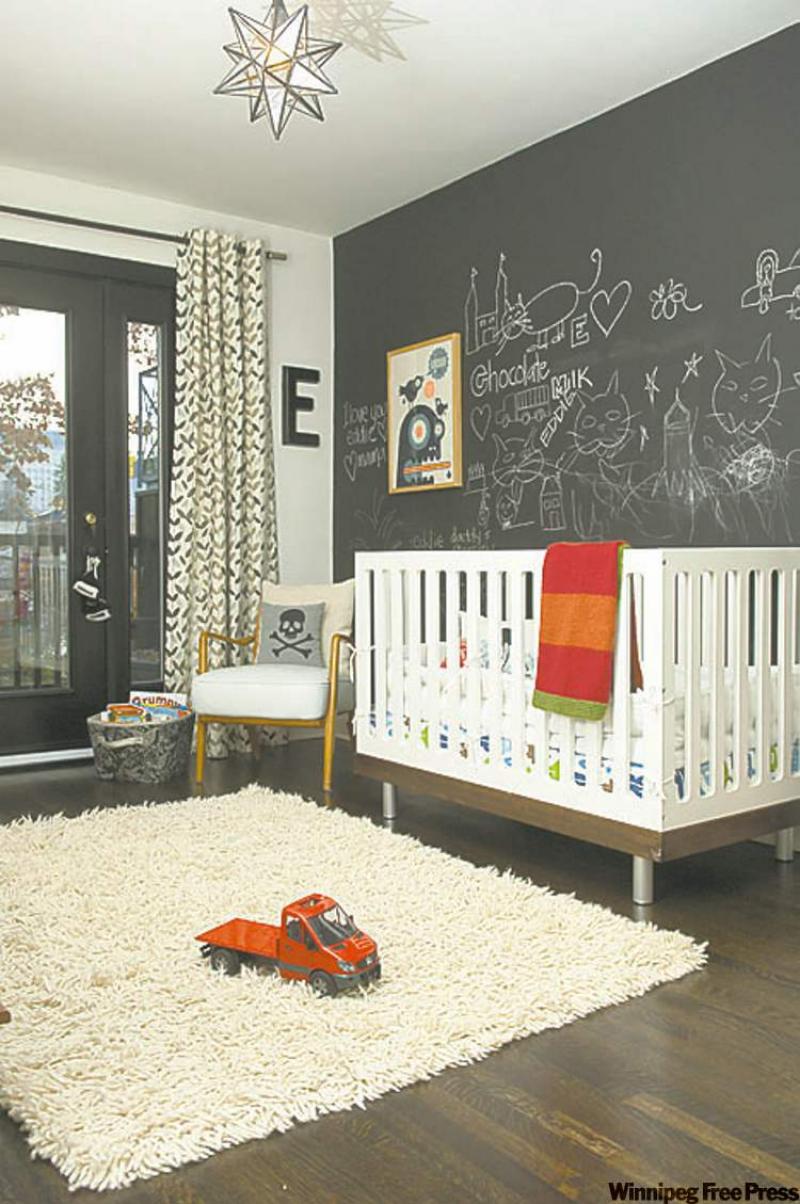
"The trend is going away from a baby-esque space," says Kelly Melanson, owner of Baby Space Designs in Calgary. "Nurseries are more in line with the rest of the home. They are something that appeals to parents as they choose to spend a lot of time in that space."
For Sotropa, this meant drapes that were both functional (to darken the room for a sleeping baby) and fashionable with fun oversized soft plaid colours.
"Those drapes established my colour scheme," says Sotropa. "They inspired my wallpapered feature wall that had the same colours in orange, blue, green and brown. It looked just fine as a guest bedroom but could easily transition into a nursery. It wasn't traditional but had fun bright colours, which were also gender-neutral."
Years later, when Sotropa's baby girl arrived, she scored a second-hand crib from a friend.
For a soft piece of furniture, Sotropa opted to stay clear of traditional baby rockers and instead repurposed a chaise longue for midnight nursing sessions.
"I would recommend that," says Sotropa. "It was such a good thing. You could lay down on it and also sit up and use it as a nursing chair. And because it's so low to the ground, now that my daughter is walking, she walks around it and it has soft corners. And I added some soft, colourful cushions to tie in with my colour scheme."
Of course, not all parents-to-be are as fashion-savvy as Sotropa, but she says parents who want to create fashionable, trendy nurseries need to look no further than the other rooms in their home.
"The nursery doesn't have to look like it belongs in a different house," says Sotropa. "Cribs and furniture are like what you'd be able to buy for your living room."
Sotropa says design lines such as Dwell Modern carry modern baby decor that boasts clean lines with popular colour combinations such as white lacquer and dark wood.
Themes are out, she adds, and parents who want to decorate their nursery walls are opting for fun and funky wall tattoos, in lieu of cartoon borders.
"Wall tattoos go up really easy and come down really easy," says Sotropa. "They don't harm the paint, and huge artwork can be really fun."
And forget about ballerina pink and baby blue, Melanson adds. Warm rich tones, such as neutrals, olive greens and plums, are taking over nursery paint selections.
"Parents want it to feel like the rest of the house," says Melanson. "They're getting prepared to spend a lot of time in this room."
In addition, because babies will stay in the room long after they've learned to crawl and walk, parents are also preparing with the necessary safety measures.
Of course, baby-proofing a nursery entails the traditional precautions such as making sure no blind cords are hanging down, electrical outlets are plugged with safety guards, that not too much bedding, pillows and stuffed animals are crowding the crib and that when babies stand up in the cribs, they can't reach sharp objects. But one safety precaution many parents may want to take is something they can't see at all -- the quality of air in the nursery.
"In my mind, safety concerns include the environment the baby is sleeping in -- the indoor air quality," says Melanson.
Melanson says this means choosing eco-friendly materials that are formaldehyde-free. She advises to choose woods and paints that don't have VOCs -- volatile organic compounds. She also says fabrics such as organic cotton and wool are healthy alternatives for their lack of potentially harmful chemicals.
"If the baby is sleeping in the room 14 to 18 hours a day, these are things that parents may want to consider," she says.
-- Postmedia News