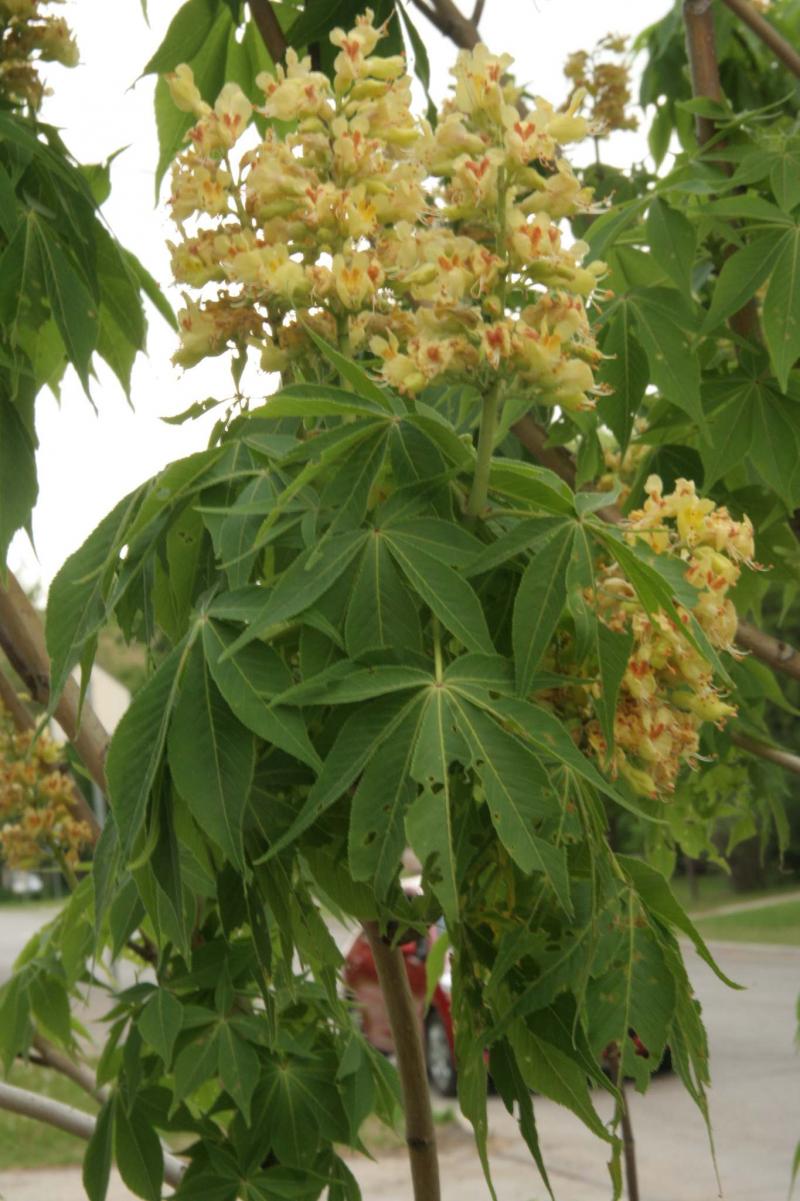
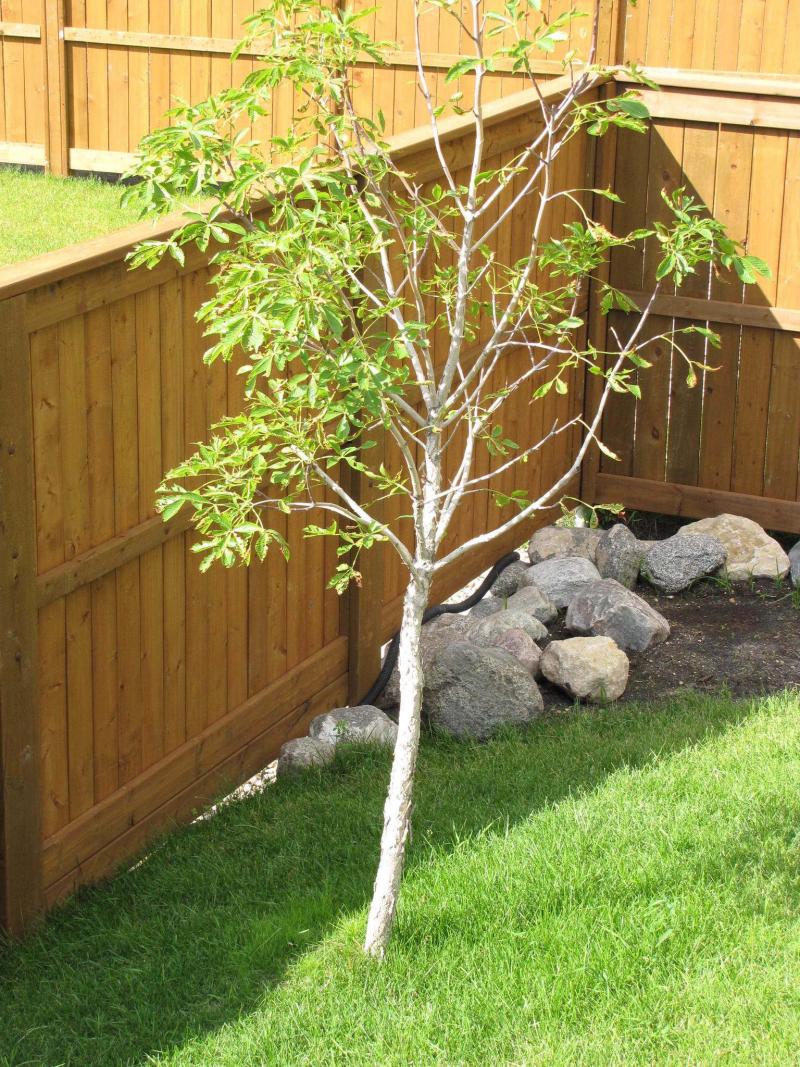
Photos by Michael Allen / Winnipeg Free Press
The Ohio buckeye looks great, even at a small size. As it grows, it begins to develop chestnuts. These can be sharp, so avoid planting it near where children play.
In a previous article, I wrote about the impending devastation coming to Manitoba ash trees within the next three years from a largely uncontrollable population of voraciously feeding emerald ash beetles. My suggestion is to plant trees that so far have not had a history, in this province, of serious pest and disease problems.
One of my favourite trees is the Ohio buckeye. This tree is grown in Manitoba commercial nurseries and some garden centres. The tree, even when small, has a very pleasing appearance.
These trees are very hardy to our climate. The City of Winnipeg forestry branch plants these trees in street boulevards where they believe this species of tree will grow optimally. In an urban yard, the tree grows very well.
The Ohio buckeye is in the horse chestnut family that plant biologists call Aesculus — the Latin name for this family of trees. These trees have a unique characteristic featuring their unusual leaves.
Most of our deciduous trees have leaves that are either singly attached to the woody twigs or are attached to the twig as compound leaves. Compound leaves in Manitoba consist of five or more leaflets having a common leaf stem attached to a woody twig depending on the species of tree. This is the case for ash trees.
The leaves of the Ohio buckeye tree consist of multiple leaflets all attached to the twig at a common base. This feature is often compared to a hand having multiple fingers. The base of the "hand" is the location where the compound leaflets on the twig originate. The number of leaflets can vary, but five is a common feature on the trees. The colourful flowers emerge in the mid to latter part of the spring season. They are noted for attracting pollinating insects such as bumble and honey bees.
The Ohio buckeye and its sister tree, the European horse chestnut (which can also grow in warmer areas of Manitoba including Winnipeg), do have a feature that may not appeal to everyone. As the tree matures, it will produce a shiny chestnut with a prominent circular beige spot. The combination of the nut with this spot gives the appearance of a deer’s eye, thus the origin of its common name: buckeye. Squirrels love these nuts. The nut itself, however, is enclosed in a hard shell or husk that develops slightly curved, sharp spines on its surface. Although it takes a number of years for the nuts to develop, it is best not to plant it in an area where children will be playing.
Ohio buckeye is only one of a number of desirable trees that can be planted both to diversify the tree species population, especially in new housing areas — and beautify our neighbourhoods.
Michael Allen M.Sc.F., RPF (ret’d) is a consulting urban forester, tree diagnostician and certified arborist. He owns Viburnum Tree Experts. He can be reached at 204-831-6503 or 204-223-7709
viburnumtrees@shaw.ca