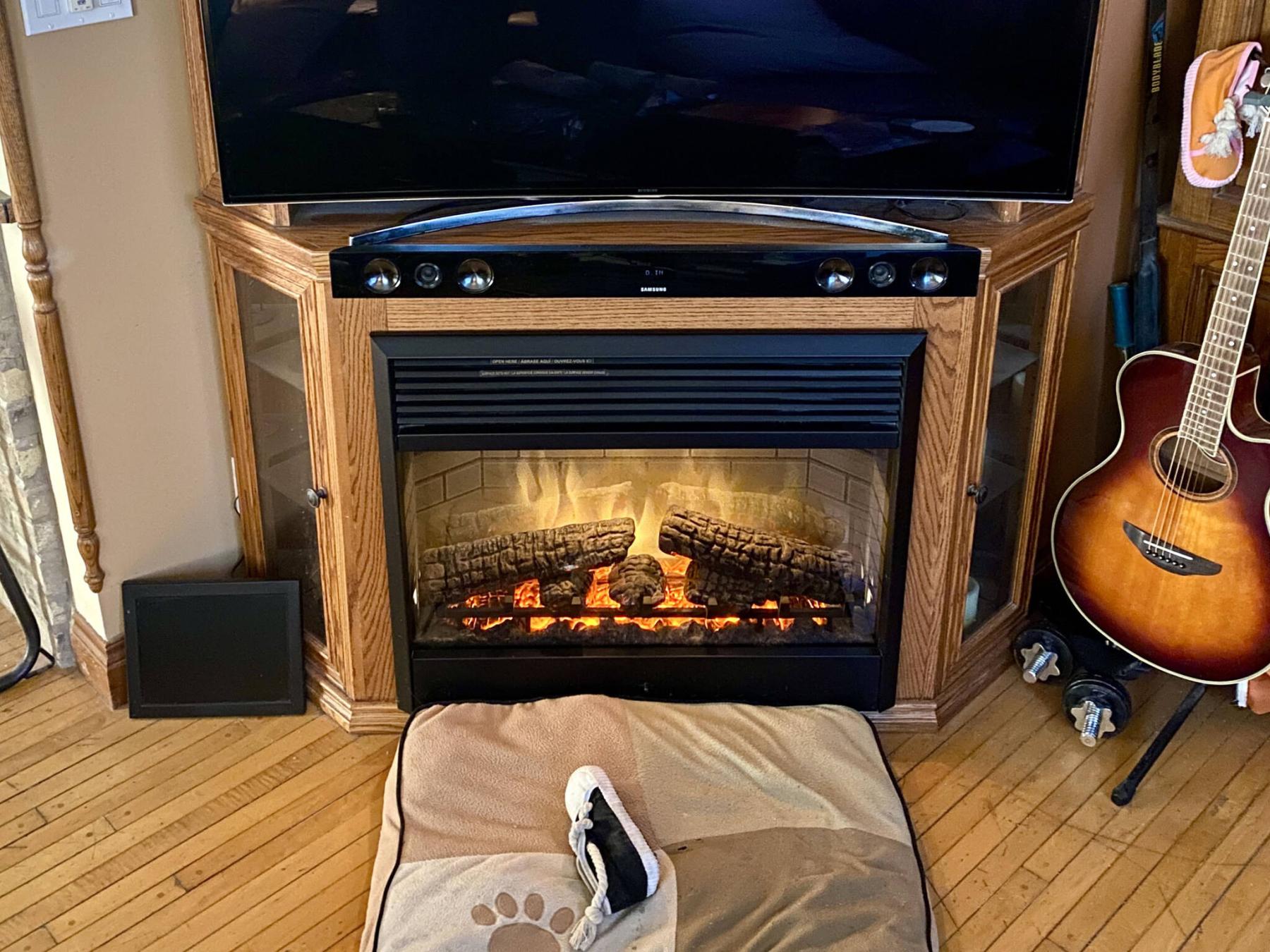
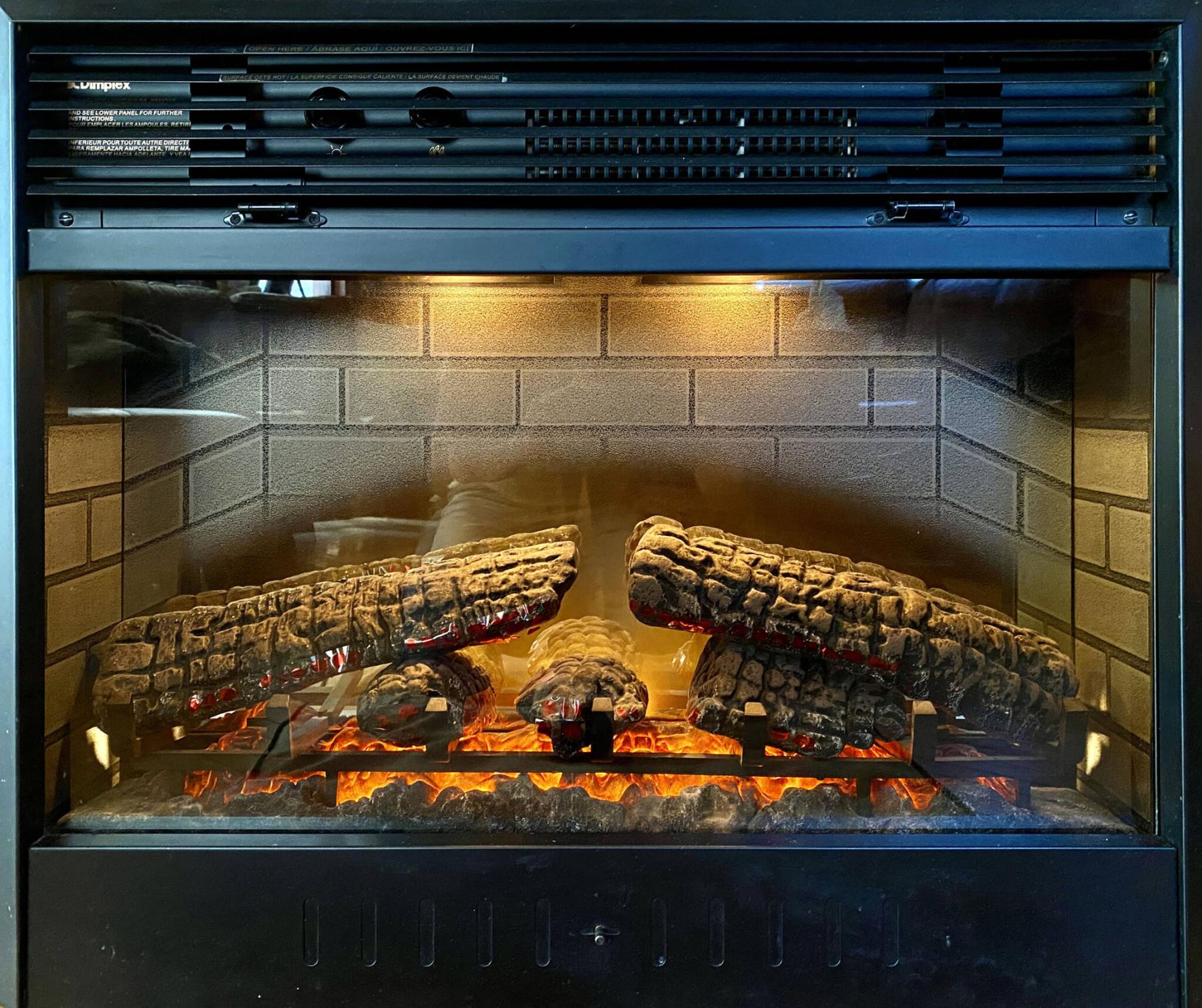
The faux logs rest atop a plastic cast of ‘embers,’ backlit by four bulbs underneath.
Marc LaBossiere / Free Press
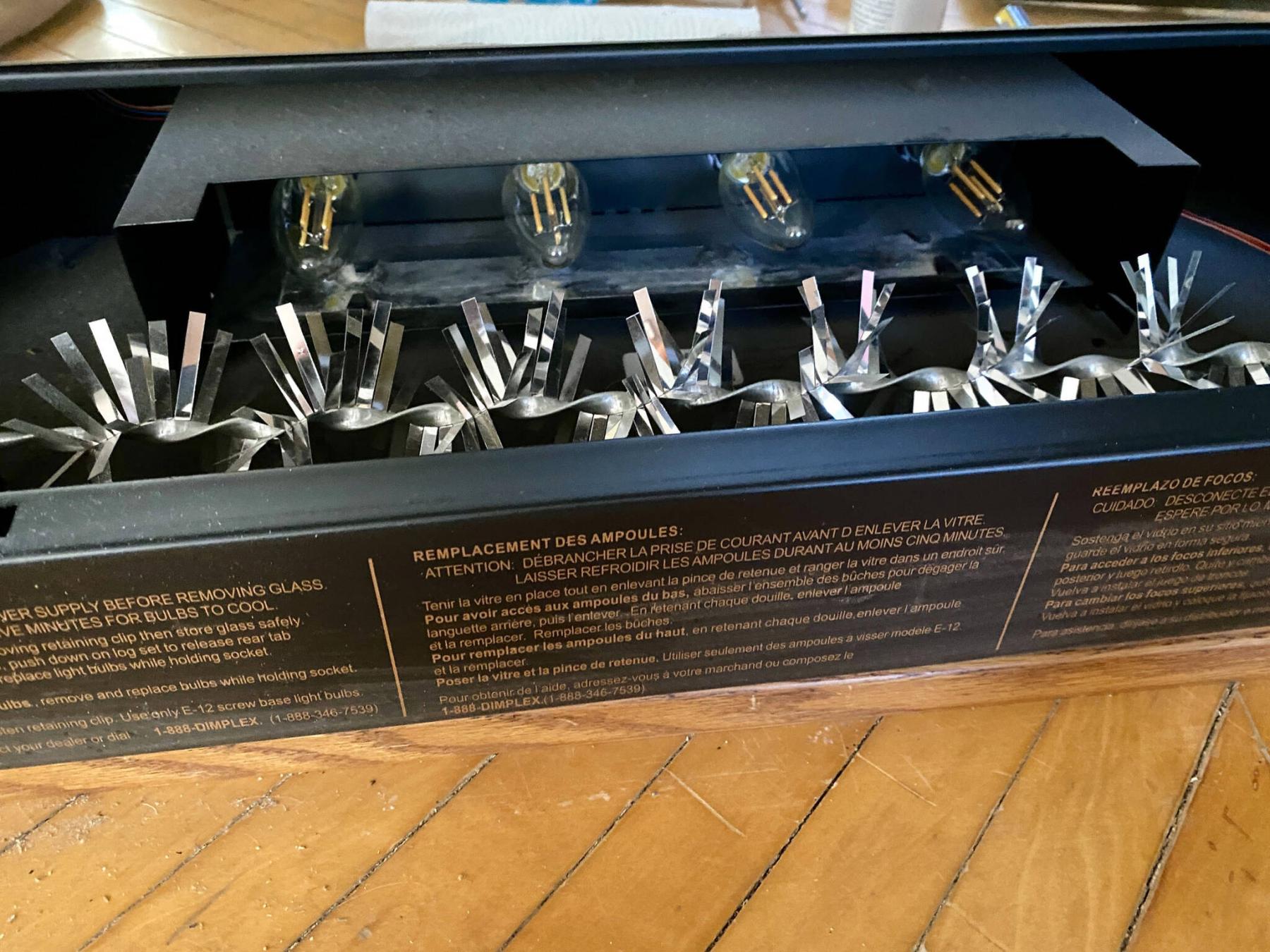
The four bulbs point forward, lighting the plastic cast of ‘embers’ while a rotating shaft of reflective spines creates the flame effect along the mirrored backing.
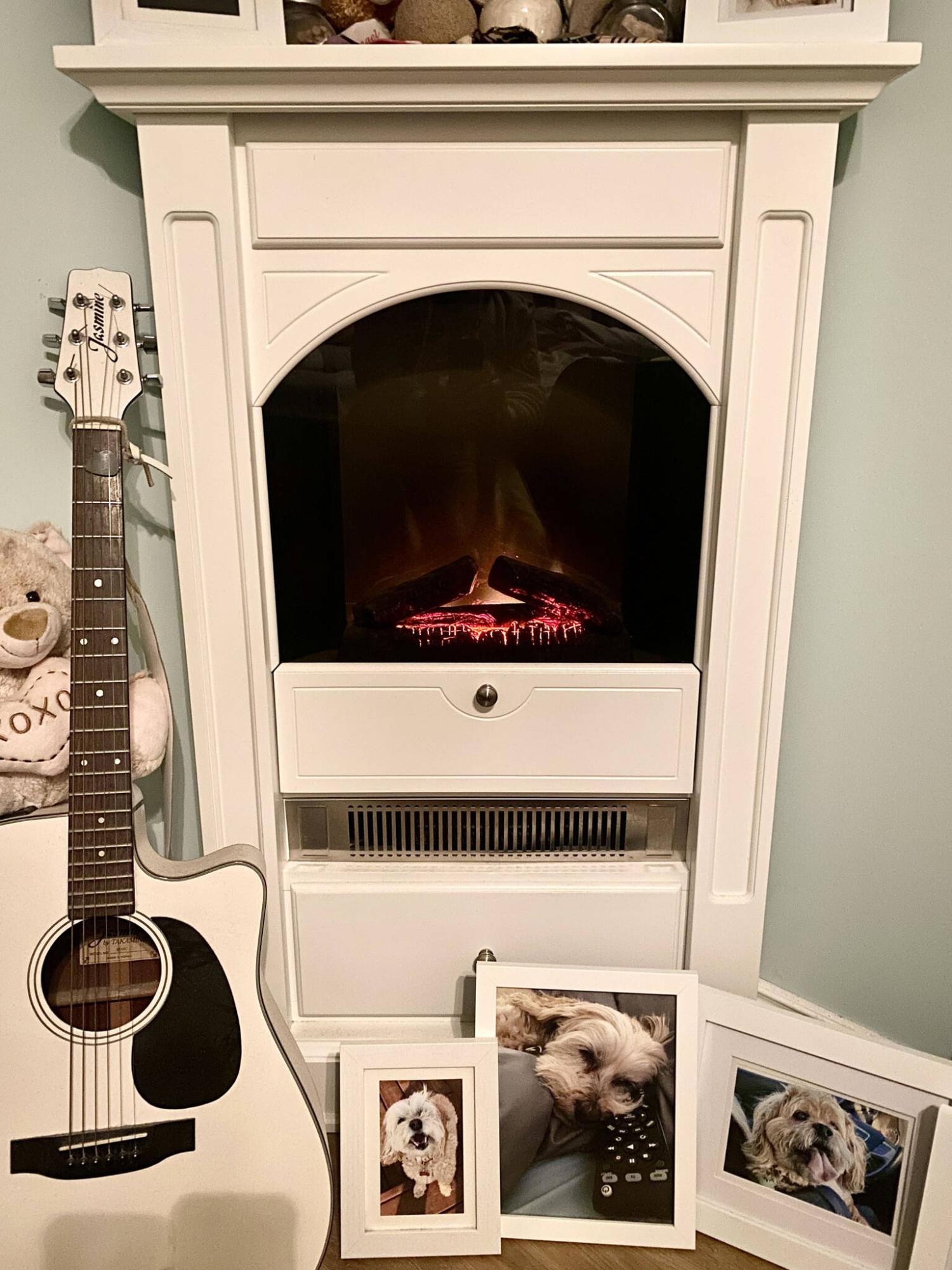
A smaller log-box fireplace helps heat our master bedroom on chilly nights.
A few days ago, something in my living room seemed slightly off. Once my focus shifted towards this oddity, I noticed our old log-box electric fireplace was no longer displaying its rolling flames, nor the lighted faux embers beneath its simulated burning logs. After nearly two decades of reliable use, this old unit had surely given enough — or had it?
In recent years, the desire to add a decorative fireplace to living spaces has become an ongoing trend. And for the most part, homeowners generally lean toward the latest and most enhanced models that offer a wide range of display options, including varied colours of “flames,” “embers” in multiple combinations, as well as adjustable “flame”-rotation speed and a wide selection of sizes.
These units are built slim and streamlined, allowing wall-mounting or inset installation options (provided the latter design includes an element that emits heat through a front-facing grill). Once prepped with the multi-faceted clear faux stones along the interior bottom of the unit, the fireplace can be mounted with ease, and simply plugs into any standard 15-amp outlet.
There are two such units in my own house — one in the basement rec-room, and another in the step-down dining room. I elected to mount these as inset installations, within fireplace stacks with mantles, and decorated with engineered stone.
The other two electric fireplaces in my home are relics from an earlier era of plug-in “hearths.” Both are made by Dimplex, and feature an entirely different look. Unlike more contemporary versions of electric fireplaces, these older models are bulky, inserted within the cavity of corner cabinetry. They also showcase faux logs, with a rudimentary attempt at lighted “embers” below the logs and “flames” that appear to rotate upward from behind against a mirrored backdrop.
Although they do seem antiquated, they have both served a purpose reliably for years. The smaller log-box unit in our master bedroom throws just enough heat during winter months to warm the entire room, and can be shut off before we fall asleep.
Dated, but charming
The other larger electric fireplace came with the corner entertainment shelving unit currently situated in our living room. A curved Samsung flatscreen TV sits atop it, and a soundbar fills the void between the two. And although this log-box is quite dated, I still rather like the charm of it, and how the faux logs at a glance truly do seem to look “real”… well, for a moment anyway.
When the flames were no longer rotating, and the ember base light had gone out, I initially thought the time had come to replace it. However, my curiosity helped me come up with a possible fix for this quirky old unit, and I’m very glad it did.
By all accounts, it was likely the bulbs providing the backlight within the log-box had simply burned out. As such, I picked up some replacement E-12-type bulbs and upon arriving home one afternoon after my workday this week, dismantled the old unit to investigate the issue.
Once the main trim was removed from the housing, the glass front was dislodged by removing a set screw and carefully prying it out. The appearance of the faux logs atop “burning” embers is achieved simply with painted foam atop a plastic cast, which was easy enough to gingerly pry out.
With the decorative aspects of the log-box removed, an ingenious mechanism was revealed. Four E-12 bulbs point toward the front, and a cleverly designed spiral of metallic spines are set along a shaft which rotates horizontally in front of the light. The “embers” are lit directly below the plastic cast, while the rotating spines throw light up and against the mirrored background to simulate flames behind the logs — so simple, yet effectively crafted.
Once I removed all four existing bulbs, it was quite clear they had all reached the end of their working life, likely over time and we simply didn’t notice them getting dimmer. The new E-12 bulbs were installed, and the unit was quickly tested, revealing all four bulbs worked perfectly.
The old log-box electric fireplace was reassembled by first repositioning the plastic cast with faux logs atop the housing base. After cleaning the glass front thoroughly, it was placed within the housing’s front and re-secured using the set screw. The trim was then re-inserted along the perimeter and the “fireplace” was once again ready for use. Clearly, it had been quite a while since all the bulbs were working co-operatively because this fireplace has never looked so good.
I’ve always preferred to retain for as long as possible (provided there’s a fix) the things we love and enjoy. This old fireplace in the living room had provided a subtle ambiance for over 20 years, while reliably heating the space on chilly nights.
Not only was I able to restore this unit’s usefulness with relative ease, but I was also filled with admiration for those who came up with such a clever design for a faux fireplace. And every time I see the rotating flames along the mirrored background, I’ll no longer wonder, because I’m able to visualize exactly how this log-box accomplishes its illusion.
RenoBoss.Inc@outlook.com