Darlene Stack
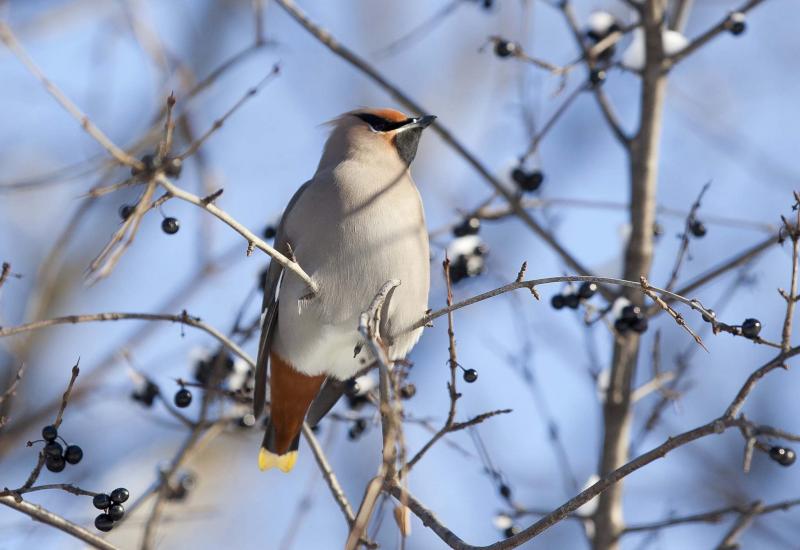
This Bohemian Waxwing found what he was looking for — a rich, natural source of black berries on a hawthorne tree at Assiniboine Park.
Darlene Stack
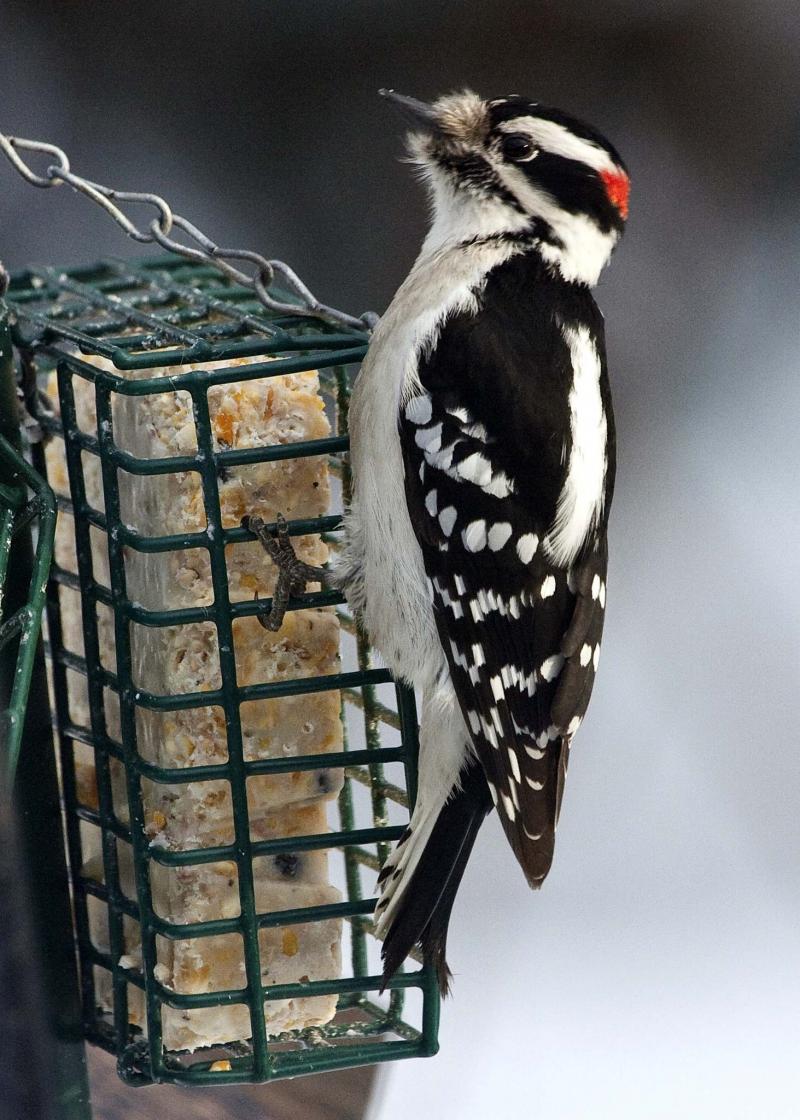
Tail prop suet feeders allow woodpeckers to balance their tail. Suet provides a boost of energy to birds in winter.
Ardythe McMaster
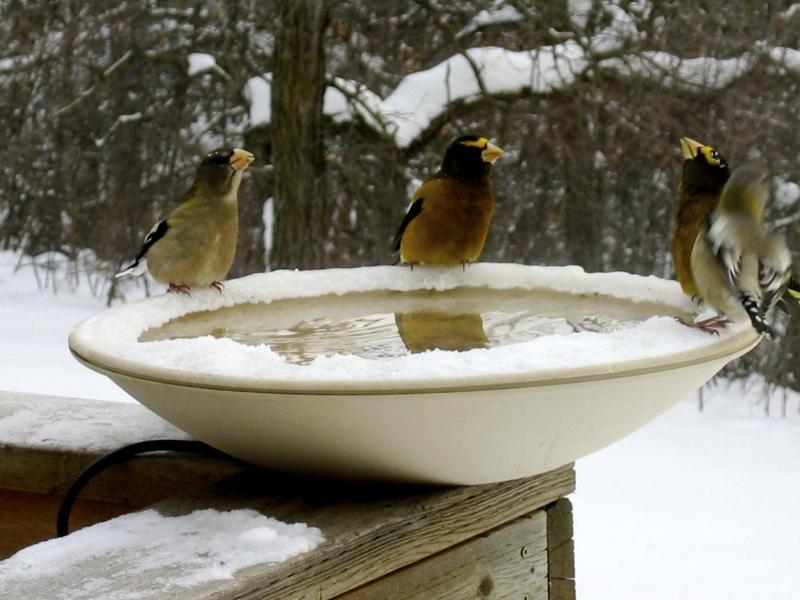
A delightful trio of Evening Grosbeaks enjoy the ease and luxury of a drink of water from this shallow, heated birdbath that has a built-in thermostatically-controlled heater.
Darlene Stack
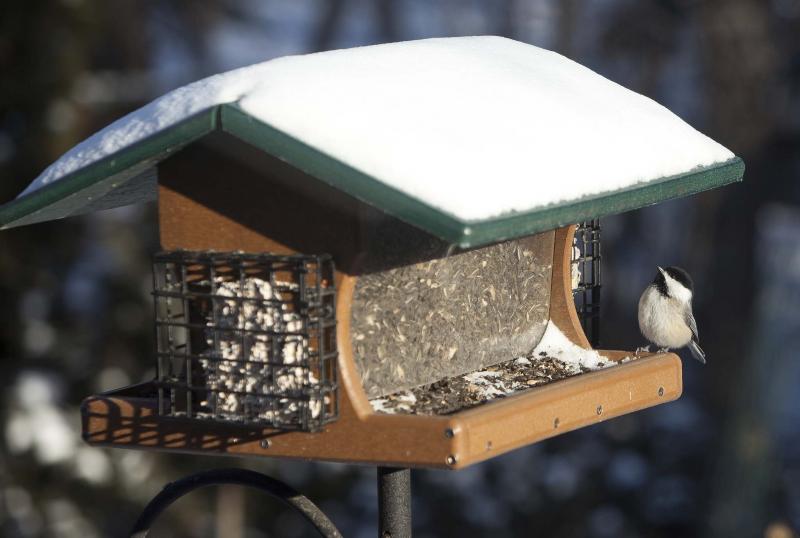
Small birds such as the Black-capped Chickadee like cylinder or tube feeders but will also frequent hopper-style feeders which attract a range of bird species.
A major new online resource, the Manitoba Breeding Bird Atlas, is one of the most comprehensive online bird atlases that exists today. It includes detailed descriptions of 312 species of birds in Manitoba, including their distribution and information about their numbers and habitat.
Co-ordinated by Bird Studies Canada, this large-scale project began in 2010 and is a work-in-progress. In Manitoba, the project is led by Dr. Christian Artuso. Legions of local volunteer birdwatchers (more than 700) have contributed their observations and field notes.
Rudolf Koes, a member of the Bird Atlas project’s steering committee, has been an avid birdwatcher since he was a child growing up in the Netherlands. A long-time resident of East Kildonan, Koes co-authored and illustrated The Birds of Manitoba, a 20-year endeavour published in 2003.
Koes expects that all of the illustrations, maps, descriptions and accounts of species will be published online sometime in 2018. A bilingual resource, Koes says that the atlas will also track changes in domestic bird populations and habitat and will be an important tool for conservation.
When I spoke by phone with Koes, he had just come back from a walk in his neighbourhood to observe what type of birds might be visiting. "If you have quite a few birds in your backyard and neighbourhood," Koes says, "it’s an indication that it is a fairly healthy environment."
Trees and shrubs with dried berries and dried seed heads on perennials or native grasses are a natural source of food for birds during winter. In a backyard which offers little or no habitat for birds, is it enough to have a bird feeder? Koes says that you may attract the occasional bird, but their occurrence will be minimal compared to a backyard with vegetation.
While birds prefer natural food sources, Koes says that if you are planning to feed the birds this winter, it’s important to keep your bird feeder stocked with seed on a regular basis. Quitting in midwinter because you are going on vacation puts some birds at risk. Bird species that don’t typically call Winnipeg or surrounding areas home might perish if they have come to rely on your feeder and suddenly discover that it is no longer being filled. Native birds such as chickadees and nuthatches will make use of the food in a feeder, but are not totally reliant on it as their food source.
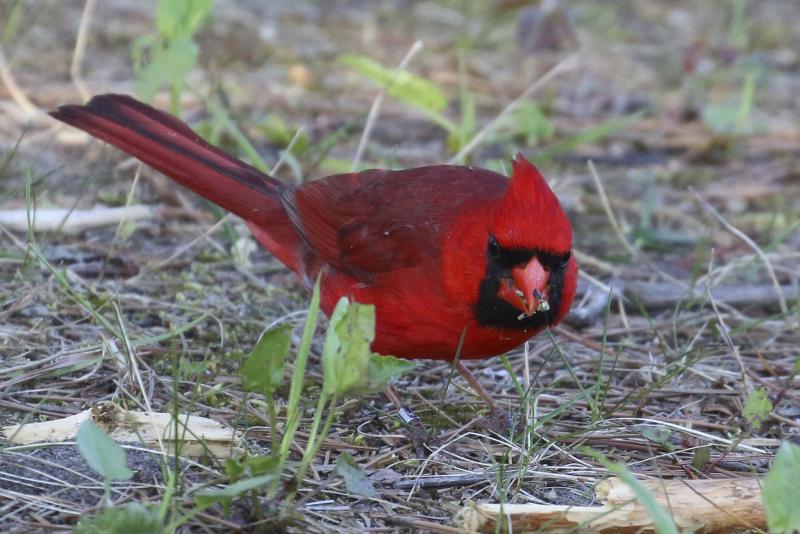
Residents living in the areas near Bergen Cutoff Bridge and Bunn’s Creek Centennial Park are treated to the occasional but exhilarating sight of the northern cardinal. A rare species in Manitoba, the northern cardinal has a vivid red bill, wings and tail as well as a prominent head crest. Present in the summer months, as well, these handsome visitors are likely attracted to the mature trees in these areas, as well as access to a water source.
Koes has been fortunate to have several cardinals visit his backyard over the years and speculates that with climate change and warmer winters, sightings of this species will become more common. Typically, however, cardinals remain in a particular area for a number of years before moving on to a new neighbourhood.
"It’s always the next new bird sighting that provides the greatest excitement," Koes says. "Just reacquainting yourself with common birds and watching them in their environment can reveal a behaviour that differs from their usual repertoire."
I can attest to that. This past summer, while watching bees looking for nectar on a stand of flowering plants in my garden, I saw a blue jay suddenly swoop in and snap up a bee in its mouth. A brief battle ensued, evidenced by the blue jay violently moving its head back and forth. Blue jays are omnivores so this type of behaviour is not entirely unusual, although I witnessed it for the first time.
Could you perhaps lure a cardinal or a Bohemian waxwing to your backyard with a special bird feeder or type of birdseed? Jennifer Gobeil operates Wild Birds Unlimited on Reenders Drive. She says that cardinals like a hopper-style feeder (shaped like a house) or a tray feeder which has a flat surface. You can build it, but it’s no guarantee they will come. Most birds do have distinct preferences, however, in both feeder types and food.
Match your food and your feeder to the types of birds you want to attract, Gobeil says. Larger birds such as blue jays and evening grosbeaks are attracted to hopper feeders, she says. "Cylinder or tube feeders which have small perches and easy to access food ports are ideal for smaller birds such as chickadees, nuthatches and finches."
Woodpeckers like to balance their tail against a tree trunk when they feed on insects. A tail prop suet feeder, Gobeil says, allows woodpeckers to feed comfortably.
Some commercial seed blends include cracked corn, wheat, oats, and milo (sorghum) but these are inexpensive ingredients used as filler by the manufacturer, Gobeil says. Birds quickly kick out the undesirable bits onto the ground. The resulting mess attracts mice. To attract a greater diversity of bird species and keep them coming back, choose a quality seed blend.
Nyger seed, a tiny black seed from the African yellow daisy Guizotia abyssinica, attracts a range of birds including pine siskins and common redpolls. You can’t go wrong with black oil sunflower seed. It has a soft shell that is easy to crack open and appeals to a large variety of birds. House sparrows and finches enjoy millet. Wire wreaths filled with peanuts in the shell are very popular with blue jays. Cardinals are said to be attracted to safflower seeds.
Suet (beef fat) provides birds with a boost of energy, appreciated on cold nights and is easily digested. Gobeil says that suet cakes must be rendered and refined to remove any impurities that cause spoilage.
Heated bird baths are growing in popularity, but they are not without some controversy, Gobeil says. They may seem an unnecessary indulgence, but they do provide visiting birds with a source of water that is meant for drinking, not bathing, as well as a delightful sight for homeowners. Designed to be shallow with a wide enough lip for birds to perch on, they provide just enough heat to keep the water from freezing.
Positioning feeders at different heights will attract a greater number of species to your yard, Gobeil says. To protect birds from window strikes, feeders should be placed less than 90 centimetres from a window or further than four to six metres from your house.
It’s important to keep bird feeders clean. Koes — who eschews bird feeders altogether, relying instead on the food provided by an abundance of native plants on his large urban property — recommends scrubbing your bird feeder thoroughly at least a couple of times a year. This helps to prevent diseases in birds, including conjunctivitis of the eyes which can result in blindness or even death.
Whether or not you set up a bird feeder this winter, take time to notice the birds in your surroundings. Birds provide a cheerful spark of life in the great frozen outdoors. Be curious about their habits. To learn more about the different species, visit birdatlas.mb.ca.
colleenizacharias@gmail.com