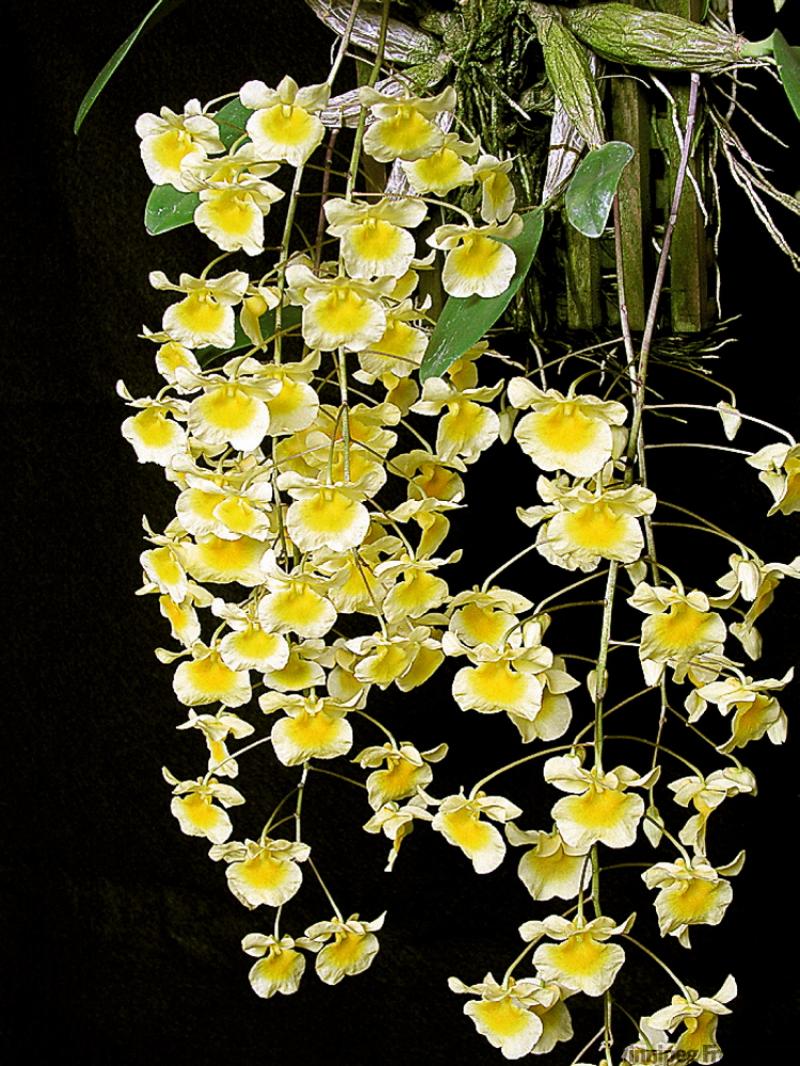
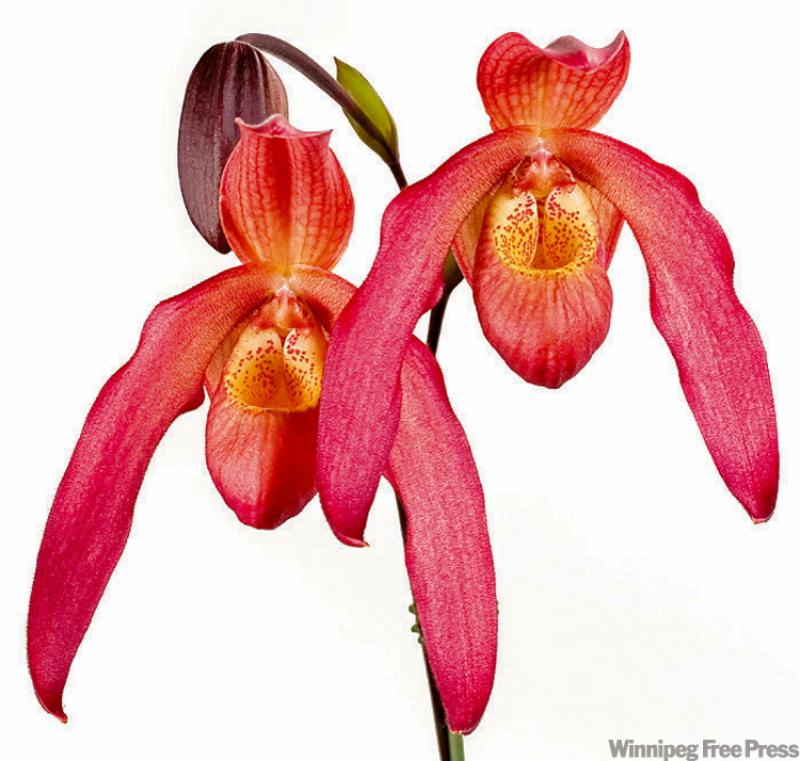
So beautiful and so exotic-looking. It's easy to assume that orchids are difficult to grow.
But orchid experts say they're surprisingly tough -- especially the phalaenopsis, a particularly hardy variety.
I would call those the king of the houseplants, says Lynne Copeland, past-president of the Orchid Society of Alberta (OSA). I don't think there is any other houseplant that you can grow that has as much to offer as those plants do. It's easy. Anyone can do it.
Copeland, who has been growing orchids for 11 years, currently maintains 250 plants in her Southern Alberta home of Innisfail. Once you've grown orchids, you never grow other houseplants again, she says. They're very, very addictive, and they're just so much more interesting and so much more rewarding, I think.
In search of the secret to growing fabulous orchids, we asked Copeland to share her top tips.
Choose the right orchid
I think the No. 1 thing is to choose a plant that's appropriate to your environment, and to choose one that's appropriate to your experience, too, says Copeland.
For most windowsill growers in Alberta, that means an orchid that's been bred for low humidity and low light levels. Many people are spellbound by spectacular blooms seen at shows, says Copeland, but if you don't do your research, you could very well end up with a plant that requires a rainforest climate you can't create at home.
If you try to grow something like that in your apartment, it's going to die, she warns.
It's very easy to forget that when you see all the beautiful types that are out there. Experienced growers do it all the time.
For the beginner green thumb, Copeland recommends the phalaenopsis. They come in just a terrific variety of sizes, and colours and flower forms.
Next, opt for an orchid that's got an identification tag. If you ever get to a point with the plant where you're doing really well with it and you're getting a little more involved in the hobby and you want to put it in a show, you can't get a ribbon or an award on an anonymous plant, Copeland warns.
It has to have an ID tag to have any kind of standing in the orchid world, otherwise, it's just a nameless plant and it's really not eligible for anything.
The orchid you buy should be in moist -- not soggy or bone-dry -- sphagnum moss or bark chips with roots that are firm and whitish green.
Gently lift the whole plant out of the pot and make sure you actually have healthy roots, Copeland advises.
Place your plant in an orchid-friendly area
Keep conditions temperate by placing your orchid away from cold drafts or hot-air furnaces and strong, direct sunlight.
What they like generally is bright, indirect light, says Copeland, so east or west windows usually work well. You don't need to be parking them in a south window and letting them really cook.
While orchids like humidity, it's not a requirement. If you have an appropriate spot near a kitchen sink or a bathroom, it helps.
Make sure to maintain orchid care
To keep your orchid happy, start a Weekly Weakly program: Use a weak fertilizer solution and feed at half-strength once a week. Once you've got that down, just be careful not to overwater, which Copeland says is often the biggest mistake newbies make.
Typically, plants should be watered once a week, if they're growing in moss, and two or three times a week, if they're growing in bark chips. Moss should be changed once a year before it rots.
To get your orchids blooming year after year, be sure to give your plant a temperature drop of about 5 C nightly for about three weeks in the fall.
If you're a typical homeowner in Alberta and you turn your thermostat down at night a few degrees, you're going to get that drop anyway, and that's all you're going to have to do, Copeland says. That's really what triggers flowering in those plants.
She guarantees you'll start seeing new flower spikes by January, and they'll be blooming by March. Put enough love into it, and you'll have an orchid that will love you back for decades.
I certainly know people in the society who have plants that they've been growing for 25 to 30 years, Copeland says.
And the nice thing about them is that, as they get older, they tend to get better. As it ages, it will put out more and more flower spikes, and a lot of those become ever-blooming.
-- Canwest News Service