Vivid colour schemes
FOR many gardeners, the fall to-do-list begins with planting bulbs and perennials for next year's blooms. This is an excellent time of year to plan vivid colour schemes for spring and summer displays. If you've admired your neighbour's glorious peonies, now is the time to plan for your own.
Ted Sobkowicz, a well-known plant enthusiast, recommends imaginative planting combinations of the lesser-known spuria iris, Siberian iris and specialty peonies.
Plant sales abound: check out the Friends of Gardens Manitoba plant sale today at the Canadian Mennonite University, or visit the Beausejour Daylily Gardens from 9 a.m. to 1 p.m. for a great selection.
The Manitoba Regional Lily Society will host its sale at the St. James Civic Centre on Sept. 24, in Brandon on Oct. 1 and in Dauphin on Oct. 8. Visit www.manitobalilies.ca for full details.
Also happening today and tomorrow is the Annual Bonsai Exhibit at the River Heights Lawn Bowling Club, 1360 Grosvenor Ave., a fascinating opportunity to see this ancient art form and perhaps discover a new hobby.
Next week's article, by Carla Hrycyna, co-owner of St. Mary's Nursery and Garden Centre, will feature cabbages and chrysanthemums -- perfect for colder fall temperatures.
Colleen.Zacharias@gardensmanitoba.com
With the arrival of September, it's almost time to put down your spade. But not quite yet -- there are some great plants to add to your perennial beds this fall before the snow comes.
Non-bearded irises, peonies, lilies, daylilies, other spring flowering bulbs and perennials, as well as shrubs and trees, can all be planted for enjoyment next year. I plan to begin with Siberian and spuria irises.
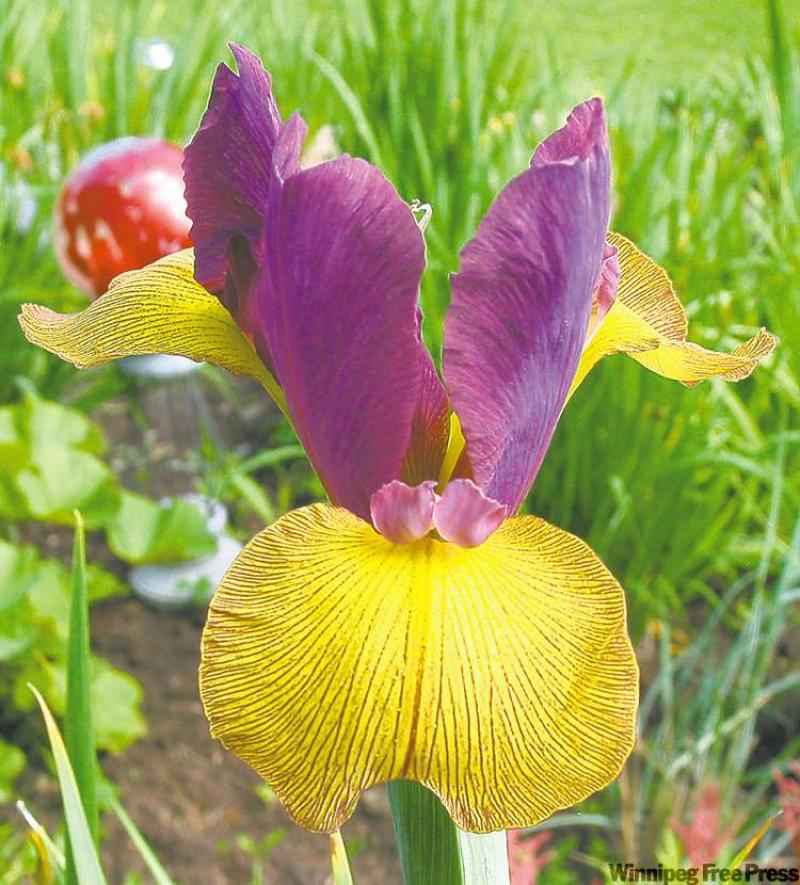
The non-bearded spuria irises are cousins of the bearded irises and the non-bearded Siberian irises. Spuria irises are quite tall, reaching a metre or more in height. Spuria are also the last irises to bloom in the garden, after the bearded type and Siberians. So, if you start with the mini and dwarf bearded types and end with the spuria irises, you can have an iris bloom season from mid-May until mid-July.
Would you believe some spuria irises come in chocolate brown? There are also chestnut and ruby browns, true blues, royal purples, rich yellows, winter white, a few courageous corals, and some pinkish tones. Usually, the flowers are in two or three distinct colours or the colour combination can give the appearance of bronze, cinnamon, orange or almost black. Generally, the colours are rich and intense, although light or pastel shades are available as well.
Spurias can grow in our clay soils, as they like a neutral to slightly alkaline soil. If given a deep, rich soil that remains moist for most of the season, spuria will multiply happily. They will tolerate a summer drought and also survive a wet period.
When spurias are planted or transplanted in fall, they need to have at least 21/2 centimetres of soil on top of their rhizomes. Some sources recommend five centimetres, and I've planted them about 31/2 centimetres deep. Just as roses are heavy feeders, so too are spuria. The Can-West Iris Society recommends fertilizing in the spring and again in the fall. Avoid watering in August to prevent mustard seed fungus or crown rot.
Spurias grow well in full to half-day sunlight, and they're quite hardy. I've grown them in my zone 2b/3a garden for the past six years. There are some spuria irises growing in the Beausejour Daylily Gardens, on the north side of Beausejour, Man.
Some Manitobans have spuria planted in private gardens outside Ninette, Ste. Anne and St. Andrews, as well as in Winnipeg. Check out the beautiful examples of spuria planted in front of the Assiniboine Park Conservatory and in the English Gardens at Assiniboine Park.
If you're thinking of ordering, there is a specialty iris nursery in Ontario (www.chapmaniris.com) and a number of iris nurseries in the U.S. sell spurias. In Winnipeg, the Friends of Gardens Manitoba are hosting their Fall Perennial Plant Sale today and will be selling both spuria iris plants and Siberian irises as well as other perennials. I'll be there and would be pleased to answer any of your questions.
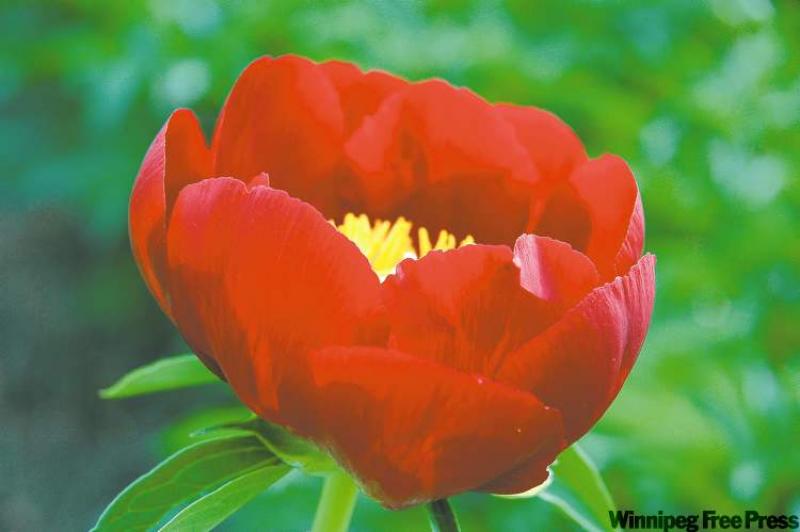
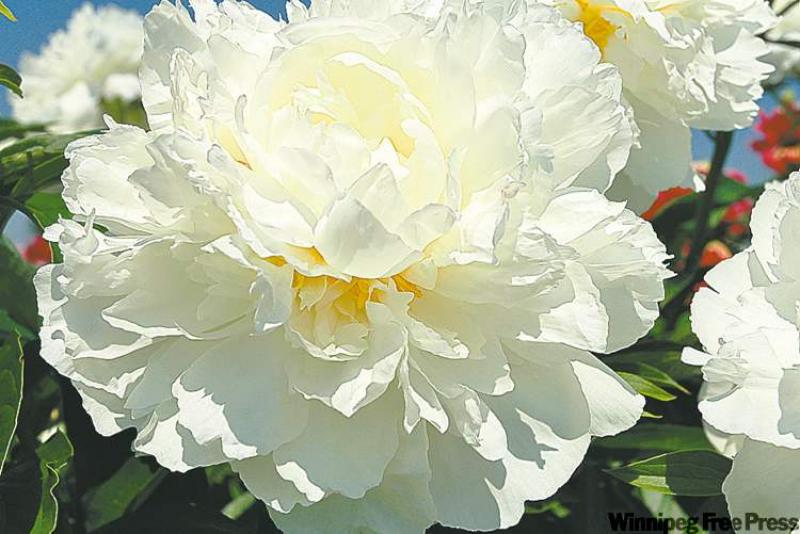
Peonies are another wonderful perennial, best planted in late September or in October. If you've decided to invite them into your garden, peonies are very long-lived perennials. Festiva maxima (introduced in 1851 in France) has red flecks on the centre petals of a full double white flower. It also has two or three side flower buds, extending its bloom season.
Many local garden centres sell the basic white, pink and red unnamed varieties, as well as some very well-known cultivars, such as Festiva maxima, Sarah Bernhardt and Karl Rosenfield. To obtain different cultivars, peony specialty nurseries are the place to shop. There are a couple in Ontario, a good one in B.C. and a few in Quebec.
At specialty nurseries, there are whites, creams, blush pinks, light, medium and dark pinks, corals, reds, rose, wine -- the choices are almost endless. There are no peonies with blue or orange blooms although, with hybridizing efforts, there are some light yellow herbaceous ones.
Peonies bloom as early as the middle of May and as late as the beginning of July, depending on the variety grown.
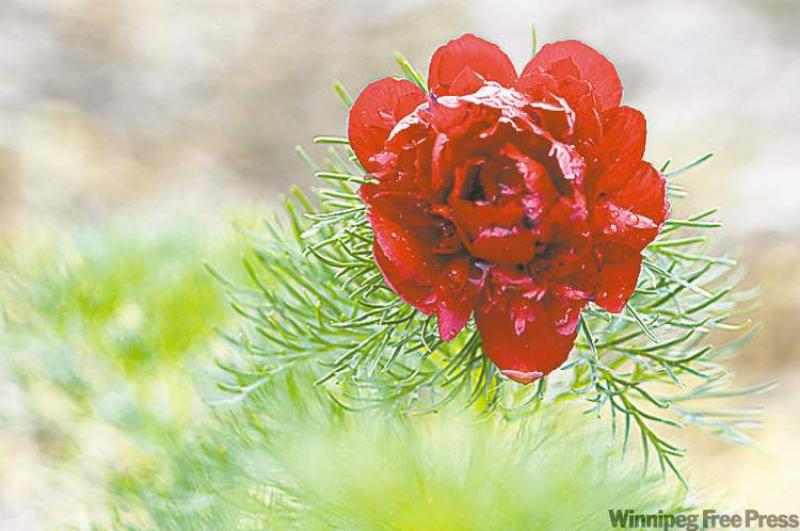
They come in flower forms of single (a single row of petals around a central mass of stamens, such as translucent), semi-double (two or three rows of petals surrounding the stamens, such as Illini warrior) and double, with no central stamens, as in the white fringed ivory and mother's choice or the dark red Paeonia tennufolia 'plena.'
Peonies need a cold sleep for next year's growth of red shoots, which turn green as spring progresses. The shoots, about 21/2 centimetres or so long, are planted about 21/2 to 31/2 centimetres below the surface of the soil. Any deeper than that and the plants may not bloom; too shallow and the shoots may not have enough insulation from the cold. Peonies are very easy to grow in almost any soil, needing good drainage and only light fertilizing.
With spuria and Siberian irises, peonies, lilies and daylilies -- as well as a few orders I couldn't resist -- I'll have plenty of planting to keep me busy before the snow flies.
Ted Sobkowicz is vice-president of the Manitoba Regional Lily Society and serves on the board of directors of the North American Lily Society. He's also a member of the Can-West Iris Society.