Verde Plant Design
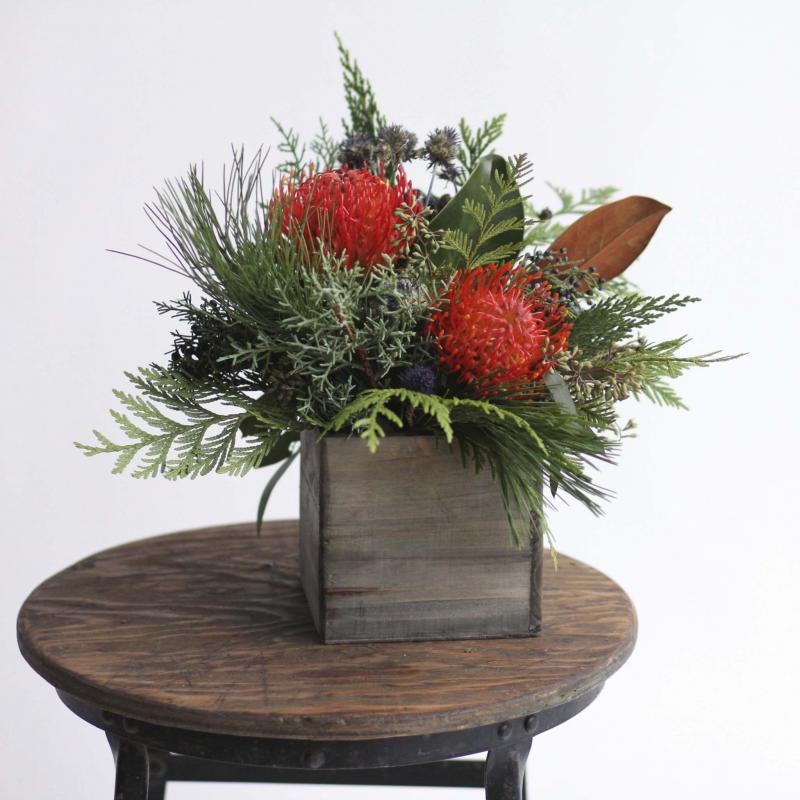
Pincushion Protea’s exotic blooms add pizzazz to your holiday table.
Verde Plant Design
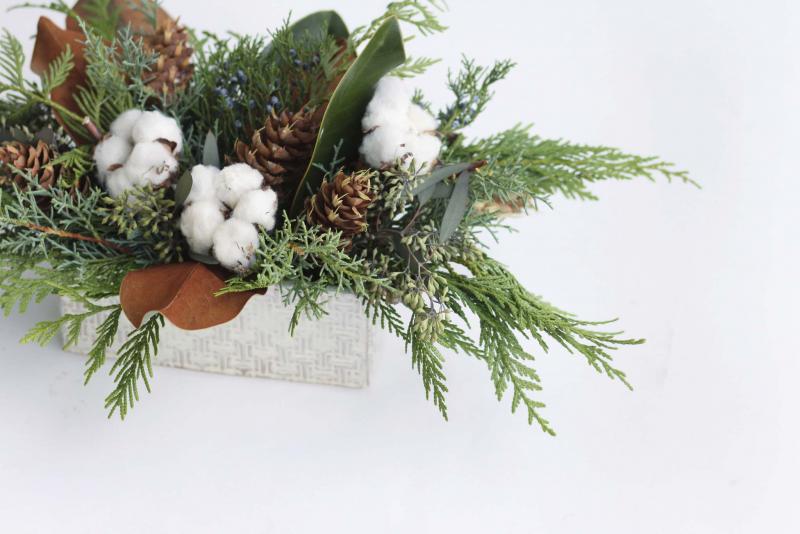
Cotton bolls add a natural and neutral accent to this low-profile arrangement.
Verde Plant Design
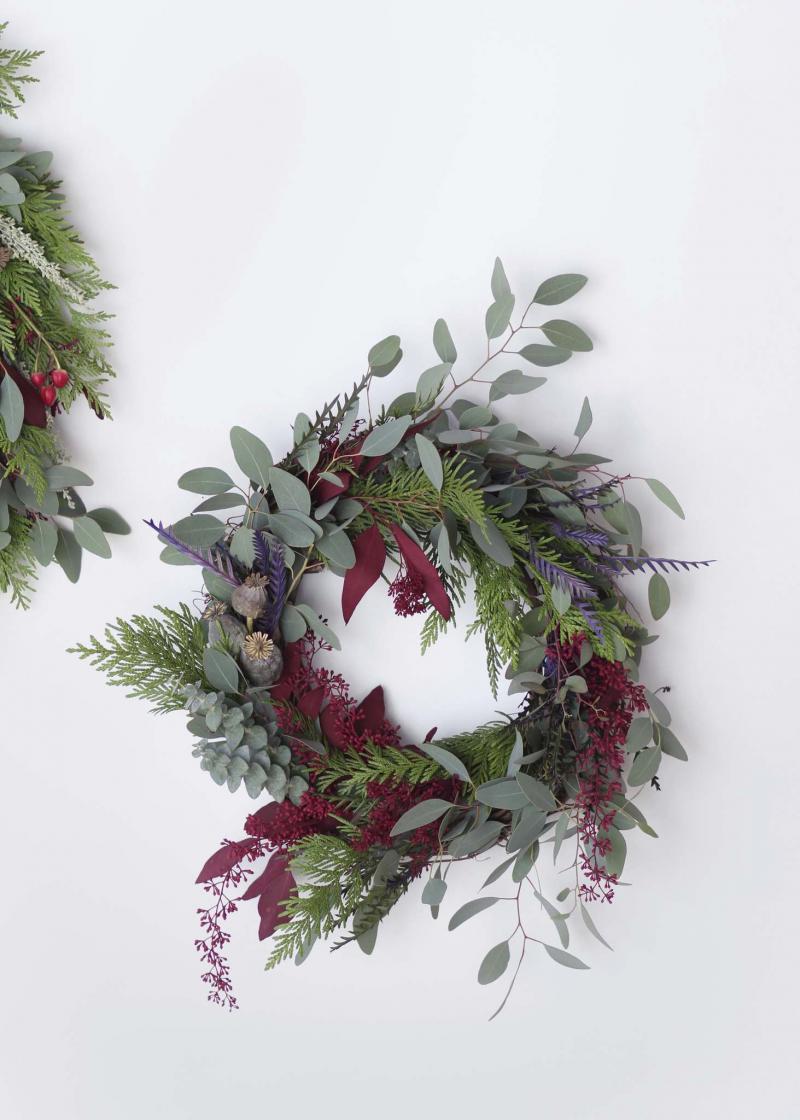
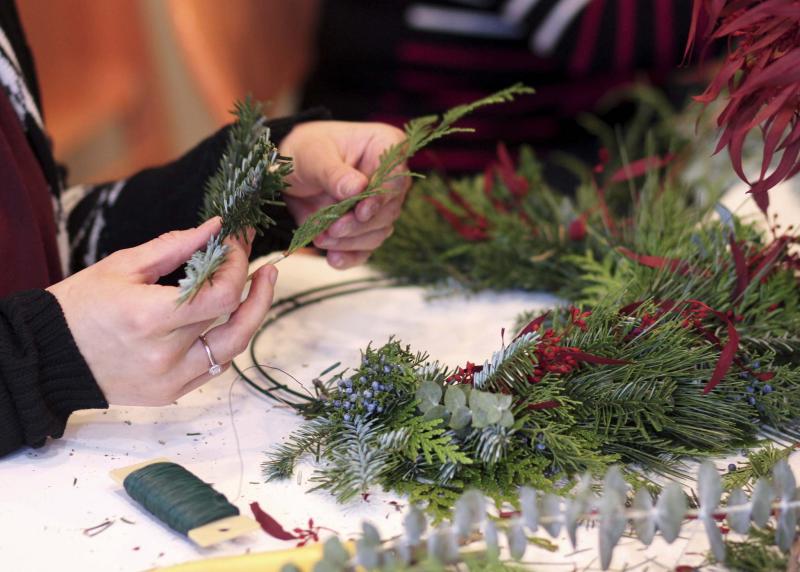
When making your own wreath, use a mix of greenery that has fragrance, texture and contrast. Red-seeded eucalyptus adds drama and whimsy to your design.
Verde Plant Design
Why not get creative and make your own winter wreath?
Milk, eggs, pasta, ready-made wreath. Planning to throw a few holiday essentials into your grocery cart the next time you go shopping?
Dominika Dratwa has another idea. She is setting the festive tone this season with a popular series of DIY winter wreath workshops. Dratwa is the owner of Verde Plant Design, a plant and flower shop at 419 Graham Ave., located a few steps from the Bay downtown.
Her shop’s lush and leafy interior is the setting for a wide range of monthly workshops where participants are encouraged to get their hands dirty and be creative. The evening wreath workshops have been selling out so quickly that Dratwa has added morning and afternoon sessions — these, too, have been snapped up.
Why are so many drawn to create their own holiday wreath when, admittedly, it is cheaper to just grab one from an oversized cardboard box at your neighbourhood big-box store?
Wreaths symbolize unity and abundance in the home, Dratwa says, adding they evoke a sense of welcoming. Doing it yourself makes it special. Doing it with others, she says, makes it extra special and boosts your mood.
"People really want to get creative for the holidays," Dratwa says. "They want to make something beautiful and welcoming for their guests and for themselves."
Space is limited at the workshops to encourage an intimate atmosphere. Often registrants include family members such as mothers and daughters and grandmothers as well as groups of friends or co-workers. Participants receive personal guidance and hot apple cider.
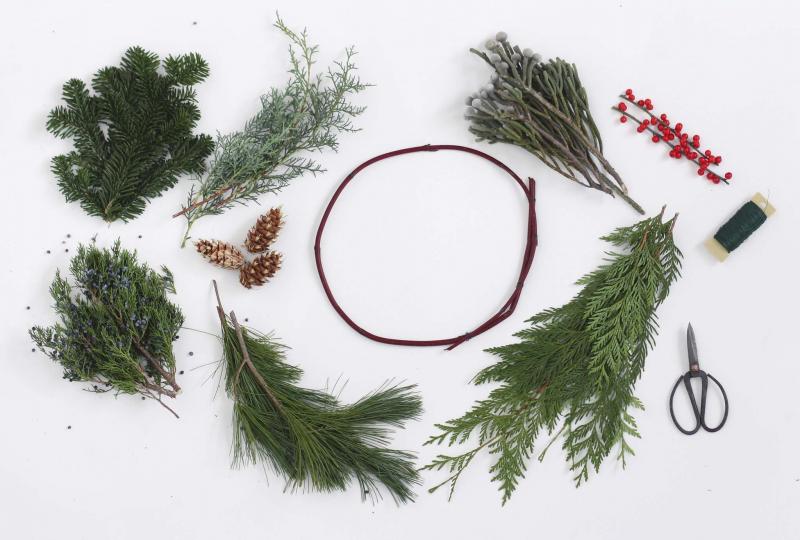
A DIY workshop is an opportunity, she says, to make something that will last throughout the holiday season and even into the New Year. It’s not always easy to find fresh holiday greenery, says Dratwa, who also offers DIY kits. These come with a bundle of fresh greenery, a wreath base, wire paddle and DIY instructions.
Dratwa focuses on combinations of materials that offer fragrance, texture and contrast.
"I like the arrangement of greens to look natural and sort of wild — the way they might look in nature," she says. By using a variety of greens and berries, the final look will be satisfying and more interesting.
Silver fir is a favourite choice for its fragrance and long-lasting performance. Its flattened needle-like leaves are glossy dark-green on top and silvery-green on the bottom. Flip it to add a nice contrast, says Dratwa, who combines silver fir with the distinctive long needles and soft texture of fresh-cut white pine tips.
Blueberry cedar is another popular choice for its clusters of dusty blue berries. Although commonly called cedar, this is not a true cedar but rather a juniper with its typically flattened, scale-like bright green, fragrant leaves that add an airy texture to wreaths and floral arrangements.
"We also use some different varieties of eucalyptus," Dratwa says. Minty-scented Baby Blue eucalyptus has small, velvety soft, bluish grey leaves in dense, tight whorls along its grey stems. Red-seeded eucalyptus adds a whimsical dimension, with its showy, red-tinted leaves and flower-like seed pods.
Magnolia leaves have a classic appeal. Choose fresh leaves that are flawless, not split or cracked, for the most elegant design. Emphasize either the glossy, deep olive green side in your design or the suede-like cinnamon tones on the reverse side. Over time, the leaves and stems dry and can be used again so long as they are stored carefully. With exposure to freezing temperatures, the leaves become brittle.
When decorating with fresh greenery, condition and rehydrate stems and tips by soaking them in water. Dratwa uses floral snips or sharp, clean scissors to cut branches into smaller sections when making a wreath. Whether your wreath base is metal, grapevine or shaped by using red twig dogwood, she suggests using enough wire to securely attach bundles of greens to the base, layering one bundle on top of the other.
Pine cones add depth and texture to wreaths as well as another dimension of colour. When adding pine cones, Dratwa recommends paying attention to the inside circle of your wreath. "Keep them going along the same direction as the general movement of the wreath," she says.
Brilliant red Ilex verticillata berries are fragile and withstand only gentle handling or they fall off readily from their stems. Place the stems in your wreath without touching the berries so that they dry nicely, Dratwa advises.
The red colour of the berries will deepen as they shrivel somewhat and take on the appearance of a small, dried cranberry. For the best colour, Dratwa says, allow fresh-cut stems of Ilex berries to air-dry at room temperature before putting them outdoors.
Dratwa likes to play with unique, decorative accents such as grevillea, a type of greenery that has wispy, fern-like foliage. She might try dried poppy pods instead of pine cones. When creating a wreath at home, Dratwa encourages foraging in the backyard for evergreen boughs and pine cones. Stems of red dogwood are excellent for making a wreath base. Dratwa shapes the branches into a circle and secures them with a wire.
Where will you display your finished wreath? If it is for indoor use, then at best the shelf life of a fresh wreath made with greenery will be a week to 10 days. Extend the life of your wreath by storing it in a cool room or in your garage until you are ready to display it indoors. Mist greenery daily to keep it hydrated.
To seal in moisture so that greenery holds its needles, Dratwa uses an anti-transpirant or finishing spray. Wilt-Pruf Plant Protector is a product that is readily available at retail outlets. Anti-transpirant sprays should not be used on juniper berries — follow the directions on the label.
As long as the temperature outside remains below freezing, your outdoor wreath can last until February.
For seasonal table arrangements, Dratwa looks beyond the poinsettia — indeed, you won’t find this traditional favourite at her shop. Dratwa prefers the Pincushion Protea with its multitudes of colourful, outward-facing orange-red pistils. In one arrangement, Dratwa has combined this decidedly exotic flower with a mix of greenery, berries and magnolia leaves.
Available in a range of forms (King Protea is perhaps the best known), Protea is a long-lived cut flower. It will retain its freshness for about two weeks if you add fresh water regularly. Protea makes an excellent dried flower, as well, Dratwa says.
Cotton bolls are another important texture trend for the holidays. Inspired in part by their enthusiastic use by Joanna Gaines, co-host of HGTV’s Fixer Upper, cotton bolls are a long-lasting, neutral accent in wreaths and table arrangements. By cutting down their stems, cotton bolls are a perfect accent in a short arrangement for the dinner table. In one example with a rustic feel, Dratwa has combined cotton bolls with fresh greens, pine cones and magnolia leaves in a low, whitewashed wooden box.
"I like to think my indoor arrangements look magical, like something out of a fairy tale," Dratwa says.
This year, plan to create something fresh and exciting. Add some pizzazz to your holiday decor and welcome your guests with your own personal holiday magic.
colleenizacharias@gmail.com