
1. The sunroom (also called a solarium or conservatory), is a glassed-in living space typically attached to the house and accessible from indoors. It is designed to function as an additional living area during mild weather but may be too hot or cold in summer or winter months. Alternatives to sunrooms: Four-season room, attached greenhouse, screen room or porch.
2. A good sunroom company will educate you about the process they will follow in building your sunroom. This begins with a careful measure and site inspection by the company's technical staff to check for concerns that might have an impact on the installation. Your sunroom company should prepare the engineering documents and permit applications and submit them to the local building department, and arrange for the necessary inspections during the installation process.
3. In choosing how large a sunroom should be, size is limited only by the budget and the imagination of the homeowner. A sunroom can be virtually any size, from the smallest and most modest to the largest, most extravagant imaginable. Most sunrooms, however, are designed to be average room size, with many homeowners choosing 15-to-20-foot sunroom additions.
4. Alternative to hiring a contractor: Some people choose to purchase a sunroom kit. Quality is one of the major factors to consider, but your budget needs equal attention. Thus, to build a sunroom, you need to strike the perfect balance between budget and personal requirements. With the DIY kit, you have full reign to build the sunroom according to the style and design you prefer best. Moreover, doing it by yourself attaches you more closely to the sunroom you have built.
5. Before you make your DIY sunroom kits purchase, ask specifically about: the foundation material, the wall type, the doors and windows, the roofs, nuts and bolts, ball bearing wheels and panels. Pay special attention to the flooring, insulation, roof system and wall material. Make sure that all materials meet your standards. Tip: Selecting the right kit is essential to the sunroom of your dreams. Make sure that the size fits in all the furniture that you plan to place inside. The size of the sunroom kits should be such that it complements the other rooms of the house. It should not look like an extra part of your house protruding outside; it should appear as an integral part of the room beside which it is placed. A building permit is required for any sunroom installation.
6. There are about five kinds of sunrooms, and what differentiates them is the type of roof that they have.
The 'average' sunroom consists of same-sized glass windows all around, and a flat roof, usually of some opaque material so that the sun is not actually visible through the roof.
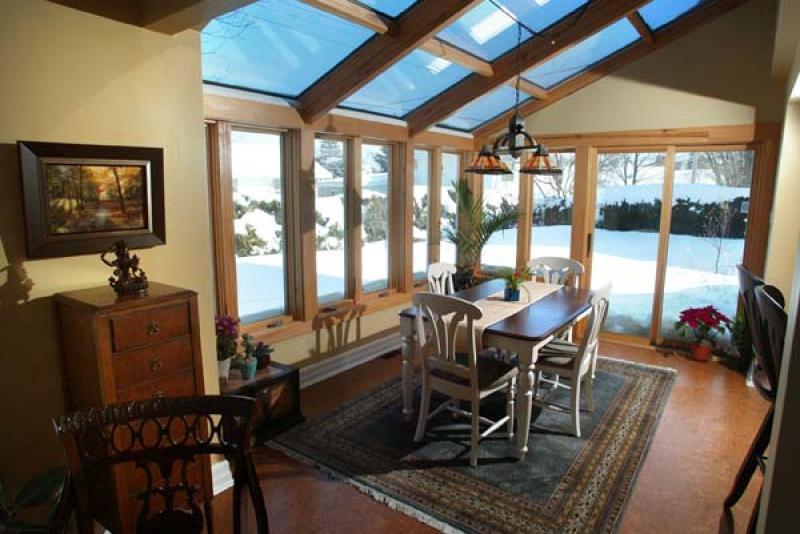
The 'cathedral' sunroom includes a vaulted ceiling in the design. This makes the room appear very large, and allows for design features like front trapezoid transoms to enhance the look of the room from both inside and out. A vaulted ceiling also helps prevent the buildup of rain or snow.
The 'split-level' sunroom, or California, has a staggered roof. One half of it slopes upward, the other half slopes up to meet it at not quite as sharp an angle, glass panels bridge the distance between the two. This allows additional light to enter the sunroom and gives the sunroom a striking look.
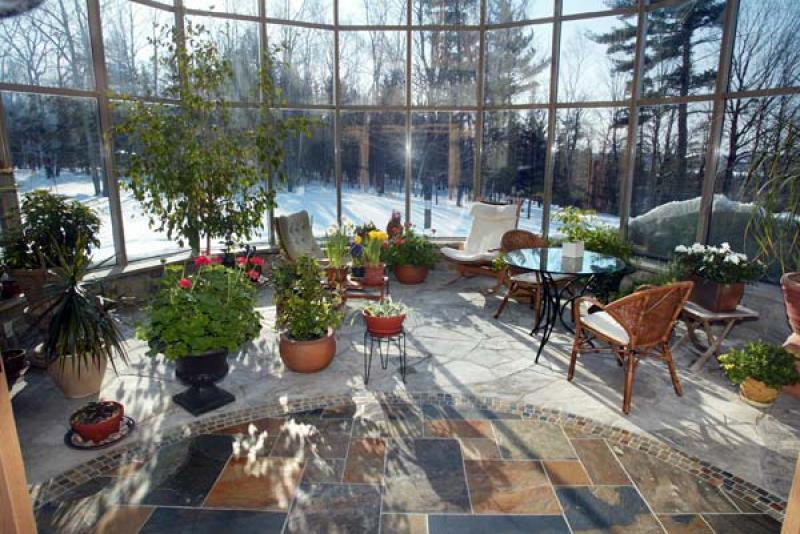
The 'solarium' is a room in which both the walls and ceiling are made of glass, and the roof has a curved-glass eave -- making stargazing a delight, and sunlight enjoyable during the day.
The 'conservatory' is a room with an old-fashioned, ornate look to its frame, designed in an Edwardian or Victorian manner, with a glass ceiling.
7. To deal with a sunroom that has a tendency to become too warm, install operative skylights to act as heat dumps.
8. To enjoy your sunroom no matter how cold it gets, install a small gas wall heater or radiant floor heating to keep you warm and toasty.
9. The highest-quality windows are of course the most expensive, but they will pay for themselves over time in lowering the heating and cooling costs of the sunroom. In addition to the window glazing, the window frames are very important. Poorly fitted window frames will allow cold air or rain to pass through, which would be disappointing after making such a large investment.
10. If you have a sunroom that is entirely windowed, you may consider placing a portable hammock in the room. This can be the most relaxing addition to the room and it will give the sunroom a nice laid-back feel to it, especially if you have a tropical theme throughout.
11. If you wish to use the room for most of the year, i.e., office or living room, it should be constructed using insulated windows. Low-emissivity (low-e) coatings and double-pane construction maximize a sunroom's insulation and make it more economical to heat in winter and cool in summer. Check the rating on the glass you select to ensure that it provides some ultraviolet radiation protection.
A sunroom is generally considered a non-permanent addition. This means that it may not count as additional floor space on your next property tax assessment. You can also use more glass than is allowed in building codes governing standard additions (check with your municipal government).
Note: One layer of glass is referred to as single glazing. Single-glazed glass does not have sufficient insulating properties and therefore is not often recommended for four-season sunrooms. Double-glazed (double layers) glass comprises two layers of glass that have either air or gas between the two panes. This prevents air from moving between the layers and better insulates the room in winter and reduces condensation.
If you plan to use the room only in the warmer months, you may be able to reduce building costs by using standard windows and less insulation in the walls and floors. However, building this type of seasonal room can be limiting if you decide later that you could use extra space year-round. A well-insulated room is a greater selling feature.
12. Keep in mind that the furniture you choose should be sun-proof and heatproof. Sun and heat can damage the best of fabrics and furniture. Select airy wicker or rattan, for its summery look; these materials are not prone to sun or heat damage. Presently you can purchase bookshelves and coffee tables that come in wicker or rattan, to complete your look.
Another choice is iron wrought furniture. You can select fancy shapes that resemble the old-fashioned ice cream parlour chairs; your guests will appreciate the charming touch.
13. When choosing pillows, cushions and throw rugs, read the label. Each item should specifically mention that the material is UV-resistant. Tip: Don't overlook the framed pictures you might place in the window-less portions of your sunroom. Keep them out of the sun's direct light.
14. Fill your sunroom with real plants, beautiful flowering pots, lovely greens and fragrant herbs. Or make a more unusual choice such as: orange and lemon trees. They look healthy and have the added advantage of growing fruit. Green growing success will depend on which direction the sunroom is facing, plus ventilation and sunlight.
15. In terms of walls, because walls are mainly made of windows, you won't have much wall decorating to tackle. And if you do opt for window treatments, select a design that frames windows rather than covers them. You don't want to block any of the sunshine!
Solutions, is compiled from various sources: allsunrooms.com, ezinearticles.com, homeimprovement.painterclick.com, sunroomkitsreview.com, sutton.com, greenhousesandgazebos.com, doityourself.com, betterlivingsunrooms.com, sunroomcenter.com, homeimprovementcorner.com, bhg.com, gidesigns.net, porchsunroomideas.com. Similar information may be found elsewhere.
Solutions sleuth Reena Nerbas is a home economist and speaks professionally on the topic of household challenges; she is also the author of two national bestsellers, Household Solutions 1 with Substitutions and Household Solutions 2 with Kitchen Secrets. She can be heard on radio and television programs across Canada.