BORIS MINKEVICH / WINNIPEG FREE PRESS FILES
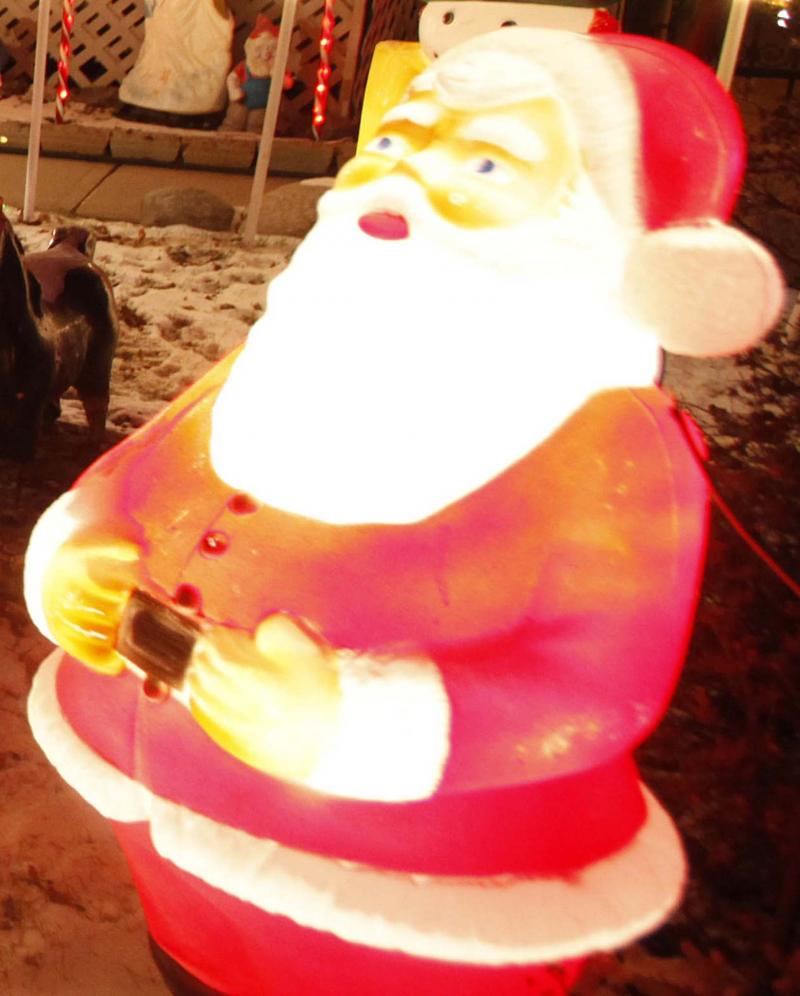
It's not fun to trek out when it's 20 below to turn off your giant inflatable Santa, so buy a timer and let it do it for you.
The holidays are expensive, and I’m not talking about buying gifts.
We decorated our house over the weekend, and as I plugged in a tangle of extension cords, it made me wonder how much decking the halls was actually going to cost us.
Holiday parties, family dinners and indoor/outdoor light displays drive up energy bills this month.
EnergyStar.gov and Florida Power and Light (FPL) have illuminating tips to help us save more money as we make everything merry and bright, if not this year, then next.
LED lights: If you haven’t made the switch to these energy-efficient lights because of the higher cost, you’re paying more in the long run with higher electric bills. The power it takes to operate just one 7-watt incandescent bulb could power two 24-foot strings of LED lights, according to EnergyStar.gov. It costs US$10 to light a six-foot tree for 12 hours a day for 40 days with incandescent lights. It costs 27 cents to use LEDs, according to the Department of Energy. Energy Star-rated LED lights last up to 10 times longer and come with three-year warranties.
The best time to buy them is at after-Christmas-sales when stores deeply discount holiday goods. Hit up big-box retailers or home-improvement stores online or early on Dec. 26.
While you’re in the spirit, use LED bulbs in lamps and fixtures. You’ll replace them less often and save more each month.
Inflatables: I’ve got an eight-foot (2.4-metre) Snowman (very appropriate for South Florida) and a six-foot (1.8-metre) Santa Claus that I set up in the front and back yards. These popular decorations can add $2 to $9 a month to power bills, according to FPL. I’ve been known to leave them running all night, which brings me to the next tip.
Timers: I’ve been too lazy to go out and unplug outdoor lights, leaving our holiday extravaganza blazing all night while everyone’s asleep. I invested in timers (also purchased at last year’s holiday clearance sales) so lights go on at 6 p.m. and automatically switch off at midnight. Whatever cash is spent on timers is recouped in power savings.
Electronics and appliances: Always buy Energy Star certified products and scrutinize information cards to see how much the products will cost in annual energy consumption. Energy Star certified televisions are 25 per cent more efficient than older models. Also, laptops require 50 to 80 per cent less energy than desktop computers.
Cooking: Holiday feasts mean ovens get a workout. FPL says that ceramic or glass pans heat faster than metal, which means you can lower the oven 25 degrees during the same cooking time.
Energy Star products keep billions of pounds of greenhouse gas emissions out of the air we breathe. Use these tips and resolve to save even more on energy bills in 2017 by taking FLP’s personalized, online home energy survey at SunSentinel.com/FPL. Your wallet — and planet — will thank you.
— Sun Sentinel