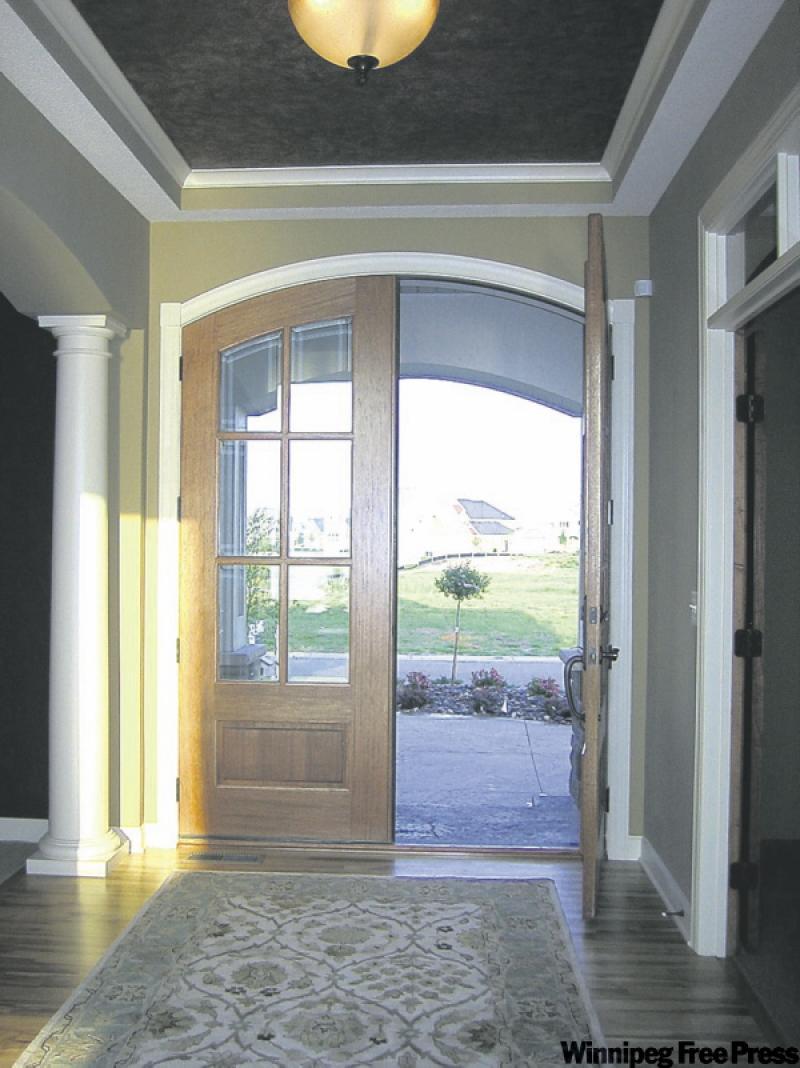
QUESTION -- I read your column in the Winnipeg Free Press and need some help. The door to our master bathroom has cracks in it (I suppose from the moisture) and I would like to know what I have to do to smooth out the cracks (sanding?) prior to applying a mahogany stain. As all woodwork is mahogany, my thought of painting would be out of the question (labour-intensive); therefore, applying a mahogany stain would be my only solution.
My kitchen door has your normal greasy grit that builds up over time (the house is 33 years old) and I have a bad habit of scratching at this with my fingernails when on the telephone. I haven't found anything to wash this grease off other than Mr. Clean; various other household cleaners -- nothing removes the buildup. Do you have any good ideas that would make my job easier? Your suggestions would be much appreciated. Joanne, Winnipeg
ANSWER -- In order to fix the scratches on the master bathroom door, you will want to start by applying wood filler. There are a lot of wood fillers on the market. The filler should not shrink as it dries; should be easy to sand, but not too easy (fillers that are too soft and sand very easily tend to leave a depression in the surface); and should dry fairly quickly. The expert in your local hardware store will be able to assist you in choosing the best filler to meet your needs.
Once the filler is dry, sand all the wood to make the surface uniform. Make sure to sand all the filler off without leaving any traces around the filled area; any excess filler will raise the surface and create a high spot in the finish that will show up later. With all the obvious surface defects filled, everything sanded, and the edges broken, it's time for either stain or primer. Although priming and painting may take extra time, it is an option and choosing a great-quality primer is indispensable for a quality finished product. It performs a variety of functions that the paint itself either doesn't do, or the primer does better. Primer is the key component for achieving the flat, smooth base that will give you a quality finish.
To clean grease on the kitchen door, use one of the following solutions: Dawn dish soap combined with either baking soda or white vinegar, or TSP (trisodium phosphate), which you can find in the paint department of your local hardware store. Use it according to the instructions on the label. One other option is to clean the wood with Murphy's Oil but you would not want to use this on your door more than once or twice a year as it may dull the finish over time.
QUESTION -- I read your column every week. We have a vinyl (looks like leather) storage bench in our bedroom. The inside storage is also lined with vinyl. It is now two years old and still stinks inside! We have drilled three holes in the bottom to allow ventilation, but if I put towels or blankets in it, they come out smelling of vinyl. I have tried placing lavender in it, but it does not help. Do you have any suggestions? I am sure other people have run into this problem as they are quite popular for storage at the end of beds. Would damp newspaper to absorb the smell work? Thanks for your help.
ANSWER -- Vinyl odour results from additives and stabilizers that give the vinyl its particular performance attributes, as well as the printing inks. Since the smell is as strong as it was two years ago, the problem does sound like it is definitely in the general makeup of the textile. Do not lay damp newspaper inside the chest; doing so will leave you with a transferred ink stain on the vinyl. Your best bet is to overpower the chemical smell with another smell. Wipe the vinyl down with an essential oil such as tea tree oil or peppermint oil. Next store a cotton ball soaked in an essential oil inside the bench. Cinnamon is one of the longest-lasting fragrances and therefore may be your best bet (provided that you like the smell of cinnamon). If you are storing fabrics inside the chest you may want to put the essential oil-soaked cotton ball inside of a knee-high nylon so that no oil touches your fabrics. Wear gloves when using essential oils because some of them do irritate the skin and eyes if close contact is made. Or create a "coffee in a sock" air freshener. Drop fresh unused coffee grounds into a clean sock. Tie the sock with a twist tie and leave in chest.
QUESTION -- My son went to Mexico. He bought a pair of white pants; the tag says: 60 per cent LINO 40 per cent ALGODON. The problem is that he walked into the ocean with some Mexican currency in his pocket and now there is a stain. How do I wash them? Margaret, Winnipeg
ANSWER -- OK, just to clarify, "Algodon" is Spanish for cotton and "Lino" is Spanish for linen. The colour of the pants is white, therefore your best bet it to pour three per cent hydrogen peroxide onto the stain. Next sprinkle cream of tartar over the hydrogen peroxide (test on an inconspicuous area first). Leave for two or three hours and wash according to directions. If the label instructions are unclear, either hand wash the pants and hang to dry or machine wash in cool water and hang to dry.
READER FEEDBACK -- I recently wrote to you about the best way to clean an antler-handled carving fork. Just to let you know that your advice regarding three per cent hydrogen peroxide is the method I chose. Nice bit of foaming went on at first and then after the wipe dry, the smell was gone! Yes! The bone is now quite beautifully light caramel in colour. I do not have any linseed oil but do have some lovely furniture oil I use on my old antique desk which I plan to use.
As a side note, I use toothpaste for cleaning all sorts of items including my watch band, various ink spots and grease spots on blouses. I also use the white paste for filling tiny nail holes on light-coloured walls when its time to make a change.
Thanks so much for your speedy response to my question. I greatly enjoy your articles each weekend in the Winnipeg Free Press; it is great to have suggestions for home solutions that release us from using harsh chemicals. You are certainly doing your part in restoring a balance in our environment. I am going to buy both your books to give to my daughter who has only recently set up her own apartment and is, like a lot of her generation, concerned with the environment. To have some small part in making this ol' world better is very empowering. Thanks for your efforts. Yours truly, Kerrie
Reena Nerbas is the author of the national best sellers, Household Solutions 1 with Substitutions, Household Solutions 2 with Kitchen Secrets and the soon-to-be released book Household Solutions 3 the Green Edition available online and in stores across Canada.