Question: As a retired professional civil engineer in Manitoba, I find your articles informative and interesting, and read your recently published one on July 14.
Further to the above-mentioned article, I would have wished to see as an aside, a discussion regarding the problems created by radon in homes. As you know, this is a problem in our homes that most people don’t know exists and that would especially be a problem in a house with a porous structural wood floor. There was no mention of an existing air/vapour barrier under the floor or negative crawl space pressurization.
— Bob Wiebe
Answer: Radon intrusion into our homes is indeed a serious health concern, and can be more prevalent from a dirt crawl space than a typical basement with a concrete floor. You have raised a good point, and measures should be taken to minimize this radioactive soil gas leaking into the home from below the structural wood floor, which may be easier to do than in a traditional home with a concrete basement slab.
I appreciate your feedback on my previous week’s column and welcome the chance to discuss radon in relation to homes. I did not address this issue because the concern was about movement in the subfloor, not that subject. Also, I have written several times about this topic, but this is an opportune time to do an update relating to the issue in homes of this type. Most of my other discussions have likely been focused on more typical homes with concrete floor slabs.
Radon is a colourless, odourless gas that is naturally occurring from minerals in our soil, primarily uranium, which has been found to cause cancer. In the natural environment, this gas will seep into the air, become extremely diluted and will not cause any issues or concerns. Unfortunately, when we build our homes below grade, this soil gas can seep into our basements and homes. This most often occurs from what is termed the "sub-slab soil," because most of our homes have traditionally been built with concrete basement floors or slabs on grade. To combat this issue, all homes built in the past several decades have required a six-millimetre polyethylene air/vapour barrier installed prior to pouring the concrete slab, primarily to prevent soil gas intrusion through the porous concrete.
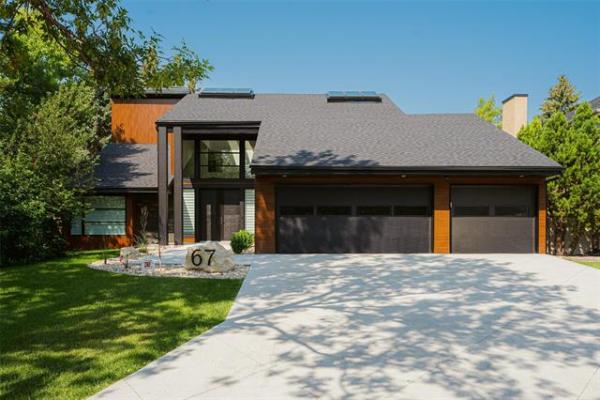
Because the previously mentioned home with the structural wood floor above a crawl space has exposed soil rather than concrete, the risk of radon entry may be higher. Fortunately, all of those types of homes also require a six-millimetre layer of poly underneath the layer of pea gravel or river stone typically installed over the soil. The problem with a crawl space is there is much more chance of this protective membrane becoming damaged or cut than with a concrete slab. During construction, electricians, HVAC technicians and particularly plumbers will need to walk or crawl over this area to complete their work on the home. They will invariably poke some holes through the poly, leaving a potential pathway for radon gas intrusion into the crawl space, and ultimately the home. I have even seen numerous of these crawl spaces where the poly has been meticulously sealed at the sump pit and around concrete piers, while having gaping holes cut through where the plumbing drains exit to the city sewer connection.
So, any crawl space of this type, or numerous other homes with partial basements, should be inspected to ensure two main items are addressed. There should be a continuous six-millimetre poly layer, sealed at the perimeter of the crawl space to the same membrane over the foundation or grade beam insulation. It should also be caulked or taped to any protrusions through the soil, such as sump pits, plumbing drains, support columns or footings. If this is present and in good condition, the next area of concern is the sump. Because weeping tile pipes terminate in the sump, or sometimes in a catch basin that drains to the sewer, this must have a well-sealed lid. The weeping tiles travel through the soil outside the home and underneath, and can be a great conduit for radon to migrate into the home. So, ensuring the sump lid has a gasket, is bolted down, and has stoppers or other seals around the electrical wires and discharge pipe sticking through, is imperative. If any of these items are not present, or damaged, simple repairs will be required to prevent soil gas issues.
After any repairs are made with regard to air-sealing these areas in any crawl spaces, the home can be easily tested for the presence of radon gas. This test should be done during the heating season, when all the windows on the home are closed. Health Canada recommends long-term testing, with a minimum of three months, to ensure an accurate sample. Passive radon detectors can be placed in the basement, ensuring to record the date of opening and sealing, then mailed to a laboratory for analysis. The results from the lab will be an average of the daily levels recorded through the test period, which can be compared with approved levels from Health Canada. If the level exceeds these guidelines by a significant amount, further remediation may be required for the crawl space. This may include further air-sealing measures or installation of a radon remediation system. That system is normally a series of pipes installed under the basement floor slab, or in the crawl space soil, connected to a low-pressure fan, which extracts air and blows it outside the home. Any radon in this air will be harmlessly passed outside the home and diluted.
Radon gas intrusion may be more prevalent from the exposed soil in a crawl space, but that often depends on how well it is sealed. The benefit of the structural floor construction method is that it may be easier to reseal or install a radon remediation system if needed, compared to a traditional home with concrete floor slab.
Ari Marantz is the owner of Trained Eye Home Inspection Ltd. and the past president of the Canadian Association of Home & Property Inspectors — Manitoba (cahpi.mb.ca). Questions can be emailed to the address below. Ari can be reached at 204-291-5358 or check out his website at trainedeye.ca.
trainedeye@iname.com