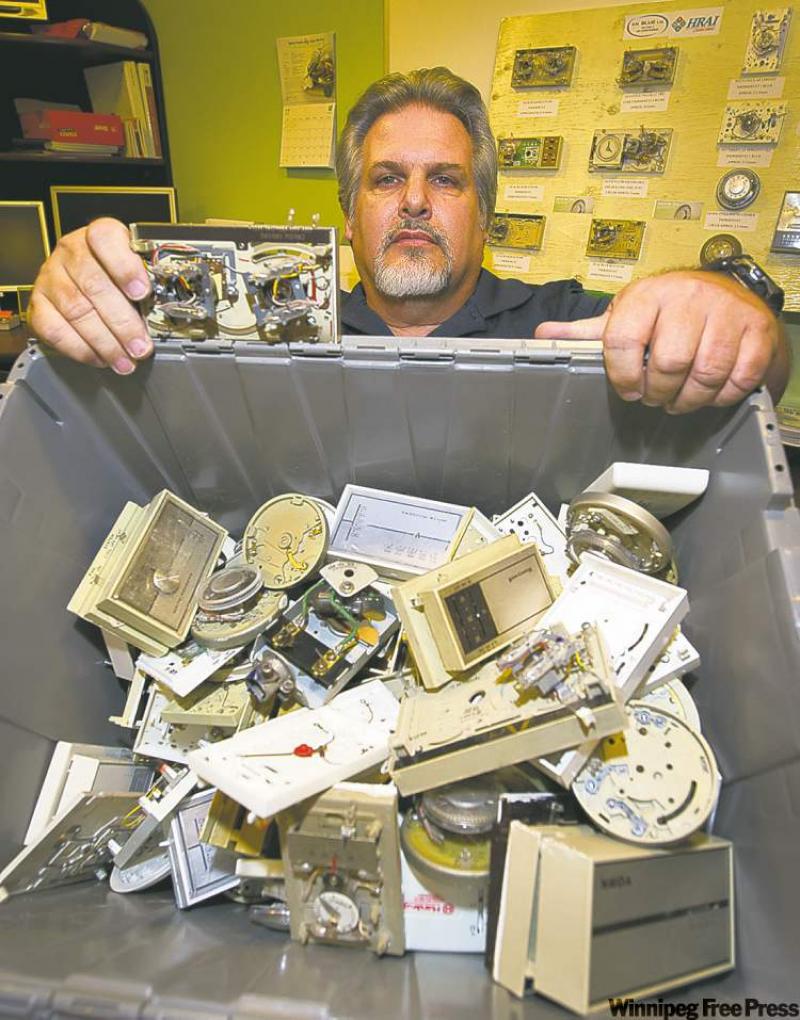
Do you have a mercury-filled thermostat that dates back to the days when avocado appliances were considered modern?
Well, the heating and cooling industry thinks it's time to toss those dated units for new, energy-efficient, programmable models -- preventing them from contaminating our air, soil, water and, ultimately, our food sources.
And they're willing to help.
This is the fifth anniversary of the Switch the 'Stat program, organized by the Heating, Refrigeration and Air Conditioning Institute of Canada (HRAI). The goal is to provide Canadians with safe and easy ways to dispose of the old mercury-containing thermostats.
Since the program began in April 2006, Switch the 'Stat has recovered 45,872 thermostats containing 71,408 mercury switches. These switches represent the safe recovery of 178.5 kilograms of mercury.
To put this contamination concern into perspective, Darrell McCagg, manager of the Ottawa heating and air conditioning company, E.N. Blue Ltd., says older mechanical thermostats typically have between one and four mercury switches, each containing about 2.5 grams of the silvery liquid in the bulbs.
While a gram may not sound like a lot, one gram of mercury put into an eight-hectare lake (about 20 acres) will affect the lake for one year and the fish in that lake will be inedible, McCagg says.
He says there are no health risks for the homeowner when the mercury thermostat hangs on the wall. But in the case of home demolition, fire or simply tossing the unit in the garbage, it's a different story. When it lands in the dump, the crushed glass vials of the toxic metal leach into the ground water and contaminate rivers and lakes.
Mercury is especially harmful to young children and women of child-bearing age because it can inhibit the development of the brain and nervous system.
The thermostats are recycled through a three-step process, which includes removal of the glass vial that contains the mercury, separation of the mercury through distillation and recycling the metal components, including iron, copper, nickel and aluminum, from the old thermostats.
Currently, Switch the 'Stat operates throughout Manitoba, Ontario and British Columbia, with planned expansion to other provinces in the future.
Once a box of thermostats are collected, they go through a three-part recycling program which separates the plastic, glass and metal parts. The mercury is separated through distillation. And then they reuse it in products and processes where it is required.
Retailers that will accept them for recycling at no cost include Home Depot and Rona.
Visit switchthestat.ca to find contractors registered in the program in your area.
-- Postmedia News