Ask an interior designer about rich, dark colours and they're likely to bubble over with praise: "Dark colours are my favourite for my own home and for clients," says designer Brian Patrick Flynn.
Chocolate brown, midnight blue, deep scarlet -- even black. Deep colours are welcoming and cosy, they say, perfect for fall and winter.
"I really like that warm, enveloping feeling that using layers of dark colours can give you," says designer Mallory Mathison.
These shades make a room distinctive and memorable, says designer Janine Carendi, but they can be tricky to use. Clients are often interested in colours like eggplant or olive green, but skittish about how the final product will look.
If you're thinking of taking the plunge, here's some advice from Flynn, Mathison and Carendi on using dark colours without creating a black hole:
In large rooms, Flynn says, dark colours are a great problem-solver. The sprawling size and high ceilings of living rooms commonly found in newer houses can make a home feel impersonal.
Deep colours add warmth and cosiness, he says, especially if you opt to paint the walls and ceiling the same rich colour. These large rooms are often flooded with natural light, which helps to balance dark walls or furniture.
But large, well-lit rooms aren't your only option: Carendi says dark colours can be wonderfully dramatic in tiny spaces with little natural light. She uses them to add glamour to hallways and small bathrooms -- places where you don't spend a lot of time and thus won't get overwhelmed by the impact.
Carendi recently used a deep red for the walls and ceiling of a client's small foyer. The effect? An unexceptional space in this New York apartment suddenly became "a sort of Chinese lacquer box," she says, creating a gorgeous first impression for visitors.
One caveat if you use dark colours in a small space: You'll need to beef up the presence of artificial light. That 100-watt bulb you used before, Carendi says, probably won't be enough anymore.
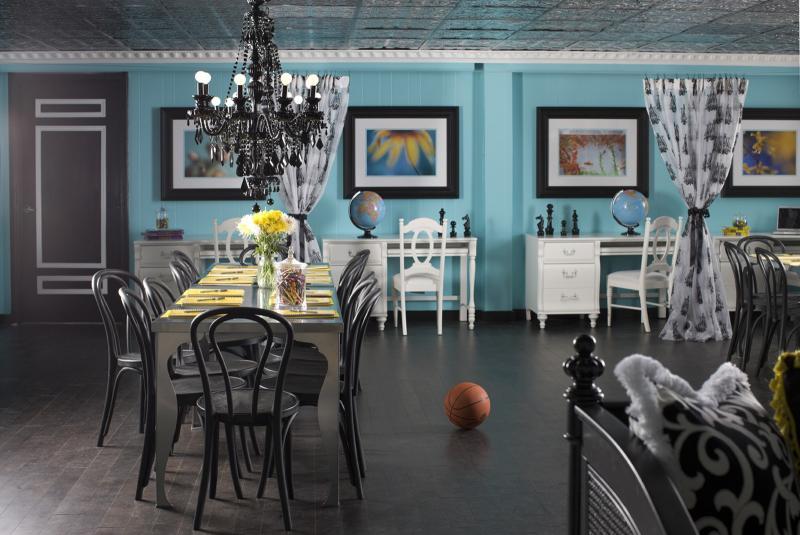
Contrast is key: "Define the room with a perimeter of brightness," says Mathison, by balancing dark walls with light-coloured moulding. (Moulding can be added inexpensively if the room doesn't already have it.)
Besides adding brightness, Flynn says, light-coloured paint will highlight the beauty of intricate moulding against a dark background. "It pops in a completely different way," he says.
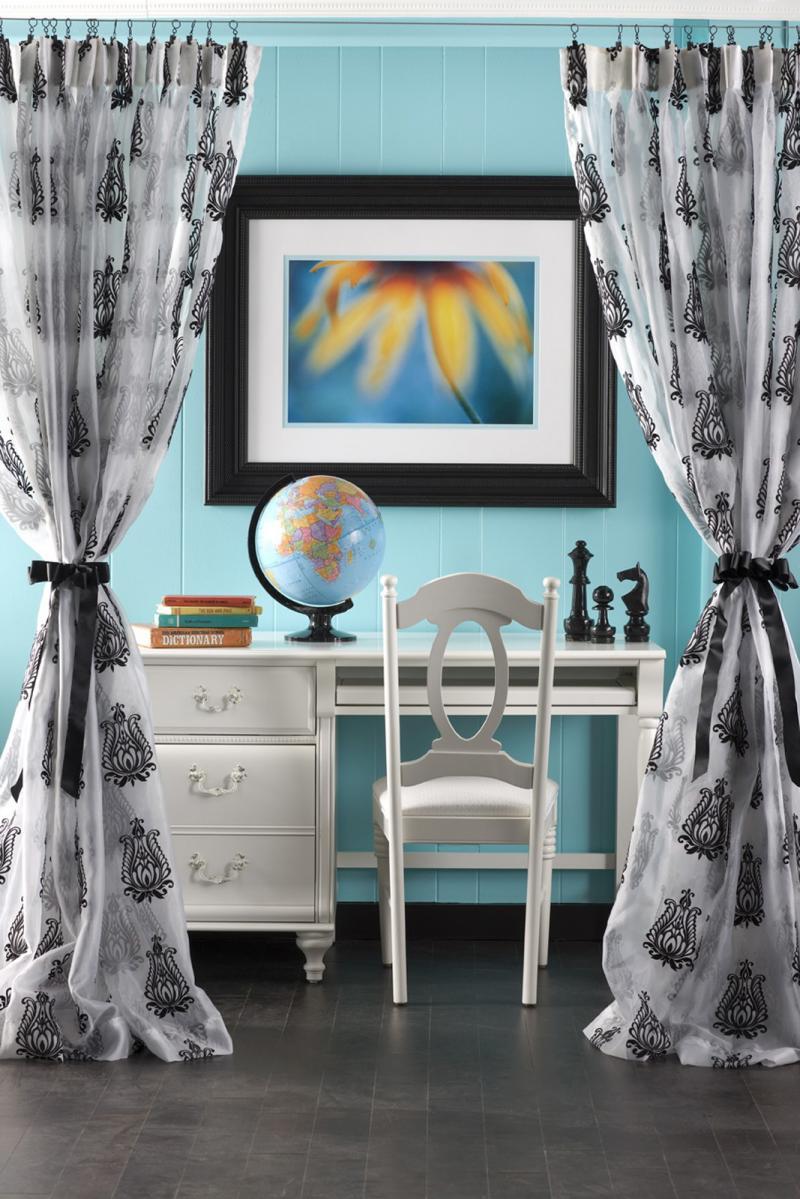
Dark walls also can be leavened by white or pale window treatments. If you're planning a dark floor -- a chocolate-brown rug, for example -- choose one made of natural fibres that includes a sprinkling of blond or ivory, Mathison says. Then top it with furniture upholstered in those lighter shades.
Get creative with colour pairings: Navy and white are deliciously crisp together, while dark brown is warm and inviting with pale green accents. Flynn's favourite? Contrasting stark black with a classic Tiffany blue.
If you're painting walls dark, consider using high-gloss paint rather than a flat or eggshell finish, say the experts. Glossy paint reflects light, multiplying it and adding sparkle to the room. Keep in mind, though, that this draws attention to any imperfections on the surface of the walls. You may have to refinish the walls before painting.
Also, says Flynn, high-gloss paint in a room with lots of natural light "can get annoying" during the brightest part of the day. If a sunny room gets frequent daytime use, you may want to choose a flatter finish.
Next, add elements that reflect light: Think gleaming chrome mirrors, crystal lamps or a clear, acrylic coffee table, says Mathison. These items bring brightness while amplifying the colours you've chosen.
Another option: Consider covering the walls with something other than paint. Leather tiles can be expensive, but they reflect light and give the room a distinctive glamour, says Carendi. Other wallcovering options such as textured grasscloth and wallpaper with large-scale graphics can also work well in deep colours.
If a full-scale conversion to the dark side is too much, you can always try a few splashes of deep colour. Try painting the inside of a bookcase a dark shade but leaving the outside white or light-coloured. Or do the floor in an ebony stain.
You can soften the moulding idea above by reversing it -- keep the walls a light colour and paint the moulding black or navy.
Subtler still, try one of Mathison's favourite tricks: Paint baseboards and moulding a deep shade of grey. The effect is soft and harmonizes well with many colour palettes, she says, but you still "get a hint of darkness."
The Associated Press