Todd Braun
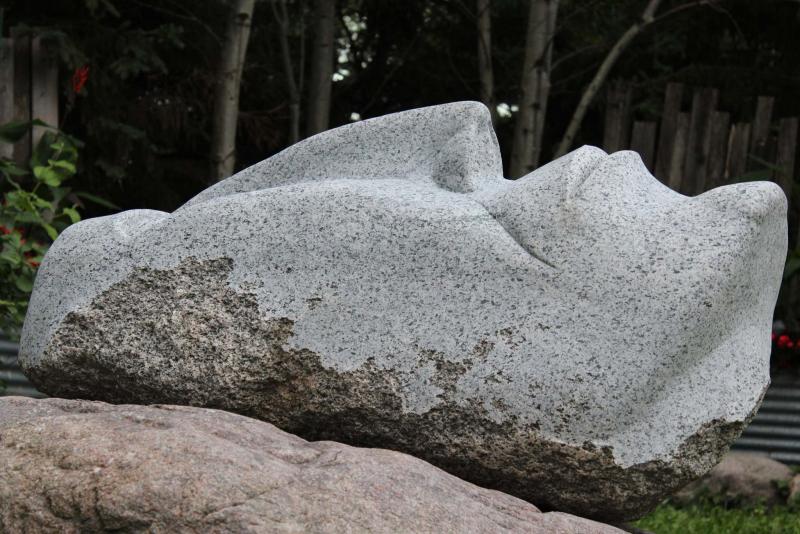
Reminiscent of Easter Island monuments, Sleeping Man is made from a salt and pepper granite boulder.
Todd Braun
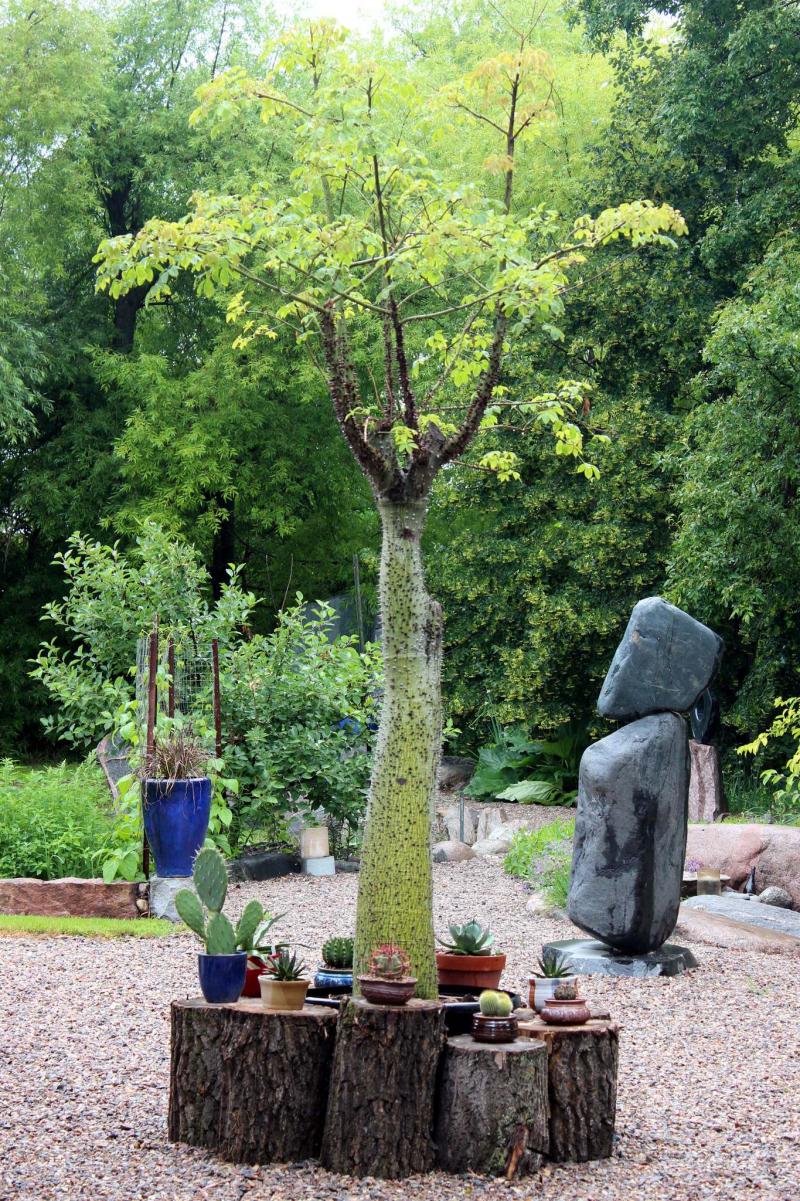
Todd Braun's outdoor sculpture gallery is populated by unusual living specimens such as this rare Paraguay Bottle tree.
Todd Braun
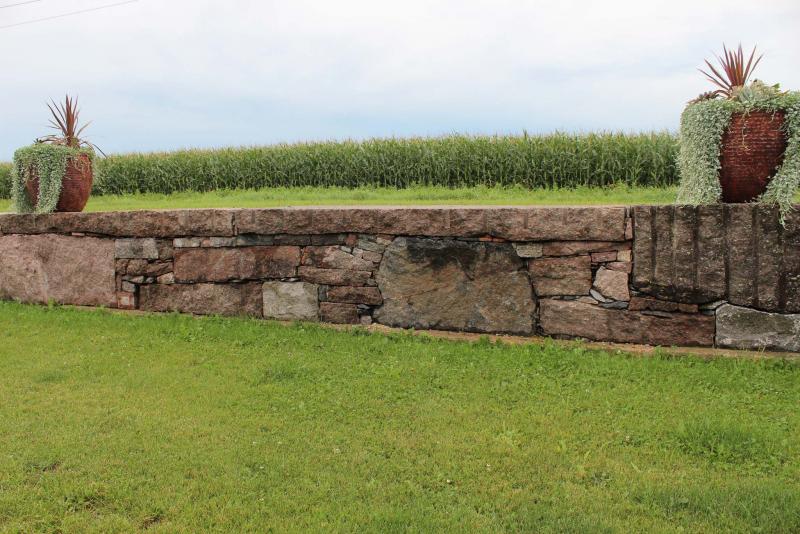
Gail Braun's magnificent stone wall in Altona.
Todd Braun
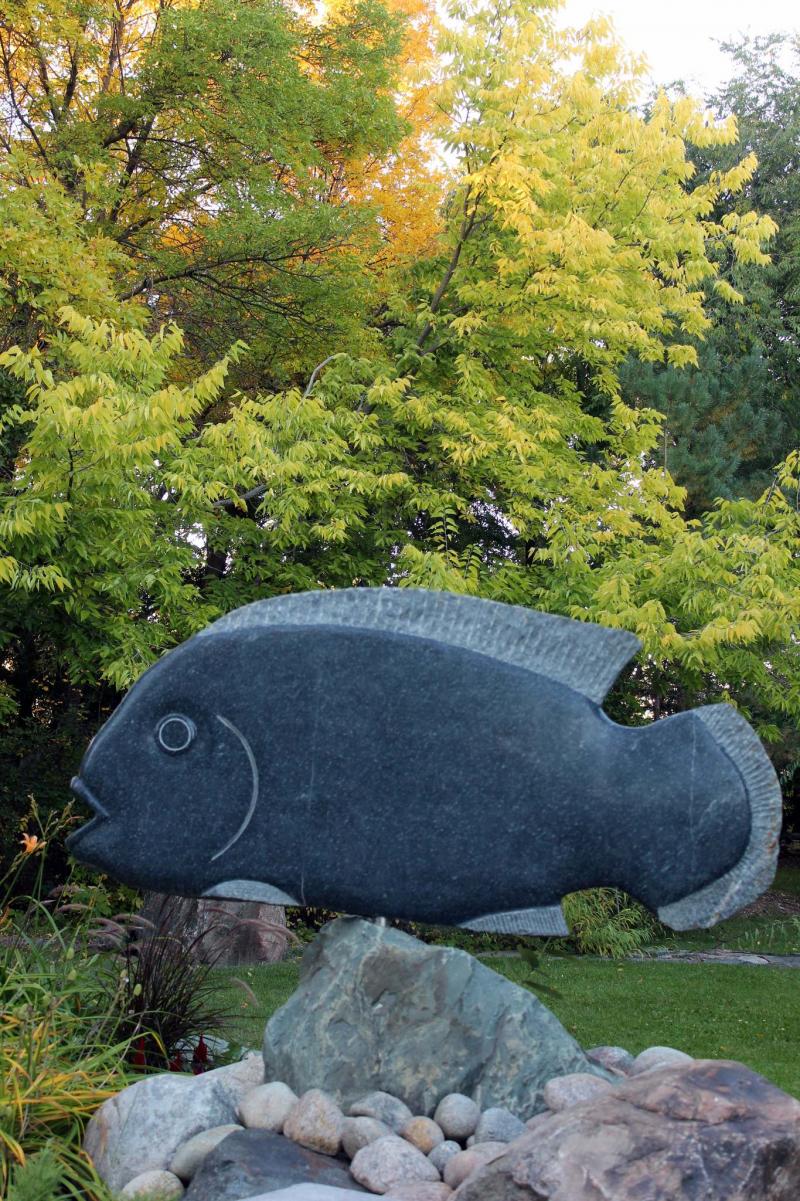
This 362 kg blue granite fish created by Todd Braun, stone carver, rotates easily on its stone base.
Paul Martens
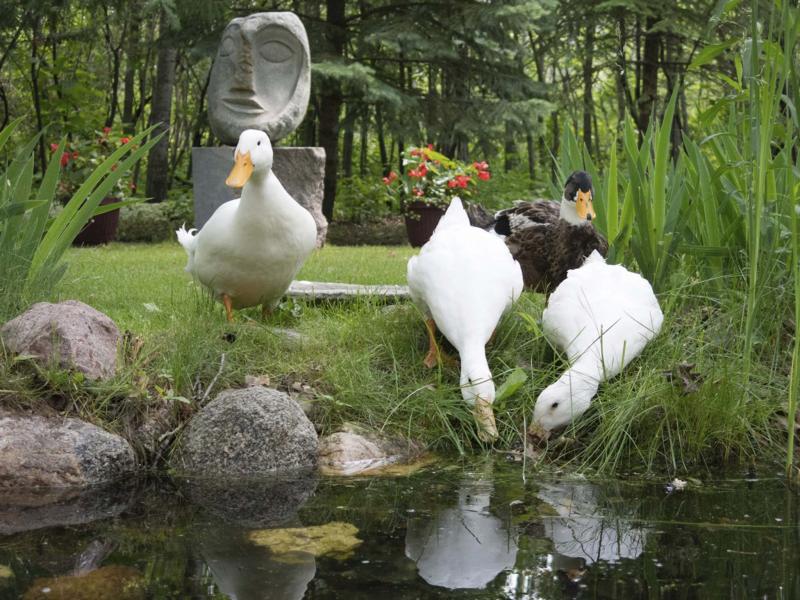
The Messenger, atop a stone pedestal, gazes out into the garden.
Todd Braun
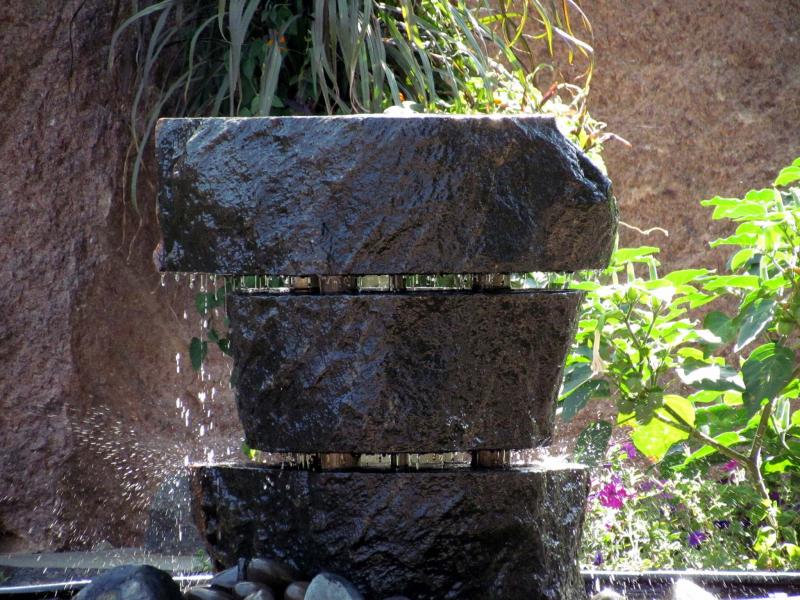
Take care to protect stone fountains from frost damage. Shown: a three-tiered granite fountain by Todd Braun.
Shirley Martens
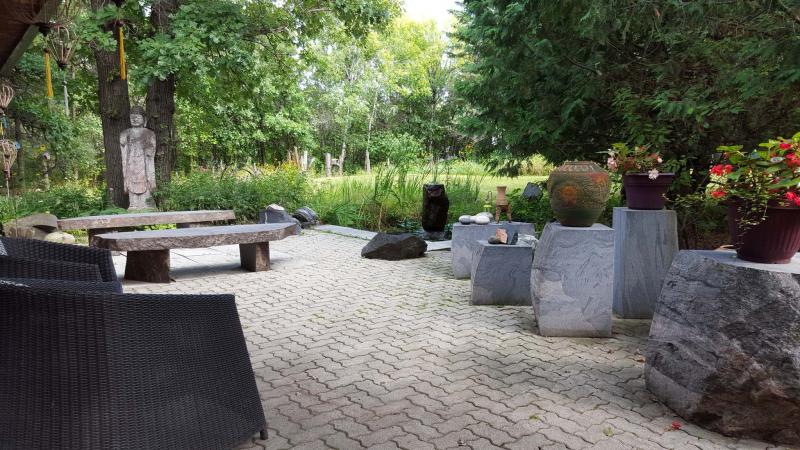
Sculptural pieces carved from granite make a distinctive statement in this garden room in Kleefeld.
Colleen Zacharias
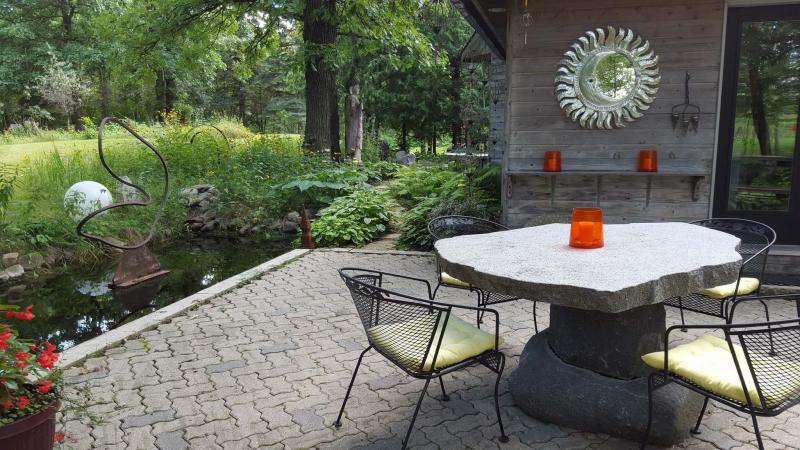
Created from granite, this sculptural table by Todd Braun will last for generations.
Over time there are few things in our personal space that stay the same. In the landscape, plants live and die. The design of our outdoor space evolves or is recreated. Structural materials in the man-made environment gradually age and must eventually be replaced. Permanence at best is fleeting.
Stone sculptures, however, have the capacity to transcend the boundaries of space and time. One might respond with indifference to a particular style of garden, but to the visitor who enters a landscape, encountering a stone sculpture for the first time, consciousness of the object is immediate. Something within the visitor responds. A sculpture stirs debate and transforms its surroundings. The owner forms a relationship with his or her piece of sculpture, attributing almost personal qualities to it in morning or evening light, changing climate or seasons. When the stone from which a sculpture is made has been sourced in Manitoba and fashioned by one of our own, it becomes a part of all of us.
When Winnipeggers Shirley Martens and her husband Paul decided to add natural stone elements to their weekend property at Kleefeld, they sought out Todd Braun, one of Manitoba’s preeminent stone carvers. Braun, who works exclusively with stone sourced from around Manitoba, maintains an outdoor gallery and workspace on his five-acre property near St. Joseph. The authenticity and individuality of his work resonated with the Martens who were looking for pieces that would complement their landscape, but also its organic feel exhibited by its natural flow, plant forms and the use of natural materials such as wood and iron.
Spatially organized into a series of garden rooms, each with separate uses and connected by winding pathways, their landscape is now home to numerous pieces created by Braun. In the garden room at the front of their property, imposing stone benches sit across from one another on a paving stone patio, their visual weight asymmetrically balanced by a series of stone pedestals at one end and a stone fountain situated in a pond adjacent to the opposite end.
The pedestals, which hold a mix of objets d’art and potted plants, were carved from one massive boulder. The shapely lines of the stone fountain resemble a female form. The stone benches each weigh approximately 725 kilograms. Shaded by tall oak trees and overlooked by a benevolent wooden Buddha, the stone pieces have physical functions but serve as art first and foremost.
"That was the motivation to acquire the pieces," says Shirley, who believes it is important to support the artists among us. In another garden room there is a stone dining table. In full view, a short distance away, against a backdrop of evergreen trees, a giant carved stone head sits perched on a stone pedestal. Known as The Messenger, its expression is seemingly impassive at first glance. The more I gazed at it while visiting their garden, the more the sculpture seemed to take on a warmer, more expressive, almost human presence.
With over three acres of land, the Martens have ample space to display several different works of art. All of the pieces, each with Braun’s distinctive chiseled signature, have been carved from granite boulders. After a rain shower, it’s fascinating to see how even a few drops of water changes the appearance of granite, deepening its colours and enhancing its character, says Shirley. The water is reflective and as the surface of the rock begins to dry, the patterns and colour continue to change.
"The sculptures go so well with the greenery, the shapes and path lines of the landscape we have created and our other works of art. Everything exists and has its own space. We gain such a sense of peace and well-being," says Shirley.
For the past several years, Braun has hosted an annual garden tour. This year’s tour will be held on Sept. 10 and 11. Known as Elemental Stone’s Beyond the Gate garden tour, visitors have the opportunity to meet Braun and walk through his expansive property. If you are planning to go, prepare to be amazed. Braun’s garden is a work of art in more ways than one.
Together with his wife, Lisa, they have planted hundreds of trees and shrubs, including unusual species. One example, Paraguay Bottle tree (Ceiba chodatii), native to Bolivia, was planted from seed 20 years ago. Bottle shaped, it’s heavily swollen trunk is covered in thorns. Braun also has a substantial collection of cactus and succulents, with close to 300 specimens.
Braun says that as he gathers boulders and develops ideas for what they will become, he decides where a finished piece will be temporarily displayed and creates its own space using a backdrop of trees, shrubs and perennials.
In one leafy gallery, Sleeping Man reposes. Measuring 1.3 metres in length it hints at Easter Island’s monumental stone heads. "The original shape and character of an individual boulder is always my starting point," says Braun.
"I like to leave some parts of my pieces untouched," says Braun who adds that it is important to him to not hide or obscure the fact that the piece originates from a boulder. In the example of Sleeping Man, which has been made from a salt and pepper granite boulder, a portion of the sculpture has been left in its natural state.
The classic fish shape has great appeal and Braun has created numerous variations. In one example, a blue granite fish weighing 362 kgs is perched on a boulder. Braun used a 50 cm round, stainless steel shaft (3.8 cm) to join the two pieces, drilling a hole in the bottom of the fish and the top of the base, anchoring the fish firmly yet seemingly precariously. This stunning sculpture rotates easily on the base in the way that a weather vane might, only far more awe-inspiring. Braun has also created a contemporary three-tiered fountain. Each granite segment is joined together with stainless steel shafts. The water flows from the top, spilling over the surface of the granite tiers, evoking a refreshing sense of coolness and filling the air with the sound of water.
Typically, says Braun, stone doesn’t require any maintenance. In the case of a stone fountain, though, says Braun, the presence of moisture that freezes and thaws can cause splitting or cracking. It’s important, prior to winter, to prevent snow from getting inside the stone by covering the area where the water enters and exits. If snow is allowed to melt and puddle inside the stone, the moisture works almost like a wedge once it freezes, causing the stone to eventually crack.
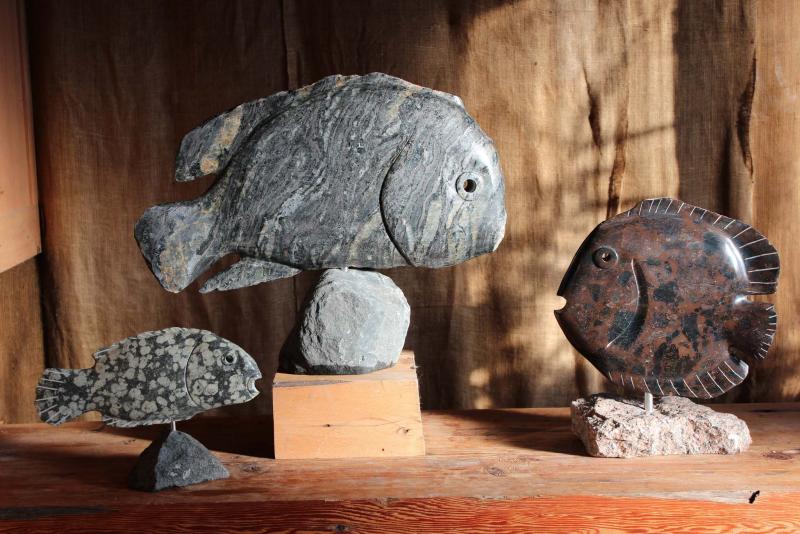
Not all of Braun’s sculptures are huge or carved from granite. Smaller fish, suitable for a mantle or cabinet, have been carved from some of Manitoba’s geological oddities including volcaniclastic basalt with a rich tawny brown hue, and porphyry, a hard igneous rock that is characterized by large-grained crystals, almost like speckles. In another example, Braun has used an unusual type of gneiss (pronounced as nice), which is a foliated metamorphic rock that has bands of crystals. "In Manitoba," says Braun, "the geology is so complex."
Recently Braun completed a 21 metre long stone wall for his mother, Gail Braun, who recently moved from her farm to the town of Altona. The stones are a random collection that were gathered and shaped by Braun over a period of about 40 years. Many of the stones, says Braun, are remnants of his early projects and were collected from the family farm. The dry stack wall stands one metre tall and is about 76 cm thick. The largest stone in the wall is an 1800 kg piece split from a boulder that was more than 10,000 kgs which Braun and his father brought to the family farm in 1980. Needless to say, the stone wall is magnificent and has transformed its surroundings.
It’s not only the message that stone conveys visually but also how it speaks to the soul. Braun’s sculptures raise the level of art in the garden. Stone carving is slow, laborious work that requires patience and inspiration. Braun’s one-of-a-kind results are meant to be seen and appreciated.
colleenizacharias@gmail.com
Notice:
Elemental Stone’s annual Beyond the Gate guided garden tour takes place on Saturday, September 10 and Sun., Sept. 11 from 10 a.m. to 8 p.m. $10 per person. Located four kms west of St. Joseph on PR 201, yard no. 43. Email element@sdnet.ca or phone 204-324-1534.