Many gardeners have limited experience with scale insects. They are extremely common on many trees and shrubs. Scales come in two forms: armoured scales and soft scales. The armoured scales can look like a round or an oval shell depending on the type. Coniferous evergreen trees and shrubs such as pine and spruce can be heavily infested with several armoured scale species. Many deciduous trees can also be adversely affected by soft and hard scales.
Scales injure plant tissue by sucking the plants' juices and injecting toxic saliva into the tissue. Heavy, prolonged scale feeding will kill a portion of the plant or even all of it. Scales normally overwinter in protected areas of the tree and emerge in the spring. Early treatment of scales before the needles or leaves appear (usually April or early May) with dormant oil is recommended. Frequent hosing down the infested tree or shrub with water under pressure can dislodge the scale nymphs sending them to their eventual death on the ground. The dormant oil treatment must be done before the buds open up as this product can be toxic to the new emerging plant tissues. If the early spring season was missed using dormant oils, insecticidal soap solutions can be applied in June and July. Here are some examples are the common scales in southern Manitoba:
Mugo pines can be heavily infested with white tine pine needle scales. They are small and pure white.
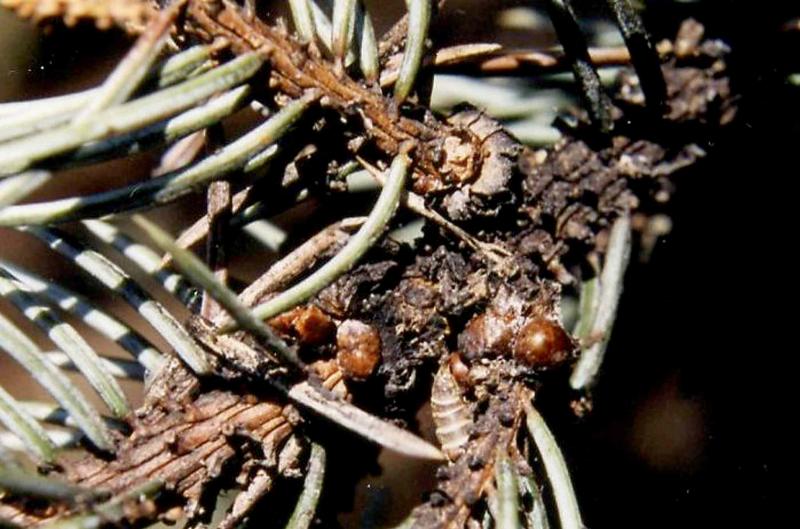
Colorado, white and Black Hills spruces can also be infested with pine needle scales, but they are more commonly targeted by numerous spruce bud scales that look like small spherical brown balls. These scales often occur in bunches of six to eight near the axils of twigs with larger twigs or small branches.
Many deciduous trees and shrubs can be attacked by Lecanium scales whose colour can vary from light brown, dark brown or black. These are soft scales. Trees that are especially susceptible are young ashes, especially green ash, basswood, little leaf linden, Dropmore linden, American elm, hawthorn and ornamental crab apple. Young scales can be yellowish brown in colour.
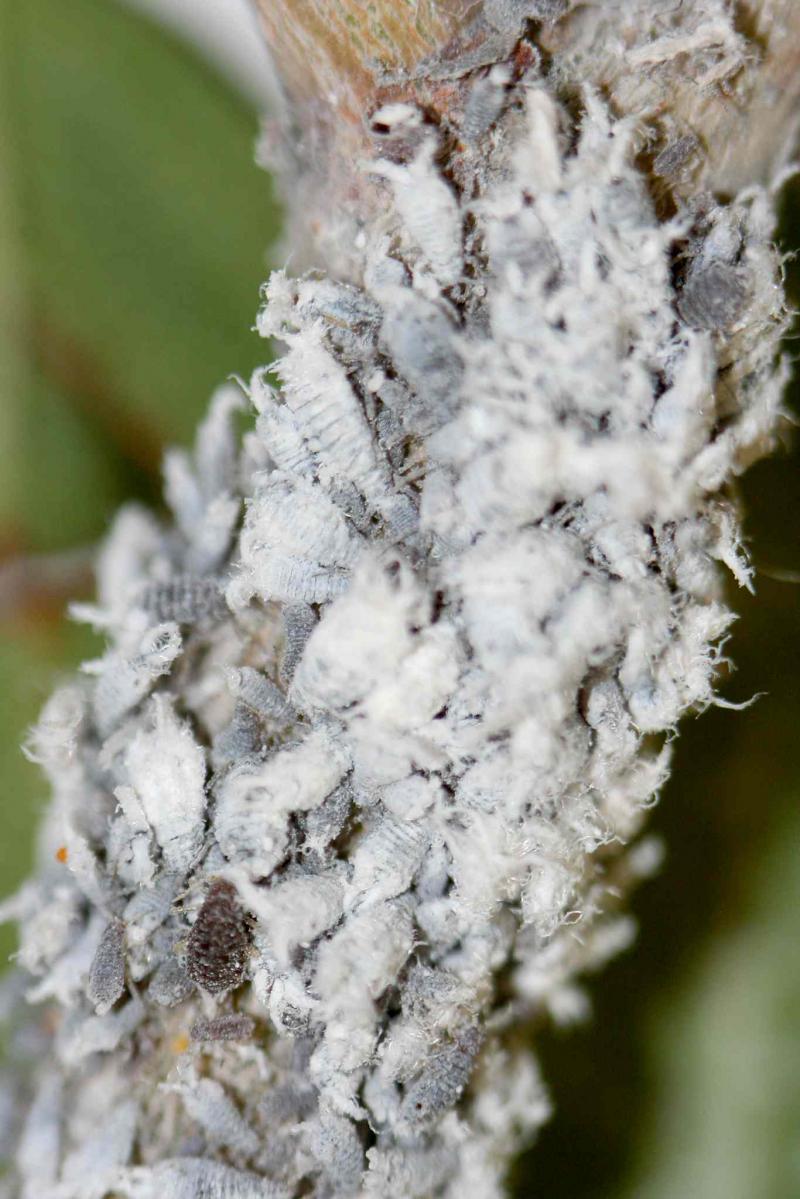
On ornamental cedars (arbor vitae) a very common and destructive soft scale in Manitoba is the Fletcher scale. It will produce copious amounts of sticky secretions. The scales are usually orange-brown and appear oval in shape. Hawthorn mealybugs are pale grey, soft-bodied scales that thrive mainly in colonies on hawthorn plants.
It is important to regularly hose down and/or pressure wash your trees and shrubs with water especially in spring and the early part of the summer season to physically dislodge the scales, especially the young nymphs.
Michael Allen is a consulting urban forester, tree diagnostician and certified arborist. He owns Viburnum Tree Experts. His recent book Dr. Tree's Guide to the Common Diseases of Urban Prairie Diseases is available in local book stores. He can be reached at 204-831-6503 or 204-223-7709.