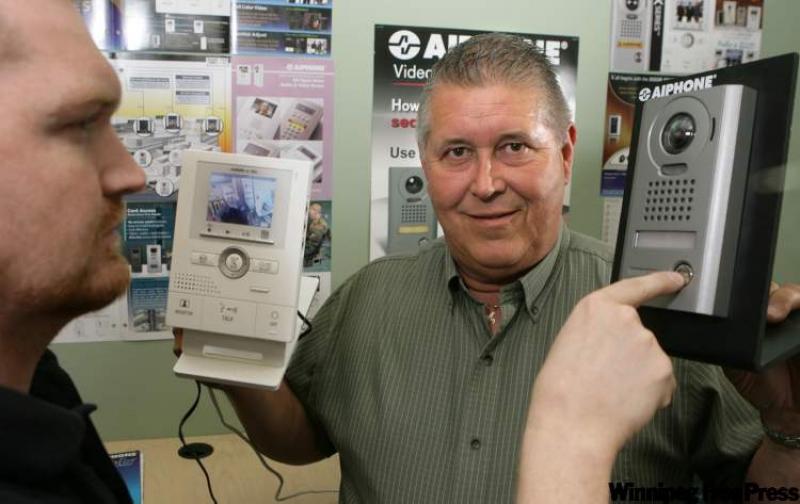
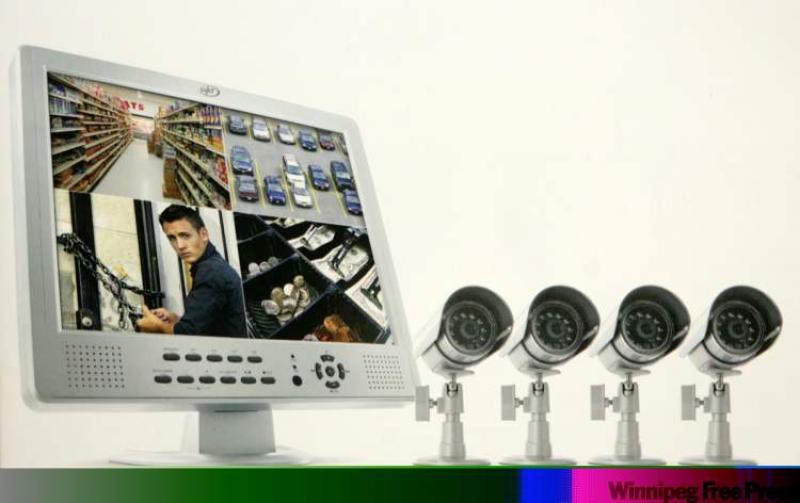
Steve Tubman uses his laptop to view the security camera pointed at his home's front door.
"I can see whether the mailman has been there," says the director of corporate sales and operations for Henderson Security.
Gilles Chasles logs onto the Internet to monitor the security systems set up at his cottage.
Welcome to the world of 21st-century home security, a world replete with cameras, gadgets and interactive devices linked to the Internet.
When used in combination with the old-fashioned, common-sense basics, like good locks, they allow homeowners to do a lot more than just hope nothing happens when they're away.
Locks, keys and barriers are the first line of defence, and the first thing Chasles of City Locksmith (www.citylock.com) looks at when evaluating home security.
A solid lock is a must, and there are different ways to improve the security of locks -- deadbolts of hardened steel, for example, or keys that can't be copied.
Chasles also suggests steel bars for basement windows, especially for multi-level houses where the homeowners' bedroom is far away from potential points of entry. "It's not a big expense -- $50 or $75 per window, depending on the size."
Gary Bauder of HomeCheckers (www.homecheckers.ca), an Ottawa-based company that monitors homes when people are away, says that patio doors are particularly vulnerable, and recommends they be reinforced with security bars.
Don't forget to put proper locks on garages and sheds, he adds. "There might be thousands of dollars worth of tools or bicycles in there."
Homeowners who want to take it up a level will consider alarm systems.
Prices of basic systems have come down in recent years, say both Chasles and Tubman.
For example, says Chasles, a conventional alarm system with triggers on two doors, a motion detector, a siren, a transformer and a keypad, can be installed for about $400. Monitoring fees are extra.
The technology of alarm systems is evolving rapidly, and many now include cameras, automated systems that allow for monitoring of such things as the furnace, and even remote-control applications linked to cellphones.
"Closed-circuit TV cameras have become a very strong aspect of home security," says Tubman of Henderson Security (www.hendersonsecurity.com).
Monitoring cameras can be linked to the Internet so that homeowners can see what's going on no matter where they are in the world, as long as they have an Internet connection. Some systems allow the monitoring camera images to be viewed on their BlackBerry or iPhone.
It's possible to set up cameras to take pictures of anyone ringing your doorbell, and view those pictures at your leisure.
Other systems allow you to unlock your door remotely using your cellphone.
The high-tech systems can include sensors, as well as cameras. For example, says Tubman, you can install a low-temperature sensor that warns you when your furnace isn't working.
Some systems allow homeowners to control the home's systems from a distance. "You can turn up your furnace, turn lights on, put the music on, and look at the surveillance cameras -- all remotely," says Chasles, adding that fully automated systems that control everything in the house are selling like hotcakes.
You can also get systems that send you a text message or e-mail whenever someone arms or disarms your security system.
That, notes Tubman, is a great way to keep track of your children's comings and going -- or to monitor how long the cleaning lady is spending on her work.
Some alarm systems are now wireless, and for monitoring you can even get cellphone backup if the regular phone line goes dead.
The cost of the sophisticated systems? From about $1,000 on up, says Chasles -- way, way up to the tens of thousands of dollars depending what bells and whistles you add.
"People will tell us what they want," he says, explaining that he installed a camera system for one client, who wanted to catch people who had been vandalizing his cottage.
"He only wanted to know who was coming to his house. If he had told me he wanted to be able to read the licence plate of the car coming into the driveway, we would have installed a more expensive camera."
Security systems aside, Bauder of Home Checkers says it's important not to forget some of the basics of home security -- things like lights, timers and other deterrents.
"Lighting is very important," he says, and he advises homeowners to put lights on timers when they're away. Motion detectors are good for outdoor lights, he adds.
He also advises trimming shrubbery and plants that might block views of the house from the street. If they block the view, they provide a screen for thieves.
You may have stopped your subscription to the newspaper, but that doesn't mean people won't leave flyers by your front door. Bauder says people should arrange to have flyers and other material picked up. And to help make the house look lived in when you're away, you can also have someone put the garbage out.
Home security is not just about protection against theft; it's also about protecting the home itself against damage caused by such things as water leaks, broken pipes and unforeseen incidents. Bauder says he's seen all kinds of incidents, most of them involving water damage.
He recalls one home where the toilet sprang a leak while the owner was away. Within 24 hours, there was so much water damage from the leak that the kitchen was totalled and repairs took three months.
Having someone check your home regularly won't necessarily prevent damage, but it may help limit the impact -- and improve the chances your insurance will pay for repairs.
The Canadian Security Association (canasa.org) is a national non-profit organization for businesses in the security sector. Its members subscribe to a code of ethics. The organization also issues advisories to consumers; for example, a recent advisory warned against door-to-door alarm system sales.
-- Postmedia News