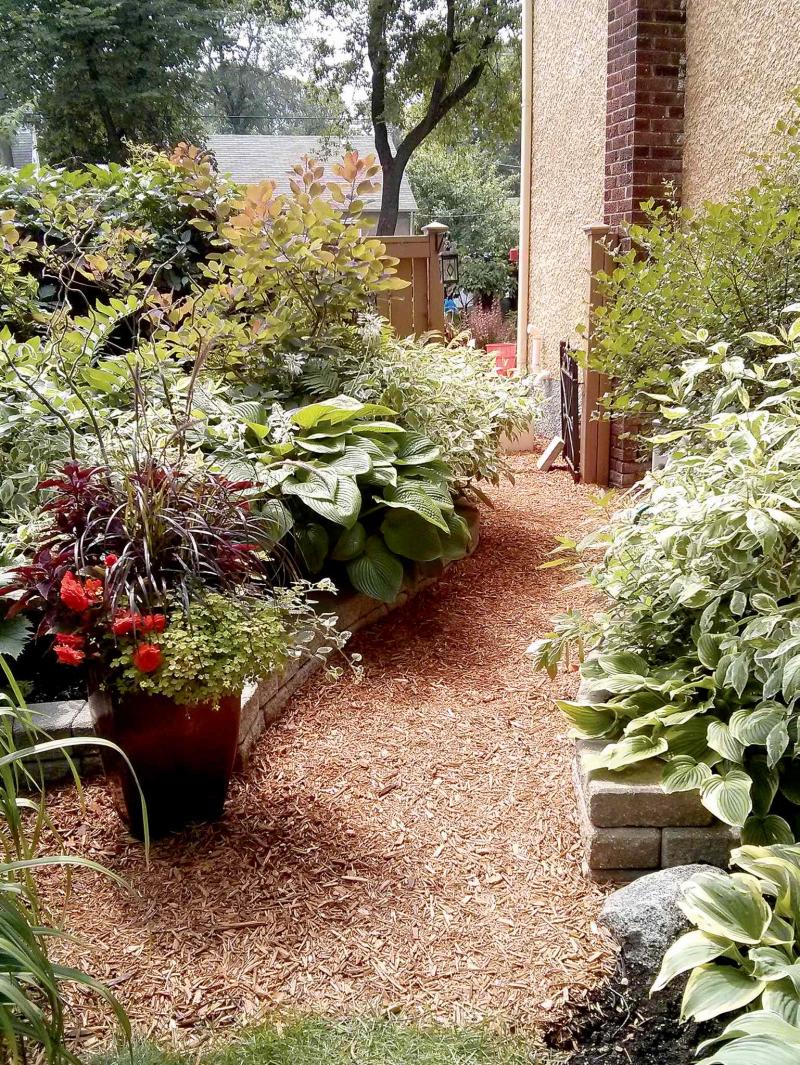
On a hot and lazy summer afternoon, a shady area can be the most desirable part of the garden, if only to cool off. Successfully establishing plants beneath the shade cast by a tree, fence or neighbouring house, though, can be challenging.
Ken MacDonald, landscape designer and owner of Prairie Sky Landscaping, says typically, low-light areas in the garden are met by many gardeners with a certain amount of resignation, even disappointment.
MacDonald says it is a mistaken notion to assume shaded areas in the landscape ultimately limit a gardener's activity or choice of interesting plant material. "The ability to skilfully design and implement a visually attractive arrangement of plant material while successfully overcoming the inherent challenges of shade gardening," says MacDonald, "represents a significant step in a gardener's personal growth."
MacDonald speaks from experience. When he moved from his sun-filled property in Birds Hill to a tree-lined neighbourhood in East Kildonan, MacDonald found through trial and error he had to adapt plantings to the new shade conditions cast by mature trees as well as competition for moisture from trees' roots.
Over time, he discovered an appreciation for plants that thrive in varying degrees of shade; not necessarily flowering plants, but a whole range of shade-loving plants with contrasting textures, unique shapes, and yes, even colour.
To transform an underused shady area in a garden that may be bland or monotonous due to sparse or underperforming plants, MacDonald recommends gardeners begin by assessing the moisture levels: for example, examine the soil beneath mature trees and structural overhangs following rainfall. Don't be fooled into thinking a good downpour automatically soaks into your soil. Wherever there are mature trees and a low branch canopy to intercept moisture, dry areas may persist and be in need of irrigation.
Alternatively, shady areas can retain moisture longer.
"Often overlooked is the soil mix used when planting," says MacDonald, who suggests preparing the soil by adding a thin layer of rich organic material available as a three-way or four-way mix to help plants develop their root systems. The first growing season is particularly important, so pay close attention to watering. The following year, add another thin layer (2.5 cm) of organic matter, keeping in mind less is more and ensures the balance of moisture and oxygen as well as gas exchange to the tree's roots is not hindered in any way.
Prior to plant selection, evaluate the available light your shade garden receives at different times of the day. Note the extent of sun and shade periods, how long they last, as well as the quality of the shade. For example, do you have full morning sun with dappled light for brief intervals in the afternoon?
If the shade is being provided by an east or west-facing fence, then the area will only be in shadow for a portion of the day. If the fence is facing north, then the area will mostly be in shade for the better part of the day.
Dense shade is more problematic, particularly beneath conifers. Soil can be dry and depleted of nutrients. In addition to applying a layer of organic mulch, incorporate a balanced fertilizer. It isn't enough to dig a hole, pop the plant in, and then walk away. The plant will need as much help as you can give it if it is to thrive in dense shade.
If success is difficult to achieve, an alternative to bare soil or scraggly grass is to add a layer of wood mulch. Late last season, MacDonald discovered shredded redwood mulch available in large bales at Lacoste Garden Centre and considers it an impressive product.
Interspersing intriguing focal points such as garden art elevates the whole experience, says MacDonald. "Use these pieces in a strategic manner, not to compete with plantings but instead to complement. You can't go wrong with subtlety."
The use of shade-tolerant annuals in either hanging baskets or attractive, decorative containers opens up all sorts of possibilities and can be very effective at lending a burst of colour in an area restricted to varying shades of green. MacDonald creates spectacular container designs in his own garden that provide not only eye-catching colour but also vertical interest.
Pruning lower limbs and thinning the crown of deciduous trees by removing larger branches either in late October or early spring can help to increase the amount of available light. Groundcovers and smaller perennials and annuals can be planted in the understory, but take care to not disturb a tree's surface roots with larger plants such as shrubs.
MacDonald particularly stresses the importance of remembering to read the plant tag for information on appropriate light conditions. Plants are more likely to reach their full potential if they are situated in the proper light conditions.
MacDonald gives the example of Sum and Substance, a commanding hosta with massive chartreuse-coloured foliage. Suited to a location with full morning sun, its unique colour bleaches out if it is located in an area that receives full afternoon sun. Goldmound spirea, another example, is often found planted in full sun, although the plant tag recommends part sun. MacDonald says it can appear almost chlorotic if it is planted in an area that receives full sun for most of the day.
"There is a huge distinction between a plant thriving in a given area or merely sustaining itself," says MacDonald.
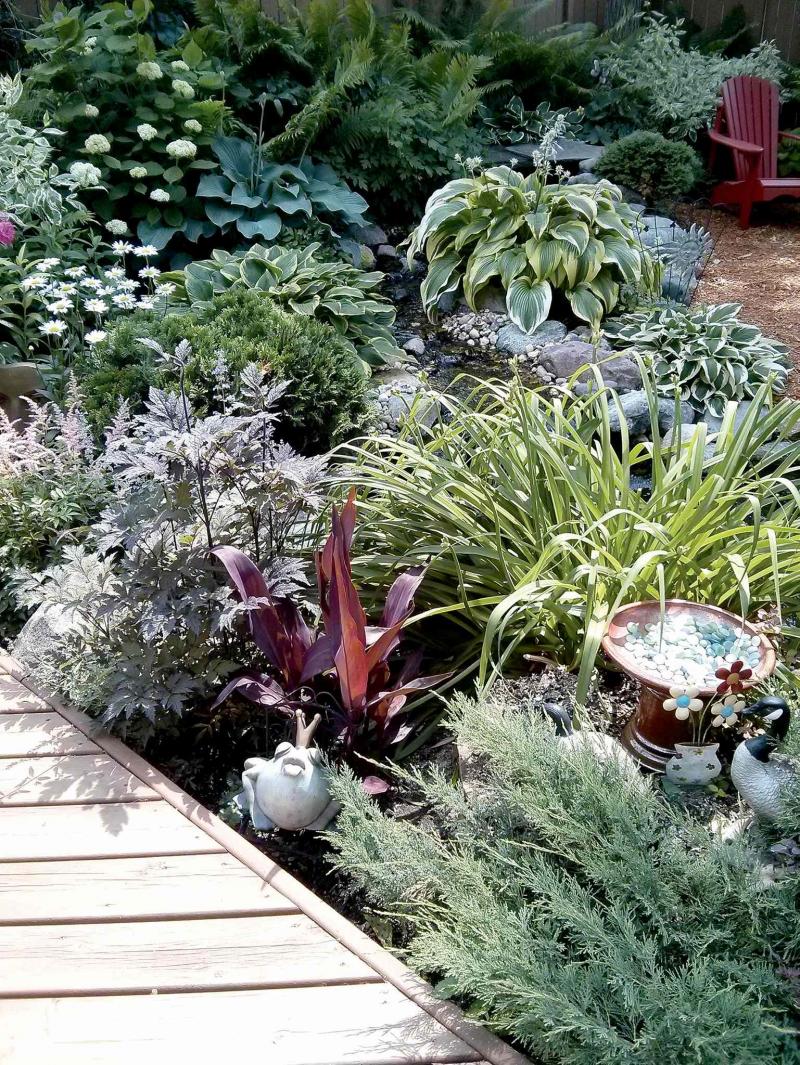
When MacDonald first moved to his current residence, there were a total of six plants in his entire yard. Today, with at least 70 per cent of the grass removed, this serene haven is characterized by luscious foliage in contrasting colours and textures, curved pathways, tasteful focal points and bright colours. Viewed at street level, it becomes immediately clear shade gardens are not restricted to swaths of mulch, low-growing plants and ground covers.
Do plant choices for shady areas mainly consist of hostas, ferns, lily of the valley, bleeding heart and rows of impatiens? Lovely as they are, connoisseurs of shade seek a diversity of plants for a tapestry of foliage and blooms as well as unique form.
The horizontal branching pattern of Pagoda dogwood, a small treeform with a mature size of six metres, makes it a unique specimen plant suitable for a part-shade area. MacDonald also recommends anchoring the landscape with compact to medium-size shade-tolerant shrubs such as Ivory Halo, Golden Variegated and Morden Amber. Golden Variegated dogwood, for example, has attractive golden edged foliage all season long and bright-red stems in winter.
Hydrangea varieties such as Bombshell and Endless Summer are excellent in a shade border that receives morning light and will produce dramatic, long-lasting blooms that extend well into the fall. Ligularia, an herbaceous perennial, is effective both in the back or front of the border, depending on the variety. Othello, for example, is a standout specimen with huge, round deep-purple leaves. The Rocket grows to 180 cm with long spikes of bright yellow flowers.
The plant list below includes other recommendations for shaded areas.
When planning your shade garden, choose a design that fits well with the available light patterns in your landscape. It may require removing and relocating some of your existing plants. Complete the addition of any hardscaping elements first such as a patio or pathway, and then develop your planting scheme. A place for quiet reflection is more likely in a shaded area than beneath a blistering sun. MacDonald says the sight and sound of water completes the image of a relaxing area. In his own garden, he installed a dry creek bed, then developed it further into a vanishing water feature or pondless waterfall.
MacDonald's beautiful shade garden didn't just happen. It evolved over time and, like most gardens, it has seen a number of transformations. "You look at a garden every year with a fresh set of eyes," says MacDonald. "It is seldom stagnant, always changing because that is a part of gardening."
colleenizacharias@gmail.com
Notice:
The St. James Horticultural Society welcomes Jan Tyler, City of Winnipeg head gardener for Winnipeg North who will present on Those Beautiful City of Winnipeg Planters." Admission is free. Tuesday, Jan. 27, 7 p.m. at Linwood Public School, 266 Linwood St.