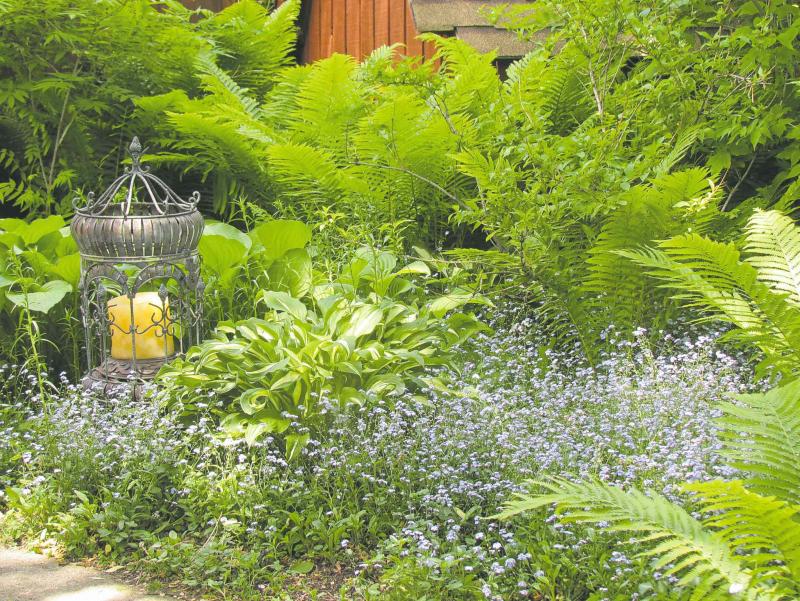
Shady areas of the garden should have more than one key player. Typically hostas are the most popular choice, however hostas will take a shade bed only so far. For a layer of interest and complexity, enrich your shade beds and containers with ferns, one of the best foliage plants you can grow.
An ideal placement for ferns is in the gaps between other shady characters such as epimedium (bishop's hat), heuchera (coral bells), pulmonaria (lungwort), ajuga, astilbe, polygonatum (Solomon's Seal) and one of my favourites, Brunnera macrophylla.
With its prehistoric pedigree (ferns have been around for more than 300 million years), ferns are more than mere infill and deserve to be more widely grown. Delicate yet dependable, the horizontal, vertical or arching forms of fern varieties can be used in a range of applications from minor to starring roles. As a bonus the lacy fronds aren't torn to bits by the forces of nature and ferns are rarely bothered by pests or diseases.
Can something so luxuriant have a sculptural quality? Consider the fan-shaped fronds of maidenhair fern (Adiantum) that are divided into small leaflets, the bright green triangular fronds of Lady fern (Athyrium) or the upright vase shape of ostrich fern (Matteuccia).
The form and texture of ferns are only two aspects of their value in the landscape. Ferns also offer an intriguing range of colours. Autumn fern (Dryopteris) with its compact, mounding habit, starts out with new, coppery pink fronds that mature to a glossy green. Lady in red fern sports light-green foliage on surprising red-violet stems. Japanese painted fern (Athyrium niponicum) earned the coveted title Perennial of the Year in 2004 for its arching olive-green fronds strangely tinted with a metallic-grey sheen. Now comes Godzilla Japanese painted fern. With an imposing mature height of 90 centimetres, it also has dark-purple stems and a frosted appearance.
Ghost fern, also an Athyrium, is perhaps the most ethereal variety. A cross between Japanese painted fern and lady fern, ghost fern startles with its unusual silvery-grey foliage on purple stems. All of these hardy ferns can be used to great effect in the garden. Some varieties, like western oak, crinkled male and autumn will even perform well in partial sun.
Concerned that ferns are not well-behaved? It's true that ostrich fern, the most commonly known fern, likes to stake its territory by spreading out and popping up in areas where it may not be wanted. It's a gradual process, though, and its gregariousness shouldn't be reason enough to exclude it from the garden.
When Free Press reader Ed Czarnecki sent me a photo taken by his brother, Ted, that showed the image of an ostrich fern's mature fertile frond, I was immediately intrigued by his perspective of something that's never impressed me before. Until now.
Czarnecki is a nature photographer as well as the mayor of Wynyard, which is about 200 kilometres north of Regina. His image of the leafless fertile frond, the plant's reproductive structure, invites closer inspection. While the green, plume-like fronds of ostrich ferns are sterile, the shorter fertile frond produces spores for reproduction. It matures to a deep brown in fall when ripe and remains standing after the showier fronds have died back.
Czarnecki sees beauty in all aspects of the ostrich fern and grows great swaths of them in his backyard. Czarnecki says ostrich ferns generally get a bad rap in part because they are often relegated to the darkest, most neglected parts of the garden, preventing them from putting on the kind of show they are capable of. Czarnecki grows his in an area of his garden that receives full morning sun and bright dappled light in the afternoon, displaying them as a textured backdrop to his more than 100 trees and shrubs.
He also grows other varieties such as Japanese painted fern which he says is the most colourful when it receives morning sun. Czarnecki also grows cinnamon fern (Osmunda), a hardy native fern species which prefers a rich, moist soil to wet acidic soil and is tolerant of sun. Czarnecki top-dresses his ferns with composted manure almost annually except for his Japanese painted fern which seems to fare better in his garden with leaner soil. He also recommends leaf mold or decomposed leaves which can be used to help acidify the soil for the fern's preferred environment. Leaf mold, though, while it has good mineral content and helps to retain soil moisture, lacks in the richness of nutrients that compost provides and may harbor pests and diseases. Like anything else, ferns are sensitive to excess fertilizer. Czarnecki uses only a light sprinkling of compost around the plants, avoiding the crown.
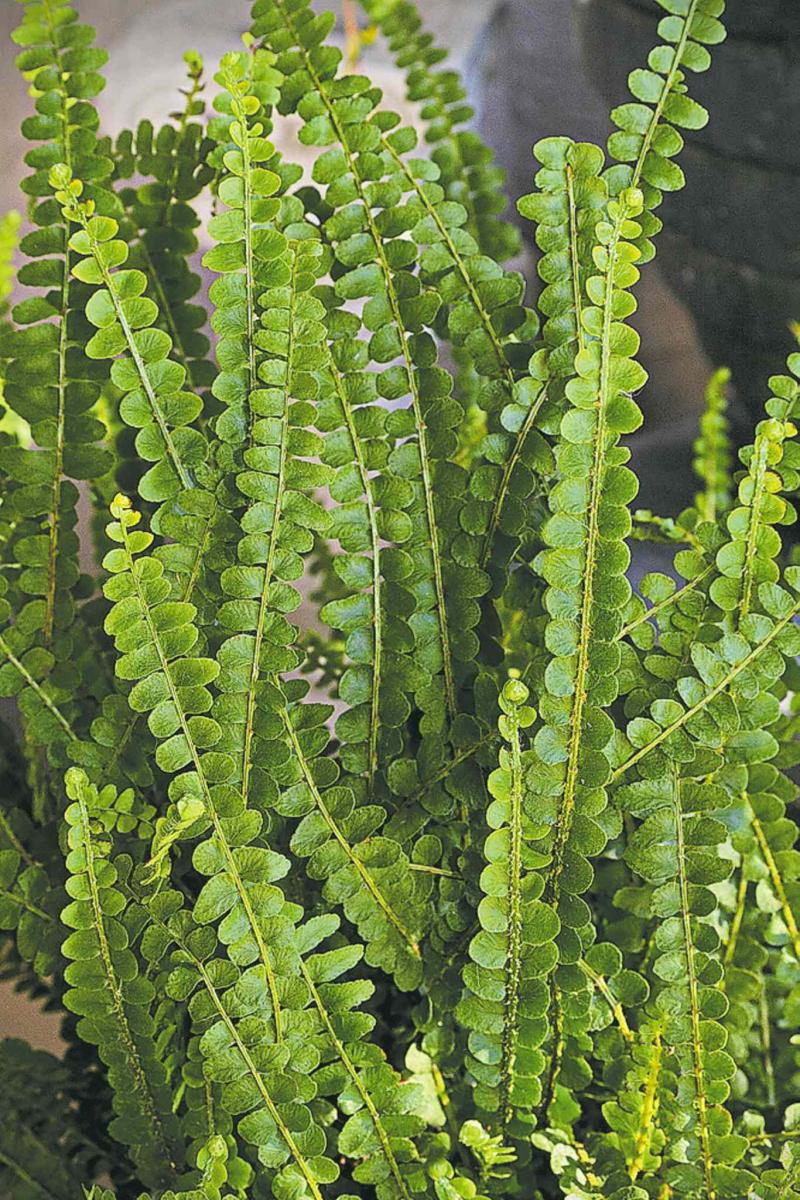
In addition to hardy varieties, Czarnecki grows several tender specimens in pots which spend the summer on his deck where they are protected from direct sunlight. They include silver lace fern, asparagus fern and lemon button fern which is the smallest of the Boston ferns (Nephrolepis), growing to no more than 30 centimetres high. A personal favourite, Czarnecki says that the delicate, button-shaped leaves aren't messy like the typical Boston fern which drops its fronds easily especially indoors during the winter. Czarnecki overwinters his potted ferns in both his sunroom and garage where he maintains temperatures at about zero degrees. If brought indoors, ferns should be situated in a bright area where it won't receive direct sunlight. Cut back on watering, allowing the surface of the soil to feel dry to the touch, and cease fertilizing until the plant begins producing new fronds. To enhance humidity, lightly spray the fronds occasionally or set the plant on a layer of small stones in a tray with a shallow layer of water.
Don't discount the value of ferns, either annual or perennial, in your summer containers. If you haven't tried Kimberly queen fern in your outdoor shade containers, you are really missing something. A non-hardy fern that is lovely at the time of purchase with the promise to increase in size dramatically before summer's end, Kimberly queen (Nephrolepis obliterata) puts on a stunning show well into October, even standing up to light frost.
It performs equally well in areas of the garden that receive no more than slight glints of morning light to brightly lit areas. Last summer, in a pair of tall black ceramic containers opposite my patio doors, I underplanted Kimberley queen with English ivy (Hedera helix) ivy and a particularly good batch of trailing Lysimachia nummularia. In another brighter location, I combined Kimberley queen with bright orange bonfire boliviensis begonia and Miss Montreal begonia, which blooms in the softest pink. And, of course, underplanted with the obligatory trailing Lysimachia.
I will likely repeat both recipes in next summer's garden, but regardless, the main ingredient, Kimberley queen, will find herself in many more annual containers. I've also combined Maidenhair fern with begonias and florist hydrangeas in windowboxes and containers. Delicate with fan-shaped fronds on black spindly stems, try tucking it in amongst your favourite shade annuals for a look that says sheer elegance.
Maidenhair fern (Adiantum) is hardy to zone two and is one of my favourite ferns, although I've had the least success with it as a perennial. My mistake has been in growing it near spruce trees where the soil is especially acidic and dry and the light conditions too low. Most ferns prefer moist, well-drained soil that is only slightly acidic. While the addition of humus helps to buffer some of the acidity beneath evergreens, the Maidenhair fern, in particular, prefers an alkaline soil.
If you have a favourite fern, protect your investment by mulching with shredded leaves. Leave the old fronds on the plant for added protection. In springtime take care to not damage the crowns of ferns with garden tools such as rakes.
colleenizacharias@gmail.com