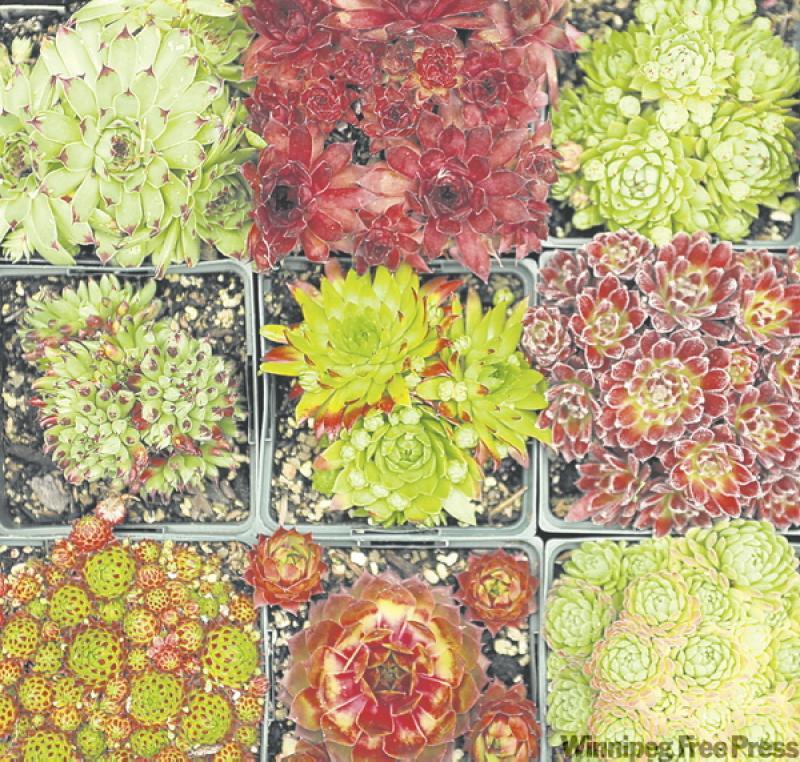
If you only think hens-and-chicks or that old floppy favourite Sedum 'Autumn Joy' when you think succulents, it's time for another look.
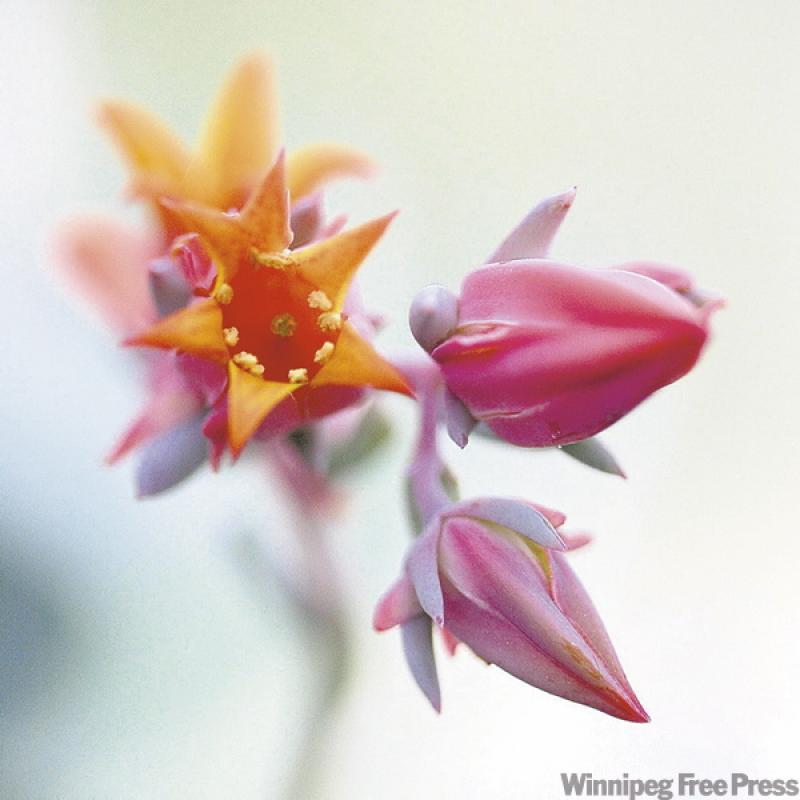
These chubby-leaved plants, like echeverias, are suddenly becoming available in a stunning array of shapes and colours. And if their geometric good looks weren't enough, they are also easy care, drought tolerant and can take the heat that Winnipeg summers can sometimes dish out. In fact, the only way you can kill them is to give them too much water.
"The new look is succulents, and the great reward is a garden designed purely as a place to sit, enjoy and relax in," says an Australian website, echeverias.com. "Gone are the thirsty, high-maintenance gardens full of the 'same old, same old' . . . they have been replaced by succulents."
While there are hundreds of types of succulent plants -- from such familiar ones as aloes and jade houseplants -- there are three main types stealing the spotlight this season: echeverias, which are native to Central and South America and are fairly new on our scene; sempervivums (hens-and-chicks are part of this group) and sedums (such as the late-summer bloomer 'Autumn Joy', with its rose-coloured broccoli-like blooms).
New sempervivums (which is Latin for "always living") and sedums are suddenly turning heads since plant breeding has produced some knock-out varieties.
Sempervivums used to be just green. Now they're available in a tremendous range of colours -- burgundies, blue tones and bronze.
If you've given up on sedums because your old-fashioned variety flops, leaving a hollow centre just as it comes into bloom, or you have a yellow creeping type that takes over your garden, consider the new varieties.
I dug up my Sedum 'Autumn Joy', tossed it unceremoniously on the compost heap, and replaced it with Sedum 'Mr. Goodbud'.
In Europe, sedums and sempervivums are hot for green roofs -- in fact "carpets" of succulents can simply be unrolled onto rooftops. These plants, many of which are native to alpine areas, are also excellent for inserting into rock walls and walks.
Echeverias are the most extravagant and amazing in leaf shapes and colours -- they've even been planted in sand to resemble an undersea garden of exotic corals and waving plants.
Unlike sedums and sempervivums, echeverias cannot withstand Canadian winters, but move easily inside to being a living focal point.
"My only concern was how they'd survive over winter, but they were just fine in my house last year -- and we have low light and were away part of the winter," says Patry.
She notes that since all these plants grow naturally in dry, rocky areas, they seem to look best in stone or concrete pots or troughs -- sempervivums can even stay outside all winter in their containers.
-- Canwest News Service