Marc LaBossiere / Winnipeg Free Press
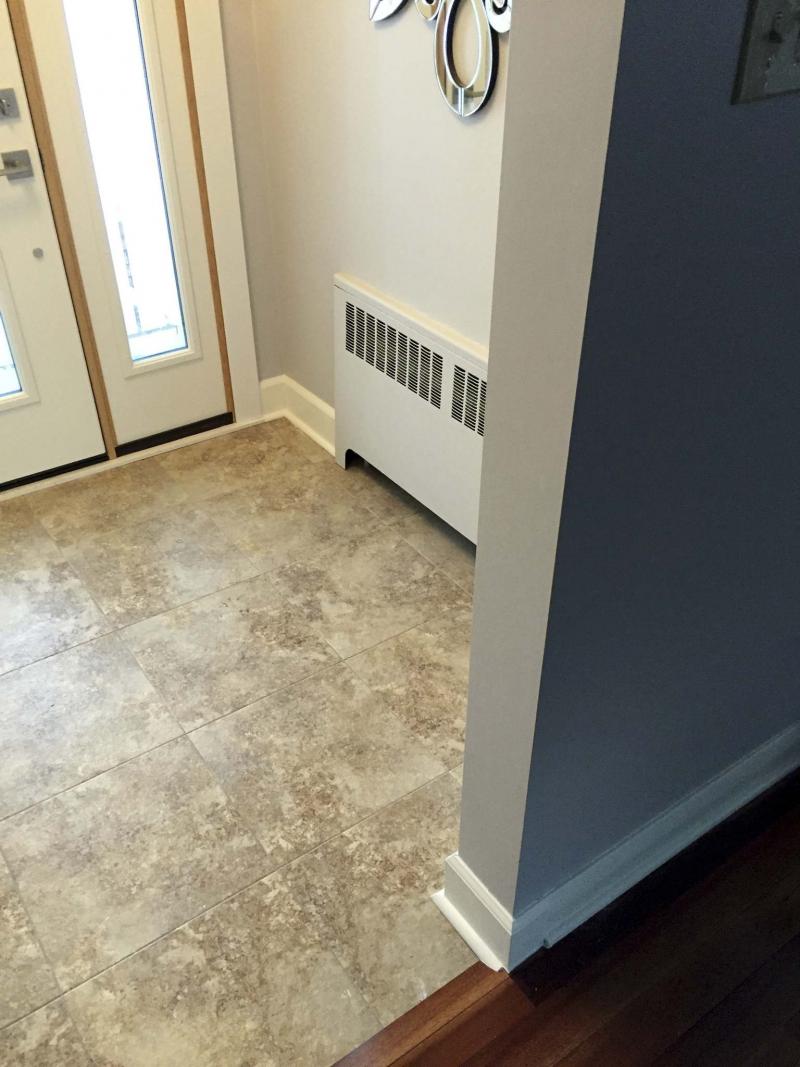
By removing the old interior door that quarantined the small foyer, simply adding drywall and corner-bead revitalized the space’s appearance and functionality.
Marc LaBossiere / Winnipeg Free Press
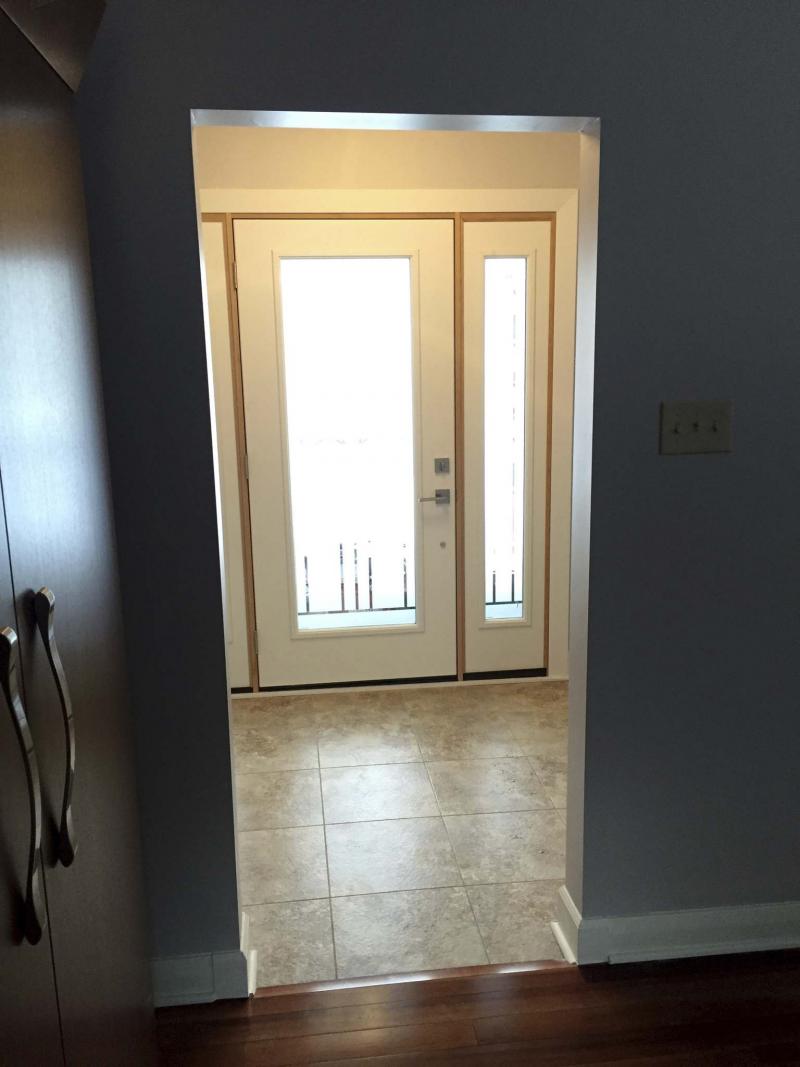
The doorway opening increased only slightly in size once the jamb was removed, but the finished result seems much larger
Marc LaBossiere / Winnipeg Free Press
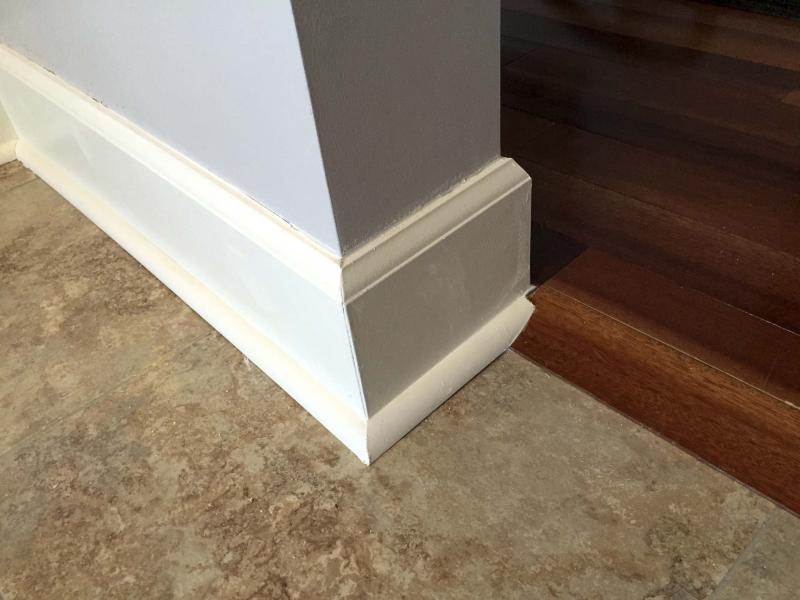
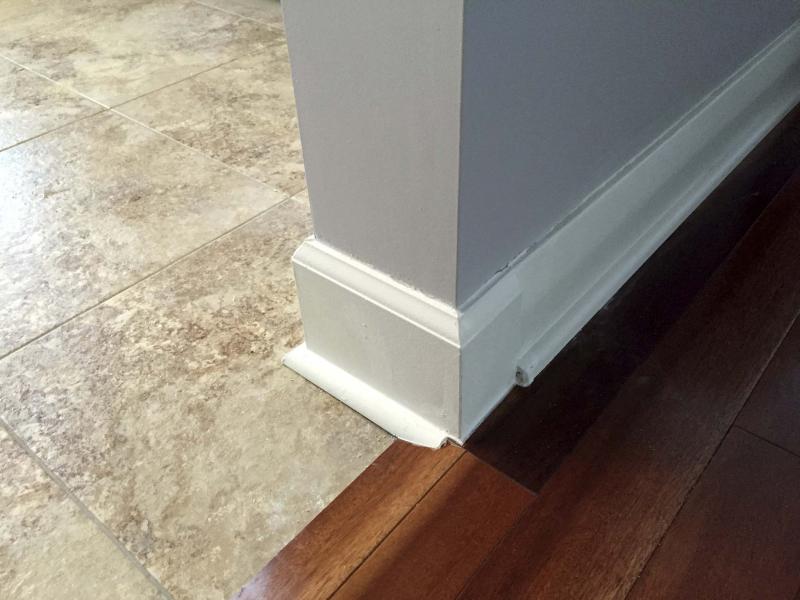
The lower quarter-round was tailored to accommodate the discrepancy in floor elevations from room to room.
After being in your house for a few years, you often realize what works and what doesn’t — in other words, it becomes apparent that certain features in your residence don’t serve your desires. When a room is too small and a larger space is required, things get costly and complicated quickly. Smaller fixes, however, can often be achieved in short order and won’t necessarily break the bank.
Not all homes have a foyer — that area adjacent the front door that allows you to greet your guests and ready yourself for the transition to go outside or back inside. Repeat clients of mine have a small foyer in their home. And once you’ve entered this space from the outside, a second doorway leads you into the living room off to the left, and main hallway to the right. Lynn Lakusiak didn’t much like her foyer, as it was quarantined from the rest of the house and was never as functional as she thought it could be. Lakusiak had a plan to fix it, and it was realized early in 2016.
When a door is hung at the midway point of a wall, the door’s swings can be awkward and a big waste of space — this was Lakusiak’s biggest complaint. No matter how little furniture was allocated to the foyer, there never seemed to be enough room for the door to open or close conveniently. While other projects in her home were being worked on, Lakusiak asked what could be done regarding this "residential albatross." Simply put, the door had to go!
This little foyer got a facelift. The lighting fixture was centred in the ceiling, the existing front door was replaced by Paramount Windows with a decorative door unit with sidelights, and after a slew of minor imperfections were touched up over every surface of drywall, the ceiling and walls would be given a fresh coat of paint. Before that final step took place, we addressed that pesky interior door by first taking it off the hinges, removing it completely. Because the jamb was also unsightly, I suggested it also be removed, and the entire threshold be finished with corner bead — Lakusiak liked the idea, and told me to proceed.
Once the old oak jamb was out of the way, the rough opening exposed the old two-by-four fur timber. Although it was still in great shape, the surfaces were somewhat warped and uneven. To remedy this issue prior to securing drywall along these exposed areas, shims were used to provide straight and level surfaces on which the drywall could be affixed. Corner bead was mudded onto the corners of the new, door-less entryway, and within a few days after several coats of mud, the area was sanded and prepped for paint. By removing the jamb, we gained about two inches in width and an inch in height — much to Lakusiak’s delight, the opening appeared to increase by much more than that. There was, however, a slight unforeseen obstacle to overcome — how to assimilate the baseboards within the foyer with those of the living room and adjacent hallway. This had never been a concern with the door and jamb in place, because the trim inside the living spaces never met the trim in the foyer. Now that the beaded drywall wraps in continuous fashion from one room to the next, I needed to figure out how to achieve this in an esthetically pleasing manner, despite a nearly one-inch discrepancy in the flooring elevations, not to mention the foyer baseboards did not match the rest of the house.
Luckily, all baseboards throughout the house were installed with a secondary quarter-round along the floor. By customizing how the quarter-round was affixed to the baseboard where the floor elevations shift, and by blending the quarter-round into the higher flooring, I was able to find a solution for the newly introduced continuous baseboards. And even if the baseboards in the foyer had matched the rest of the house, a workaround that was pleasing to the eye would have been difficult, due to the one-inch height difference in flooring. It was not an ideal situation, but Lakusiak was satisfied with the custom result — I was glad, because our options were quite limited. Overall, having successfully removed the interior door overshadowed any other issues that arose. Lakusiak finally had a functional and inviting space, and that’s all that mattered in the end.
It was a straightforward project that took the better part of a week, only due to the drying times between coats of mud. Lakusiak has since furnished her foyer as she had always imagined it should be, no longer having to worry about leaving enough room for the swing of that annoying door. No longer cut off from the rest of the house, her foyer has joined ranks with the many other feature rooms of the house, proving that sometimes, you just gotta trust your gut and make a change.
bossenterprise@outlook.com