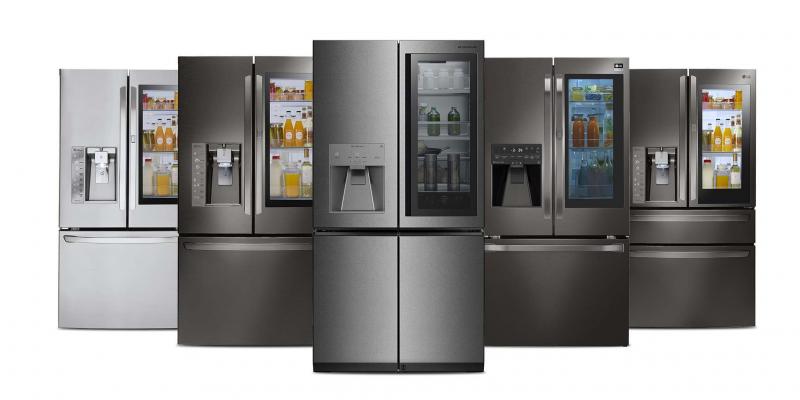
A century after the refrigerator supplanted the ice box as the newfangled way to keep perishable foods cool and fresh, the fridge is getting a digital makeover and joining the ranks of "smart" products.
Leading the charge are two of the best-known names in consumer electronics, Samsung and LG. Expected to be out later this year, LG’s Smart InstaView and Samsung’s Family Hub refrigerators will allow owners to play music in their kitchen, leave digital notes for family members, check to see if they’re out of milk when they’re away from home and even order groceries with just a voice command.
"Smart refrigerators open a whole new world for getting content and services," says Dinesh Kithany, senior principal analyst for home appliances with IHS Markit, a London-based technology market researcher.
Both Samsung’s and LG’s smart fridges will be tricked out with an array of high-tech features, including touch-screen displays on the front of their doors, one or more cameras inside and Wi-Fi radios to connect to the Internet. Both companies’ fridges will also be able to run apps and will have artificial-intelligence technology built in that will allow them to respond to voice commands and queries.
LG’s Smart InstaView will feature a jumbo-sized, 29-inch, touch-screen LCD display. If you knock twice on it, the display will become transparent, allowing you to see inside without opening the door.
The display can also show memos and to-do lists, and a digital menu lets you add virtual stickers and tags to indicate what’s stored inside and the expiration dates of those items. And the fridge will have Amazon’s Alexa voice-assistant technology built in, allowing you to play music, search for recipes, add items to a shopping list and order items available from Amazon’s Prime shopping service.
Samsung debuted its Family Hub line last year with four models that included large touch screens and the ability to run apps. Its Family Hub 2.0 refrigerators, which will come in 10 different sizes and styles when they hit stores later this year, will have some new and updated features, most notably a voice-assistant technology similar to the one in LG’s Smart InstaView. With that, you’ll be able to order groceries, check your calendar and get the time just by talking to your fridge.
LG and Samsung intend their new smart fridges to offer meaningful conveniences, not just expensive frills. Their cameras, for example, are designed for a practical purpose, allowing you to check the contents of your fridge remotely. That’s a feature Rob Enderle, an Oregon-based analyst who tracks technology trends, loves about his older Samsung smart fridge.
In the future, smart fridges could offer even more conveniences, analysts say.
"There is a lot of potential, especially once you get the interconnection with the family hub, to be able to use the refrigerator to control the stuff in the rest of the house," Enderle says.
Still, for all their cutting-edge appeal, the refrigerators clearly won’t be for everyone. Their price will likely turn off many consumers. Neither Samsung nor LG revealed the prices of their upcoming smart fridges. But Best Buy is selling last year’s Family Hub models with a starting price of US$3,000 — and those models originally cost more than US$5,000 each.
By contrast, you can buy a top-brand refrigerator without all the smarts for less than US$2,000.
Meanwhile, some early customers have found that smart fridges aren’t as smart as billed. Enderle’s fridge only has apps from Samsung on it, so there’s not a lot of choices in which ones he can use. That’s frustrating, he says, because the built-in shopping app doesn’t work in the area where he lives. Meanwhile, the fridge is supposed to talk to his Samsung vacuum cleaner, but he can’t get that feature to work.
"The interconnection (with other devices) is kind of ugly," Enderle says.
Many consumers may also be nervous about having a tech device for a basic appliance such as a refrigerator — and with good reason, given how fast-changing technology tends to work.
People tend to keep fridges for 10 to 15 years before replacing the appliance. That raises the possibility that the expensive investment for the kitchen could be outmoded within a few years. Plus, a check of the warranty for the Samsung Family Hub doesn’t mention software defects as one of the covered items the manufacturer would fix. And of course, the ultimate boogeyman for consumers: could a fridge be hacked remotely if it’s connected to the web?
Ultimately, manufacturers and consumer-electronics companies should be able to work through these problems and assuage consumer worries about smart fridges and other smart appliances, says Ben Bajarin, an analyst with Creative Strategies, a tech research firm.
"They will have good security so they can’t get hacked, and they will have more and better features," Bajarin says. "People used to freak out about cameras on their phones, but eventually that fear went away."
— Tribune New Service