Photo by Marc LaBossiere / Winnipeg Free Press
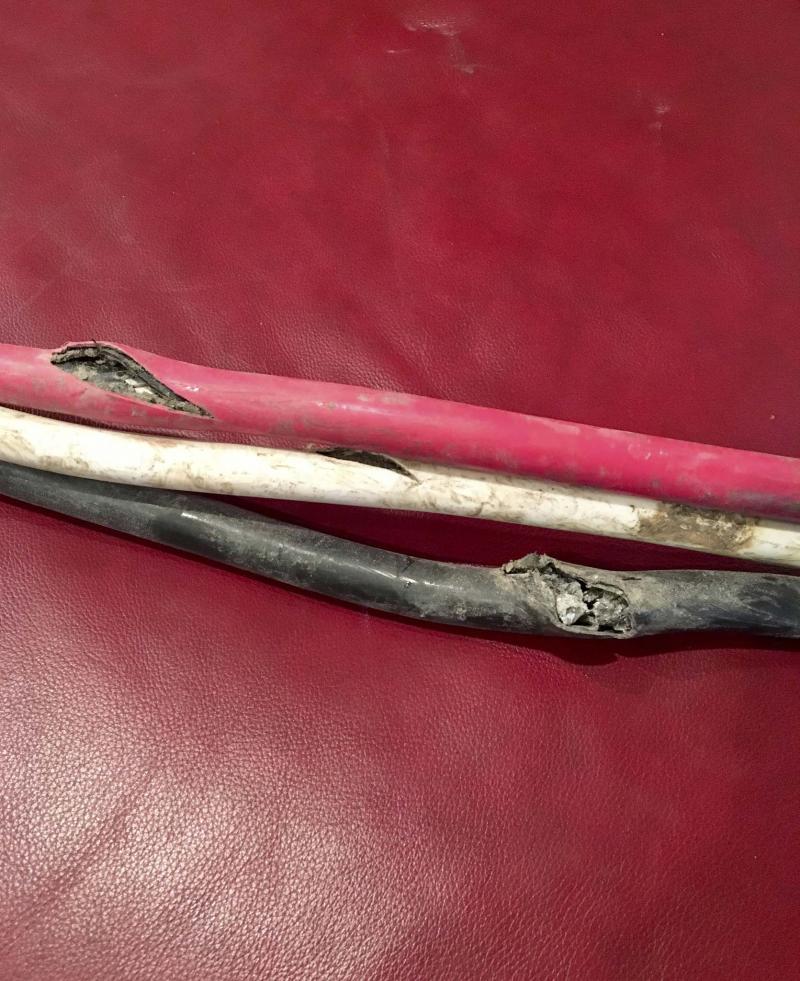
Damage to the 200-amp electrical line after the bucket of a bobcat hit the live feed and blew the fuses at disconnect near the MB Hydro meter.
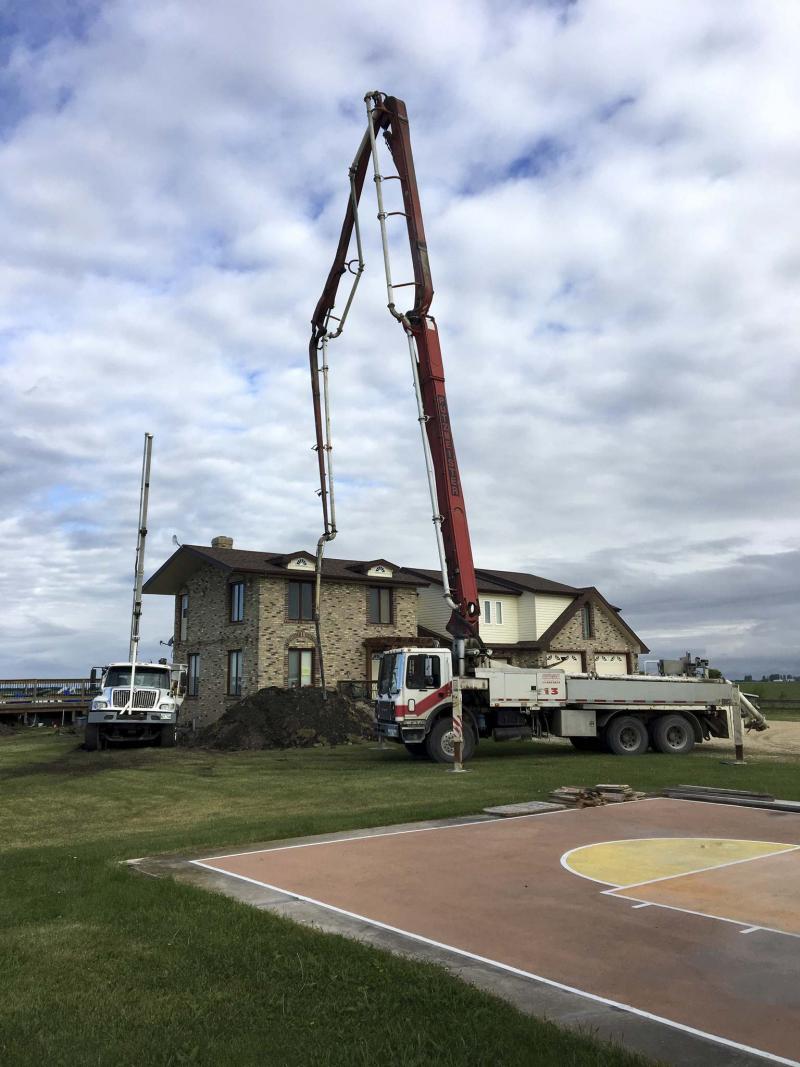
Photo by Marc LaBossiere / Winnipeg Free Press
The piling driller (left) creates the cavities for the piling forms while the boom truck prepares to feed concrete into each piling.
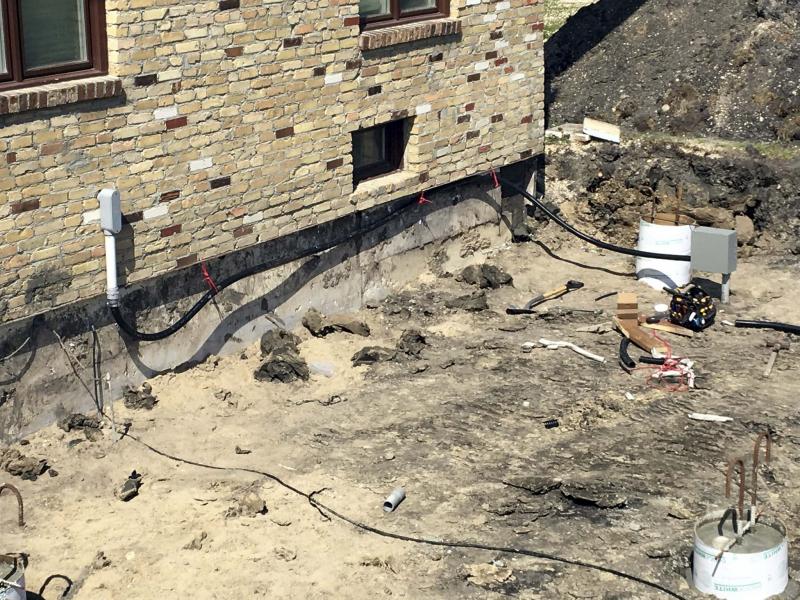
Photo by Marc LaBossiere / Winnipeg Free Press
New 200-amp line from the back of the electrical panel is spliced within a top-side junction box to the existing 200-amp line which runs underground from disconnect near the MB Hydro meter 300 feet away.
Best intentions are occasionally no match for Murphy’s Law — sometimes things just don’t go as planned. Despite all precautions, mishaps can still manage to find their way on to the job site. When these unanticipated events occur, costs increase and delays are likely. Unfortunately, no one is immune.
When bad things happen, determining the best course of action to rectify an issue is key. It’s happened to me on a few occasions.
A scenario that comes to mind is that of a renovation I had undertaken for my client, Jamey Paul, in a condo suite that required a remodel which included a kitchen facelift, upgrades to two bathrooms and new flooring throughout. During a weekend that Paul would travel to Toronto, the main bathroom and shower would receive new shower tiling and faucets. Upon closer inspection, it was determined the existing shower stall had already received a facelift in the recent past — new tile had been tiled over old tile. As such, I highly recommended to Paul the old tile AND aqua board be replaced along with the tub/shower perimeter to avoid "tile on tile." Paul agreed, and the preliminary demolition began the first morning Paul was away.
The wall behind the faucet-side of the shower stall indicated a six-inch cavity. As a precautionary measure, I created pilot holes along the edge of the existing tile to penetrate the cavity at roughly 10-inch intervals, which allowed me to reach into the cavity with a dowel to determine whether water feeds and/or electrical lines existed behind my intended cut line. No obstructions could be felt, and I assumed the water lines came up from below. With a short blade on my reciprocating saw, I slowly and carefully followed the edge of the existing tile from the top edge of tile near the ceiling, to the floor. At about four inches from the floor, I felt a ‘clink’, and heard a "pssssss" – I knew EXACTLY what this was… a hidden water feed.
Unfortunately for me, there was no main water shut-off valve for any of the individual condo units at this location. So, I opened the wall, and to the best of my ability, made an attempt to corral the water to flow into the open toilet flange, at least until I was able to finally reach the property maintenance manager on the phone. Luckily, he was nearby and rushed over to my location. Within 15 minutes, the water to the condo complex was shut off.
After a quick trip to the local RONA, the repair to the water feed was achieved. A total of 55 minutes had elapsed from "oops" to "phew." A few mobile fans that ran all day and night were able to adequately dry the wall cavity and crawl space below. The bathroom facelift was able to continue the very next day, and the entire shower stall was completed on schedule before Paul’s return.
Had Paul’s condo been on the second or third floor, gravity would have rendered the water damage much more extensively to condo units below.
I never would have guessed that both the hot and cold water feeds would have been installed flush against the inside of the drywall, just four inches off the floor, within a six-inch wall cavity — clearly an oversight on my part, that will never again be repeated. Lesson learned!
During the construction of the two-storey addition on my house, it was necessary to sub-contract certain tasks, one of which was the excavation and concrete portions of the crawl space and support pilings. I had mentioned in an earlier column that Ernie Hildebrandt and his team had done an awesome job prepping the area for the crawl space by carefully excavating the area once the underground services to the house had been located; the 200-amp electrical lines, the BellMTS phone and alarm lines, as well as the best guess-timate as to where the artisan well feed entered the house below the existing basement floor. The well-line was my main concern that morning — there was a remote chance that the drilling company tasked with creating the six pilings to a depth of 20 feet could unknowingly nick this well-water feed while drilling. This possibility was extremely unnerving. Once the sixth and final piling had been drilled successfully, there was indeed a sigh of relief from everyone. Unfortunately, it was short-lived.
While the concrete was being poured into the last of the pilings forms, a Bobcat operator was removing the mud and clay that had been exhumed from each of the drilled piling locations. And on one pass, out of the corner of my eye, I noticed that the 90-degree conduit that brought my 200-amp electrical feed into the back of my electrical panel began to pivot ever so slightly in the direction of the Bobcat. I began to holler, as did the rest of the crew… but it was too late. By the time the Bobcat operator had noticed what was occurring, the damage had been done. An outer tooth on bucket of the Bobcat had clipped the exposed 200-amp service line. The bucket breached the sheathing of the line and shorted out the circuit. I then watched in disbelief as the operator jumped out of his Bobcat to move the lines away from the bucket… with his hands! I obviously feared the worst. Luckily, the fuses at the disconnect location near the MB Hydro meter had performed as they are intended, and blew the moment the bucket hit the line.
Although this had been a dangerous incident, it was an accident, and no one was injured. The concrete crew continued with their pour until the job was done. Being a Friday afternoon with no power to the house, it was fortunate that local electrician and good friend, Lionel Cure, was able to drop what he was doing and come to the rescue. Because the crawl space was scheduled to have a slurry concrete floor, Cure suggested it would be prudent to create a top-side junction box which could easily be serviced in future, rather than splicing the lines below the surface. As such, new lines were brought into my house through the back of my electrical panel. These new lines were than spliced to the existing 200-amp feed within a new junction box, which would eventually rest atop the concrete floor of the crawl space. The issue was rectified in just four hours, thanks to Cure!
The short that was created when the Bobcat breached the 200-amp feed blew out a four-inch wide chunk of the bucket — solid steel was vaporized in an instant. The operator told me afterwards, during a moment of deep contemplation, that in all his 18 years of experience, never had he ever been exposed to a scenario so dangerous through his own carelessness. After a short pause, I simply told him that these things happen to the best of us — and that luckily, no one was hurt, including him… this time. No doubt, a valuable topic of discussion during his company’s next safety meeting.
Accidents can happen any time, anywhere. To stay safe, you have to remain vigilant. A valuable and necessary adage, in all aspects of life.
BossEnterprise@outlook.com