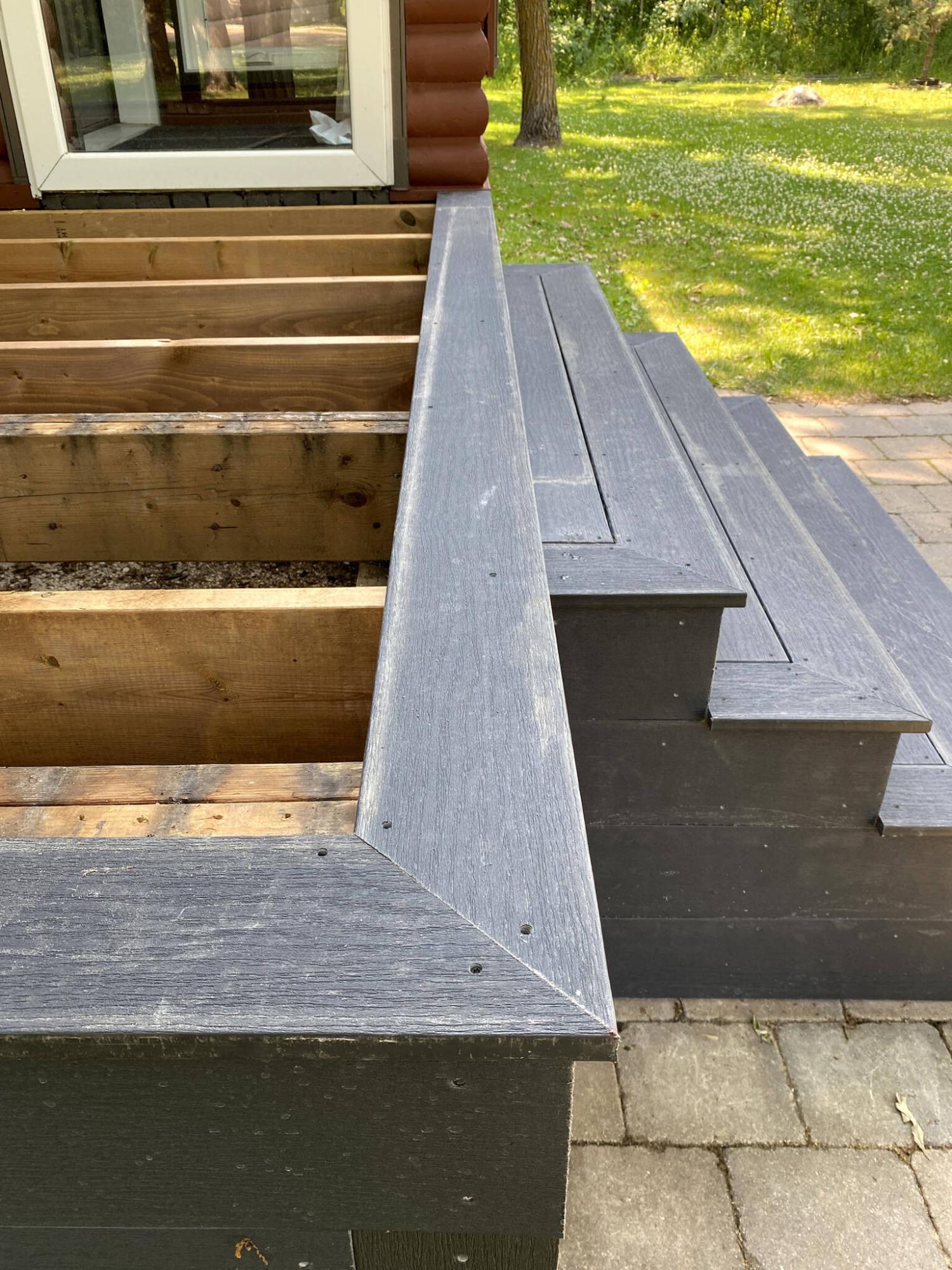
Marc LaBossiere / Free Press
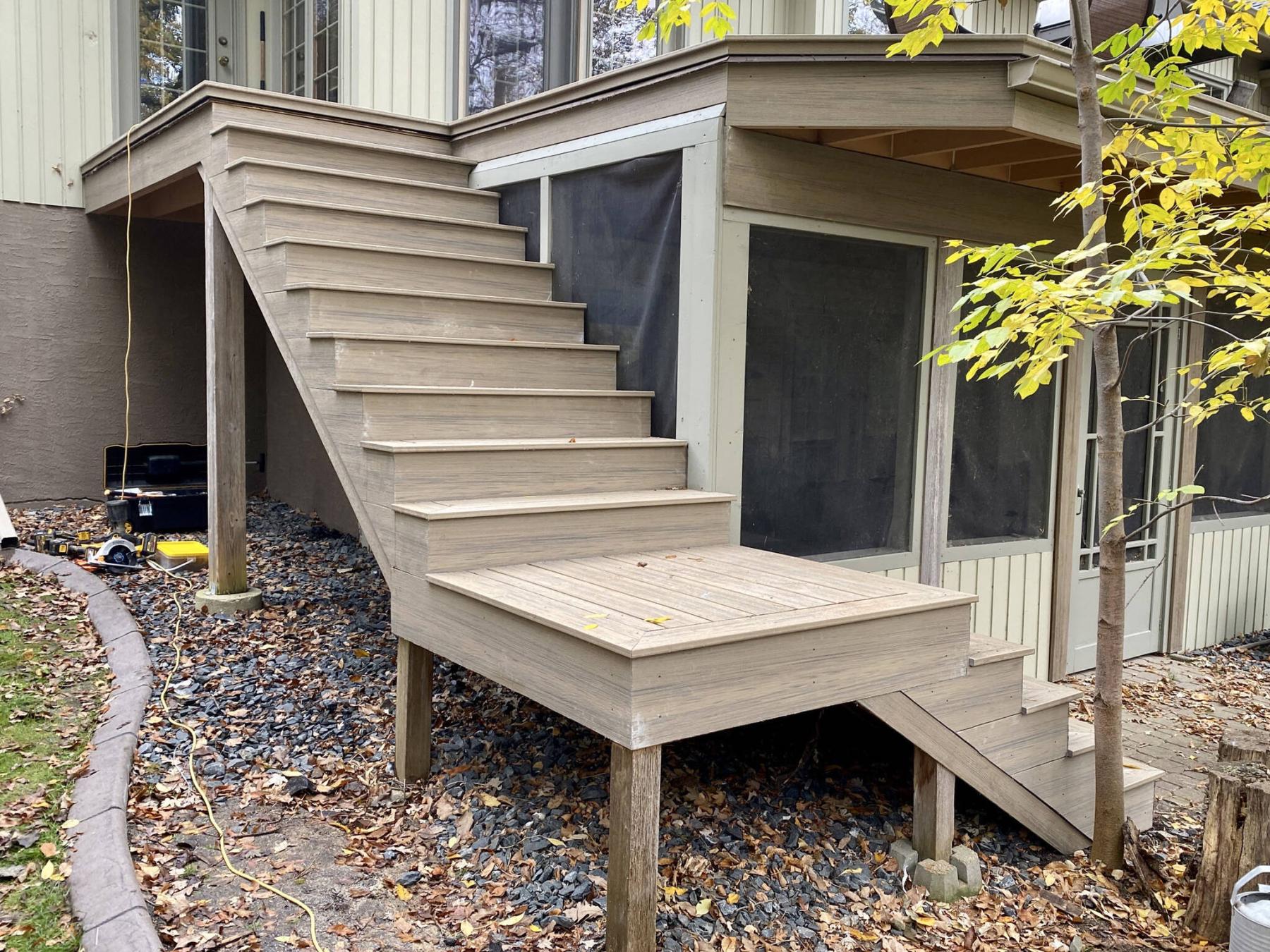
‘Picture-framing’ and stairs are completed first using a darker-grey composite than will be used for the subsequent main top-decking boards.
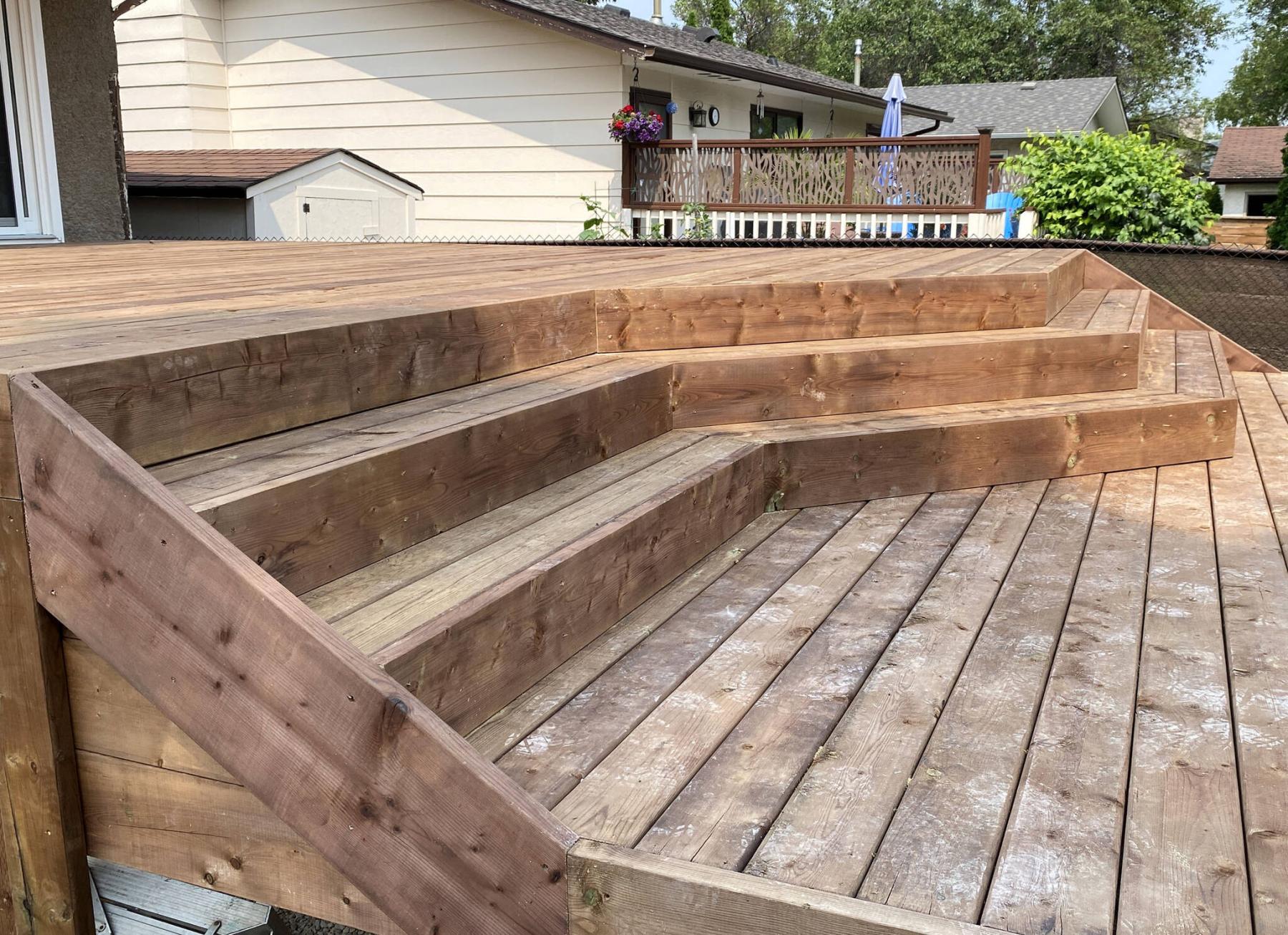
A 45-degree angle along the stairs is introduced to maximize upper-tier top-decking surface, prior to the addition of aluminum railings.
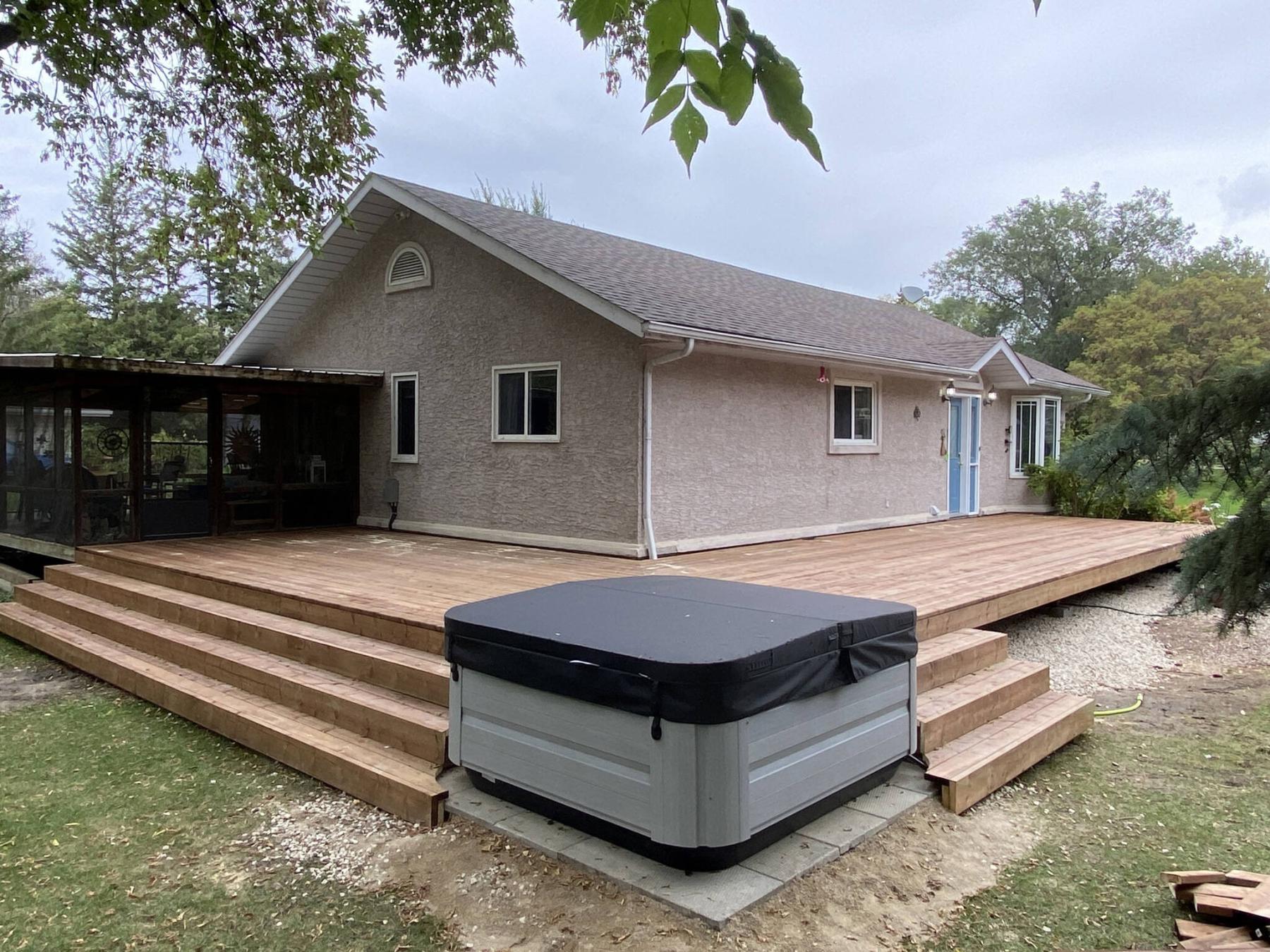
photos by Marc LaBossiere / Free Press
On a treated-lumber, double-wing deck project, one section of top decking is completed before railings and fascia are added.
After submitting my weekly Reno Boss columns for roughly one year, I asked my editor out to lunch to voice a few concerns regarding my subject-matter choices.
Over the course of that first year, I noticed similarities from column to column, especially when elaborating the step-by-step process to build a deck. Other than the actual design layout, most decks follow the same procedure. And when I’ve listed those steps, it feels like I’ve told the same story repeatedly.
My editor smirked, and simply said Reno Boss readers may not get to every week’s column, and also said completion photos of varying completed decks showcase a variety of designs, no matter the similarities they may possess beyond esthetics.
Although these comments did somewhat alleviate my worries during our lunch, I still sometimes feel my concern from back then is somewhat relevant, even today, as though déjà vu is playing a cruel joke.
This subtle anxiety notwithstanding, today’s column is purposefully something of a revisit to past columns. Every March, I feel the need to remind impending deck-build customers not to wait too long to begin preparing their designs. Contacting potential deck-builders as early as possible is also always a good idea, even when the snow is still at its deepest.
I’ve often joked that when homeowners finally awake from their hibernation, the majority of early-spring/summer build dates will have already been booked. It seems winter slumber can play a role in subconscious procrastination, and completely undermines “the early bird gets the worm” philosophy.
As such, get busy sketching your new deck and start contacting builders… now! When analyzing the process from start to finish, it can take several weeks to refine a design, choose the type of top decking and railings, and decide if there will be add-ons such as lighting or other features — all before applying for building permits. And remember, your impending build is likely being prepped along with several others on your contractor’s list of upcoming projects.
Wood or composite?
Once you have a design in mind, it’s best to contemplate whether the deck will be sheathed in lumber or composite decking. Not only do serious financial ramifications ride on the choice, but structural requirements for composite top decking tend to be more rigorous, which increases the volume of lumber needed to frame your deck.
While there are several lumber options available for railings, including those featuring metal balusters, aluminum railing with pickets or glass inserts are always popular choices. However, the latter is considered an upgrade, and does incur added costs.
With the design in place, and most esthetic choices made, your contractor can then determine how best to approach the structural design of your deck to meet local building code requirements. While some municipalities allow the post-and-pad approach with adjustable deck jacks to support beams, others may require screw piles which are countersunk into the ground.
Even though the per-post outlay for the latter option can add considerably to project costs, many deck-builders swear by them. I still prefer the post-and-pad/deck-jack route, primarily because it’s an elegant approach to deck support. Moreover, I’ve found it’s much easier to adjust a jack upwards should a post begin to dip slightly, than it is to manipulate an unruly screw pile that wants to come out of the ground due to frost heaving (extremely rare, but it does happen). If screw piles are your preferred approach, I suggest they be installed deeper than stated minimum depth, to negate any frost-heaving issues.
Pricing is likely the biggest factor when planning a deck build. Treated lumber is the lower-cost choice for exterior sheathing, but it’s only available in the colours offered for retail sale. And while composite-decking options may seem endless, pricing can vary quite drastically.
Most importantly, the availability of certain composite-decking colours and styles may dictate your build schedule. As such, it’s always best to make inquiries as early as possible, to ensure the builder will have access to everything needed, when it’s needed. There’s nothing worse than waiting on materials.
It may be hard to visualize creating something outdoors at this time of year. That’s why it’s imperative to see past the snow drifts, and to begin making sketches of your dream deck now. The earlier the design is set and your esthetic choices made, the sooner the formal process of applying for a deck-build permit, ordering materials and scheduling the actual build can be undertaken.
It may only be the beginning of March, but the launch of deck-building season is only a couple of months away. So, get on it!
RenoBoss.Inc@outlook.com