Sandra Gessner Eggertson photo
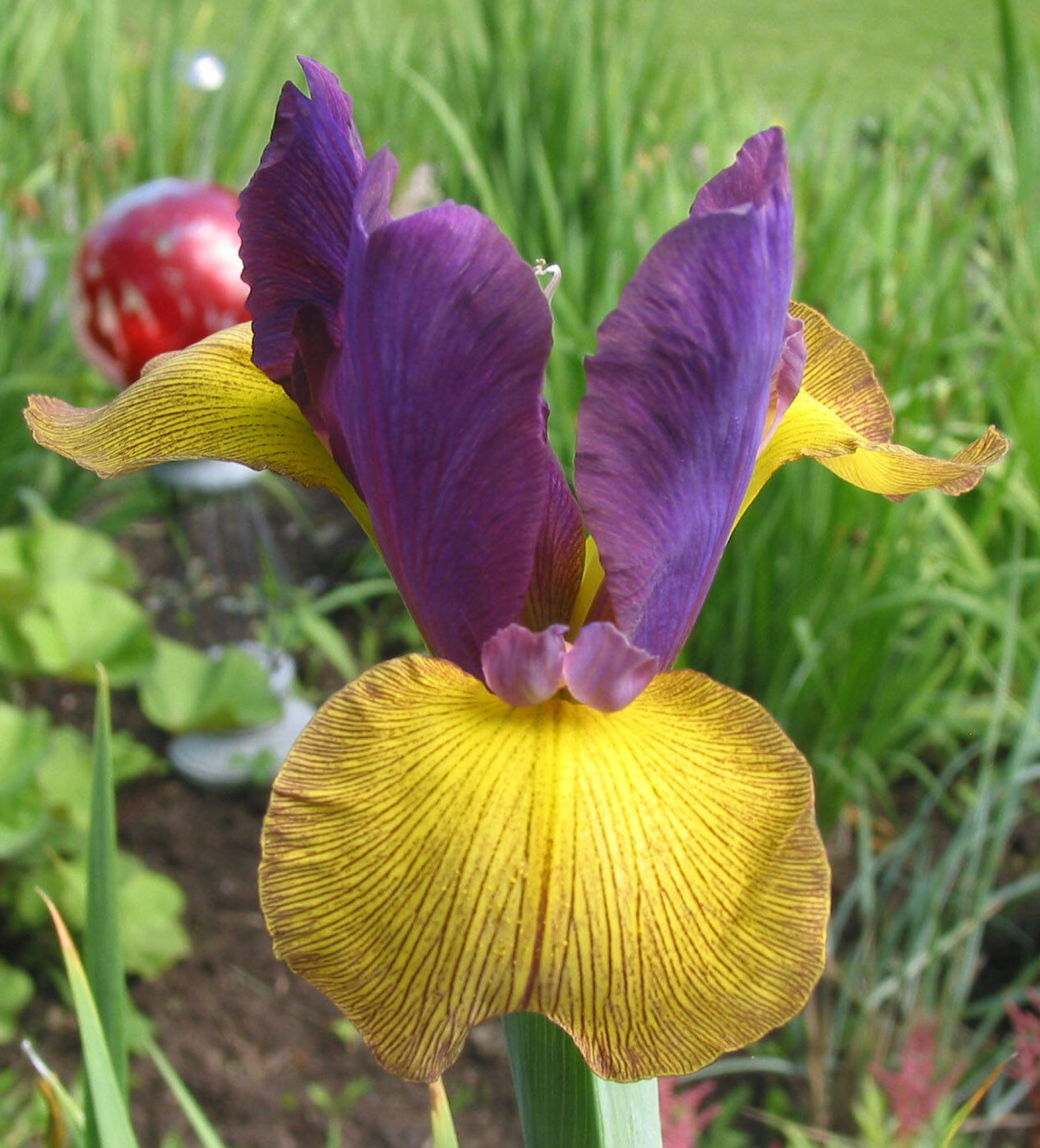
Spuria iris Eleanor Hill, show here next to a garden gazing ball, is a standout beauty with rich, saturated colour.
Colleen Zacharias photo
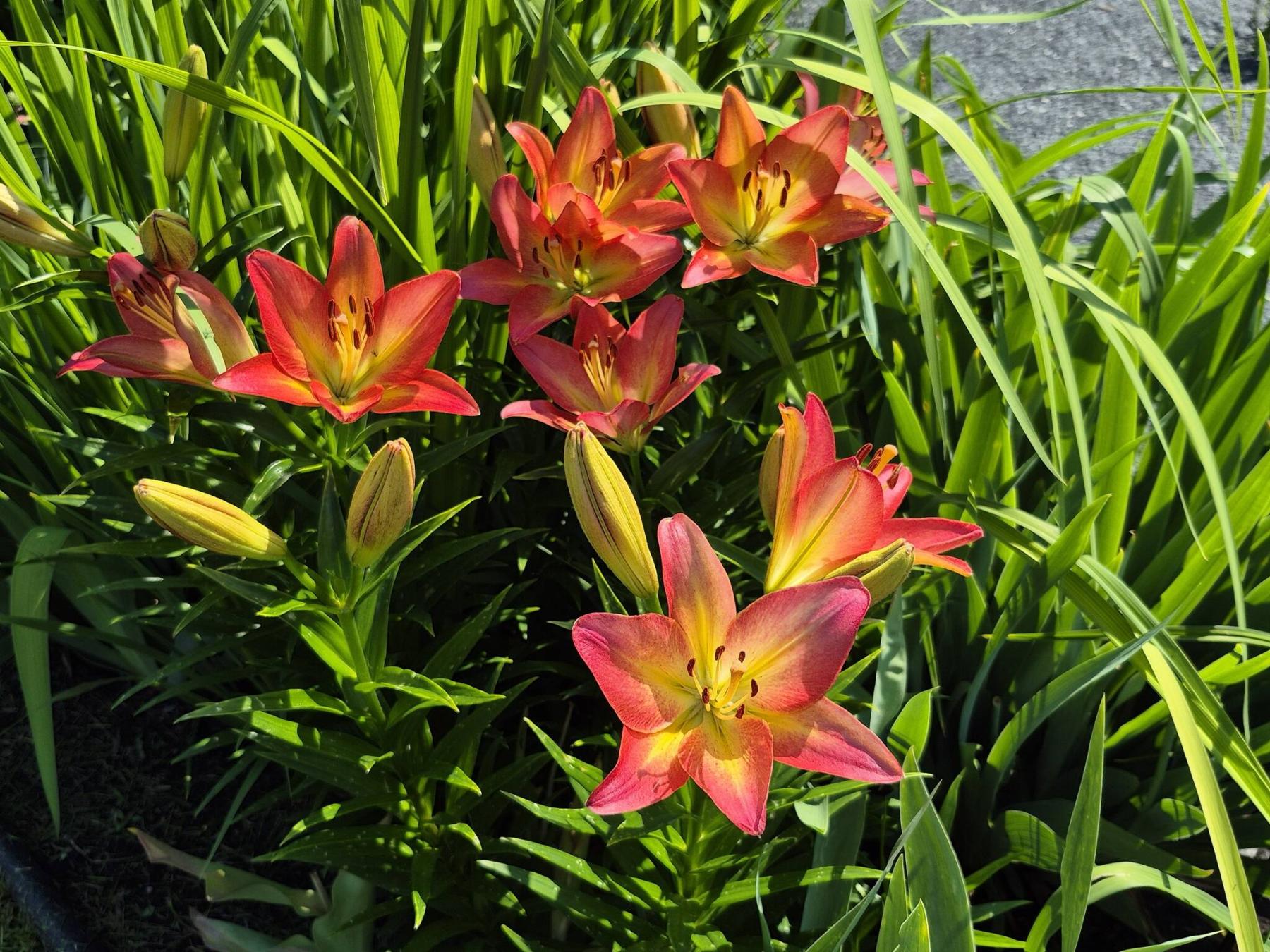
L.A. Kiss Me Kate hybrid lily, one of the many lily cultivars in Sandra Gessner Eggertson’s garden, has effervescent bright pink blooms.
Colleen Zacharias photo
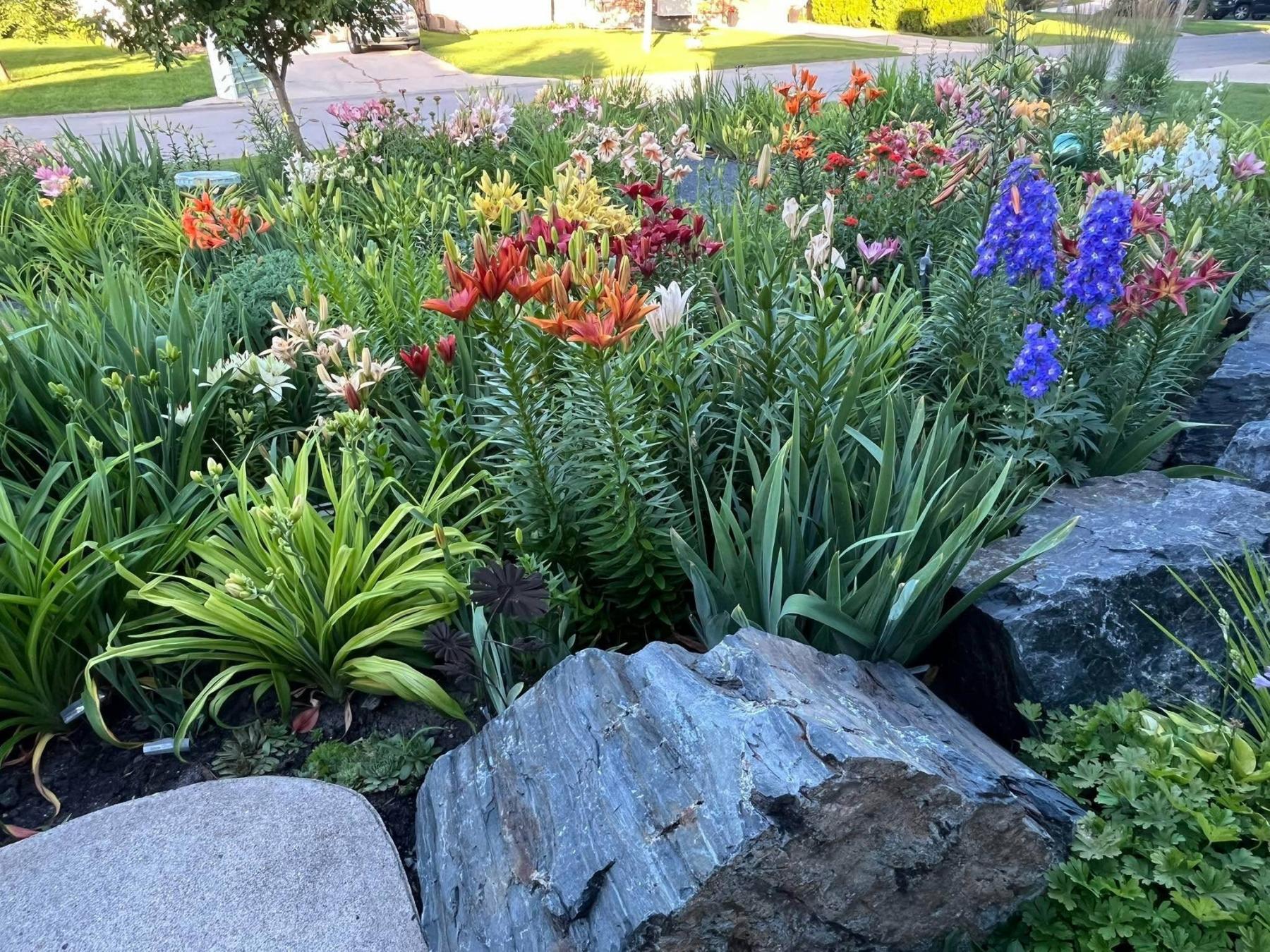
Sandra Gessner Eggertson’s new front yard garden has spectacular curb appeal with lilies and irises galore.

Sandra Gessner Eggertson photo
A river of granite boulders flows through a garden of lilies, iris, delphinium and more.
Colleen Zacharias photo
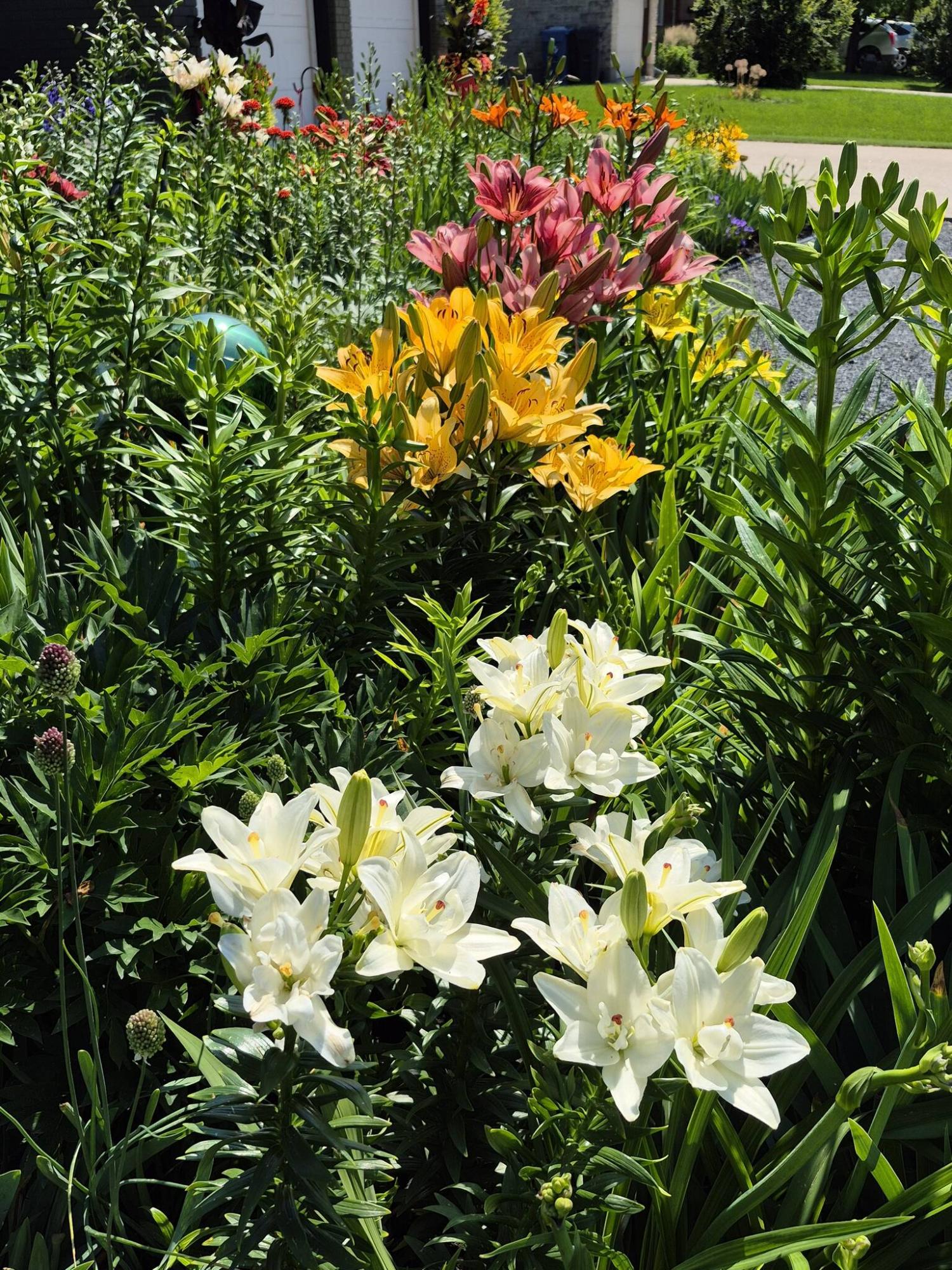
Annemarie’s Dream, a fully double Asiatic lily, comes into bloom just before L.A. Evening Star hybrid lily, situated directly behind, can steal the show.
It’s not uncommon for homeowners to dig up some of their beloved plants when they sell their home and move to another property. But relocating hundreds of prized plants from an established and spacious rural garden to a blank slate is a whole other matter.
In 2023, Sandra Gessner Eggertson and her husband decided it was time to sell their three-acre rural property near St. Andrews. They purchased a home on a quiet street in Winnipeg where Eggertson planned to make a new garden. Their rural property was listed that fall and sold immediately. Eggertson moved in December, but first, hundreds of treasured perennials, including hostas and specialty lilies and iris plants, needed to be transplanted into pots.
With the assistance of a good friend — a fellow lily and iris enthusiast — the enormous task of digging and dividing took three months. The plant divisions were loaded into a truck and transported to her friend’s farmyard, where they spent the winter in a protected location with ample snow cover.
“First we placed bales of straw in the shape of a big square to act as a catch-all for snow,” says Eggertson. “The pots were placed close together inside the square and then covered with mulch. I had very few plant losses.”
By spring 2024, Eggertson, now settled in her new home, set about making a garden in her front yard. She began by removing all the existing grass, leaving just the boulevard grass and a flowering crabapple tree. Landscapers made two sweeping, curved beds, separated by a wide pathway of crushed gravel. A river of granite boulders flows through the bed closest to the house.
Once a four-way soil mix was added to the new beds, Eggertson used a loop hoe regularly to remove any weeds. By the end of July that year she was ready to plant.
Fast forward a mere two years and Eggertson’s front yard garden is an absolute showpiece, with masses of colourful blooms. To the passerby, it appears as an established, long-standing garden. A plaque near the front of the garden shows it has been designated an official Historic Iris Preservation Society display garden. Formed in 1986, the Historic Iris Preservation Society is a section of the American Iris Society. It was formed to prevent the extinction of heirloom cultivars.
“There are Canadian branches. Barbara-Jean Jackson, who is also president of the Can-West Iris Society, is our representative here in Manitoba,” Eggertson says. “To be designated an official display garden, you must have a certain number of historic irises in your garden and you have to be prepared to have people come and view it.”
Eggertson has numerous historic irises, including a cultivar that dates to the 1800s. She also grows several varieties which she ordered from Iris Cayeux, a famous nursery in France which was started by the Cayeux brothers, who helped revolutionize modern iris breeding from the late 19th to the mid-20th centuries.
Eggertson grows several different types of irises — from miniature dwarf types, which are the first to bloom, to standard dwarf, miniature tall bearded, intermediate bearded, border bearded and tall bearded types.
“They all bloom at different times, so my garden looks different every week as they progress,” she says.
Spuria iris is a favourite. A cousin of the bearded and Siberian irises, Spuria irises are among the last irises to bloom in the garden. They were in bloom on my visit in early July. But what’s especially notable about Spuria irises is their height and rich, intense colour.
“They’re very slow to get established, but I had some at my former property that were almost up to my forehead,” Eggertson says.
Spuria iris Eleanor Hill, with its striking purple and yellow flowers, is one of her favourites. She loves the saturated colour. Eggertson also likes Iris pseudata Yukiyanagi (Willow in the Snow), a beautiful pure white iris with a purple eyelash pattern around a yellow centre.
On my visit, many of the irises had finished blooming. Their wide, strap-like foliage will continue to provide handsome texture throughout the remainder of the growing season.
Now, in Eggertson’s garden, it’s showtime for lilies. And what a captivating, colourful scene, with dozens upon dozens of Asiatic lilies bursting into bloom in this hot, sultry month of July. What must the neighbours think!
As the Asiatic lilies finish blooming, Eggertson’s L.A. hybrid lilies start blooming. L.A. hybrids are a cross between longiflorum lilies (trumpet-shaped blooms) and Asiatic hybrids. Next, the O.T. hybrids come into bloom. Also known as Orienpet lilies, O.T. hybrids are formed by crossing Oriental lilies with trumpet (Aurelian) lilies.
It’s an education, really, when visiting Eggertson’s garden because irises and lilies are so different from other garden perennials. Gardeners such as Eggertson, who specialize almost exclusively in lilies and irises, have their own language. Specific botanical terms are used to describe flower shapes and forms. Enthusiasts belong to tight-knit, widespread groups that exchange knowledge and plants. Eggertson cut her teeth on how to grow lilies and irises over regular coffee get-togethers that started 35 years ago with experienced enthusiasts who have since become lifelong friends.
“Those connections are vitally important,” Eggertson says. “We exchange ideas about what works and doesn’t work.”
Eggertson’s garden is truly one-of-a-kind.
“There’s not one duplicate iris or lily and if I happen to find one, I dig it up and replace it with something else in my backyard or trade it with one of my friends.”
And forget the lily beetle. If one dares to fly into Eggertson’s garden, its fate is quickly sealed with an emphatic squish.
Interestingly, Eggertson only fertilizes her garden in the fall, after the ground freezes.
“You can’t fertilize irises once they have started to grow, because the rhizomes can burst,” she says. “I wait until fall, when I cut everything down and, after a frost, when all the plants are dormant, I go over the whole garden with Vigoro Pink All Purpose Garden Fertilizer. Then in the spring, when the snow melts, the plants are ready to grow.”
There are numerous contrasting flower shapes and colours, too, in Eggertson’s garden that combine beautifully with all her irises and lilies — Maltese cross (Lychnis chalcedonica) in two colours, pink and orange, along with delphinium, salvia, sedum, allium with true blue flowers, oodles of daylilies, plus roses, hostas and so much more.
Look closely and you will see the sun’s rays glancing off glass gazing balls among all Eggertson’s flowers. There are tiny bee and butterfly watering stations, too. Eggertson takes care to add marbles to the shallow ceramic dishes so that visiting bees and butterflies don’t drown, and uses a tiny watering can to change the water every day — that’s a considerate, imaginative and innovative gardener.
But Eggertson isn’t done yet.
She plans to create an additional flower bed at the very front of her garden.