Gwen Beam photo
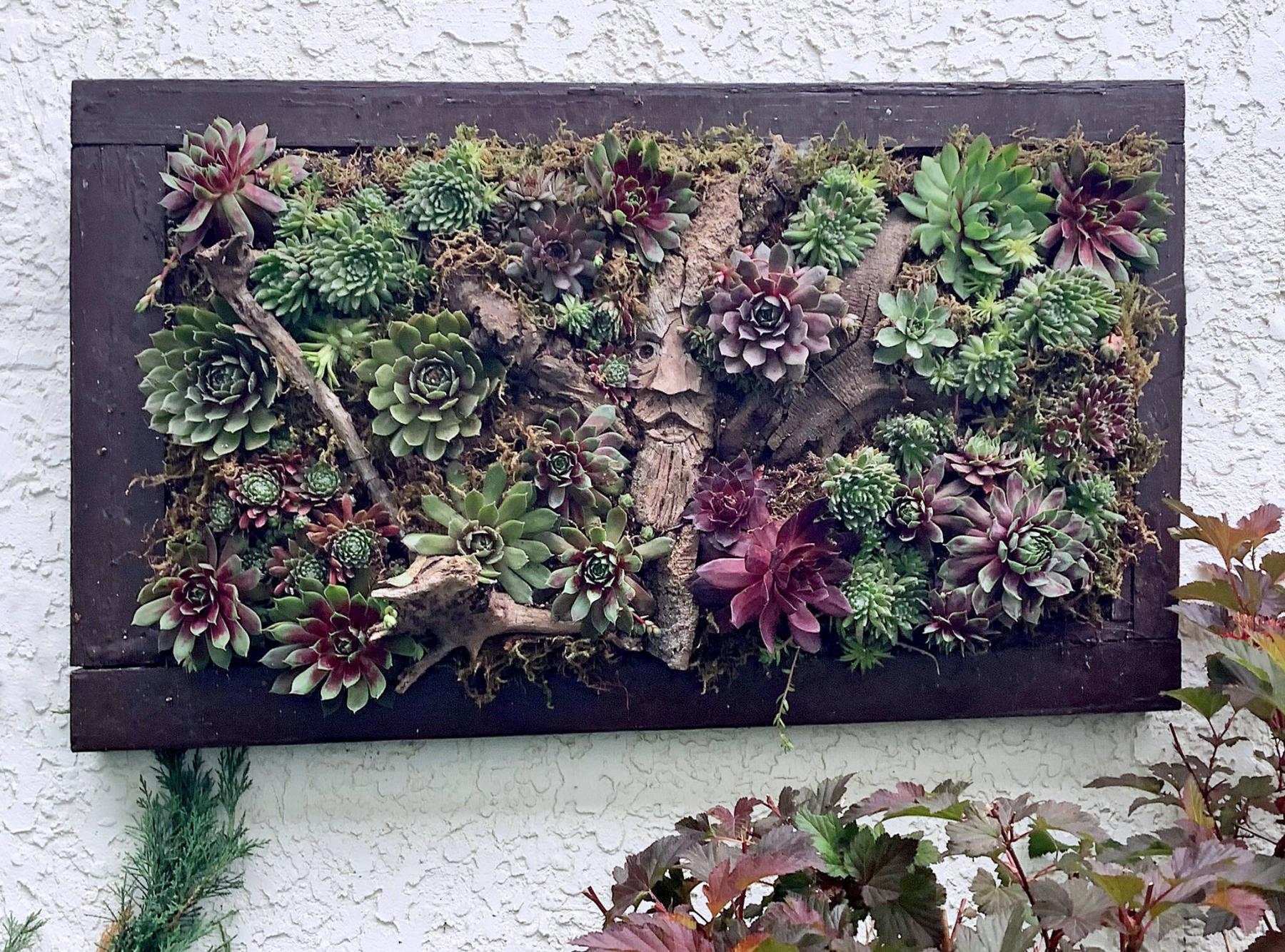
This handsome succulent living frame spends the winter buried in the ground beneath the insulating snow until it is uncovered in spring for another season of outdoor display.
Gwen Beam photo
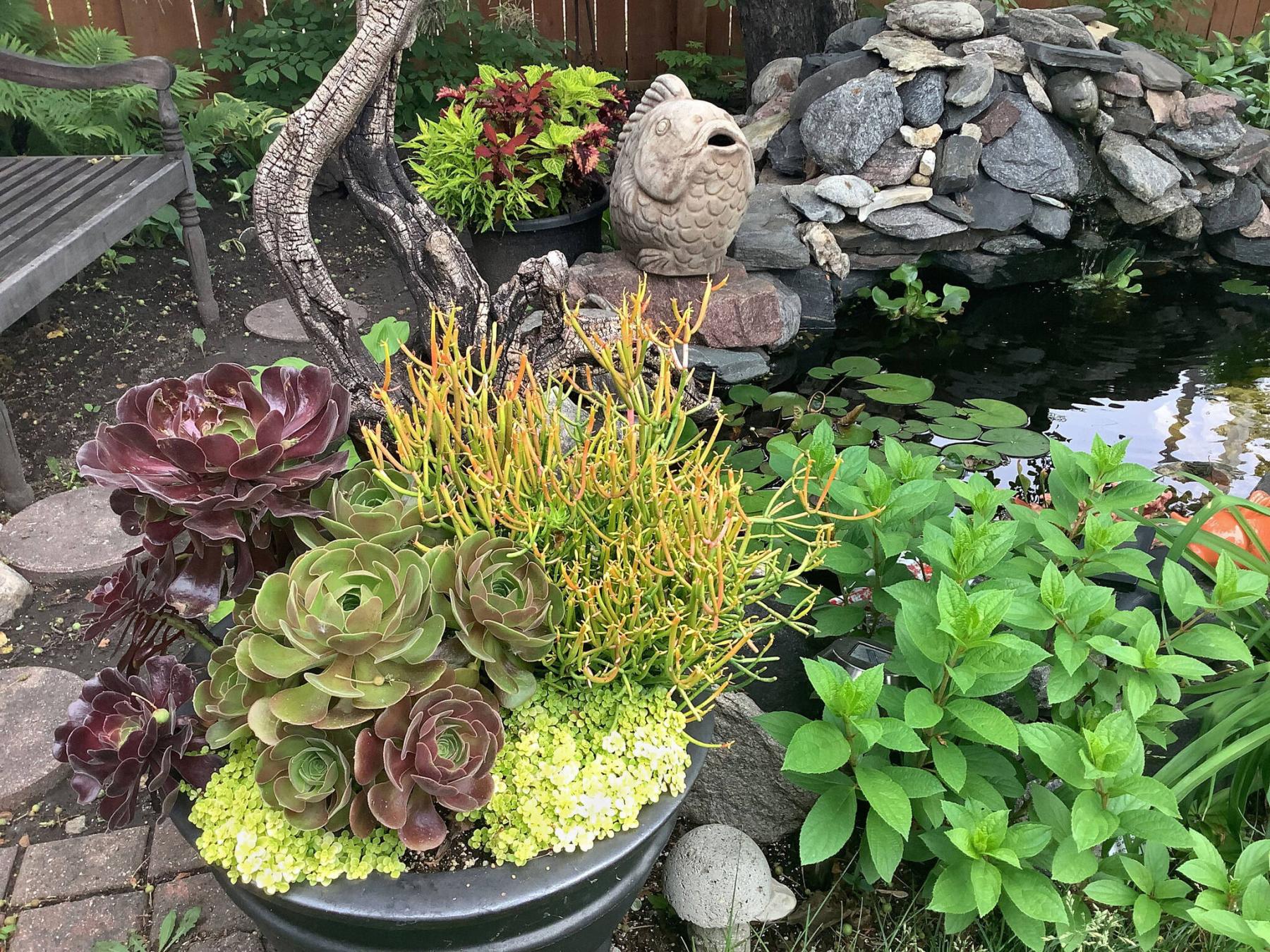
Gwen Beam overwinters non-hardy aeonium (left) and Firestick Euphorbia indoors under grow lights.
Gwen Beam photo
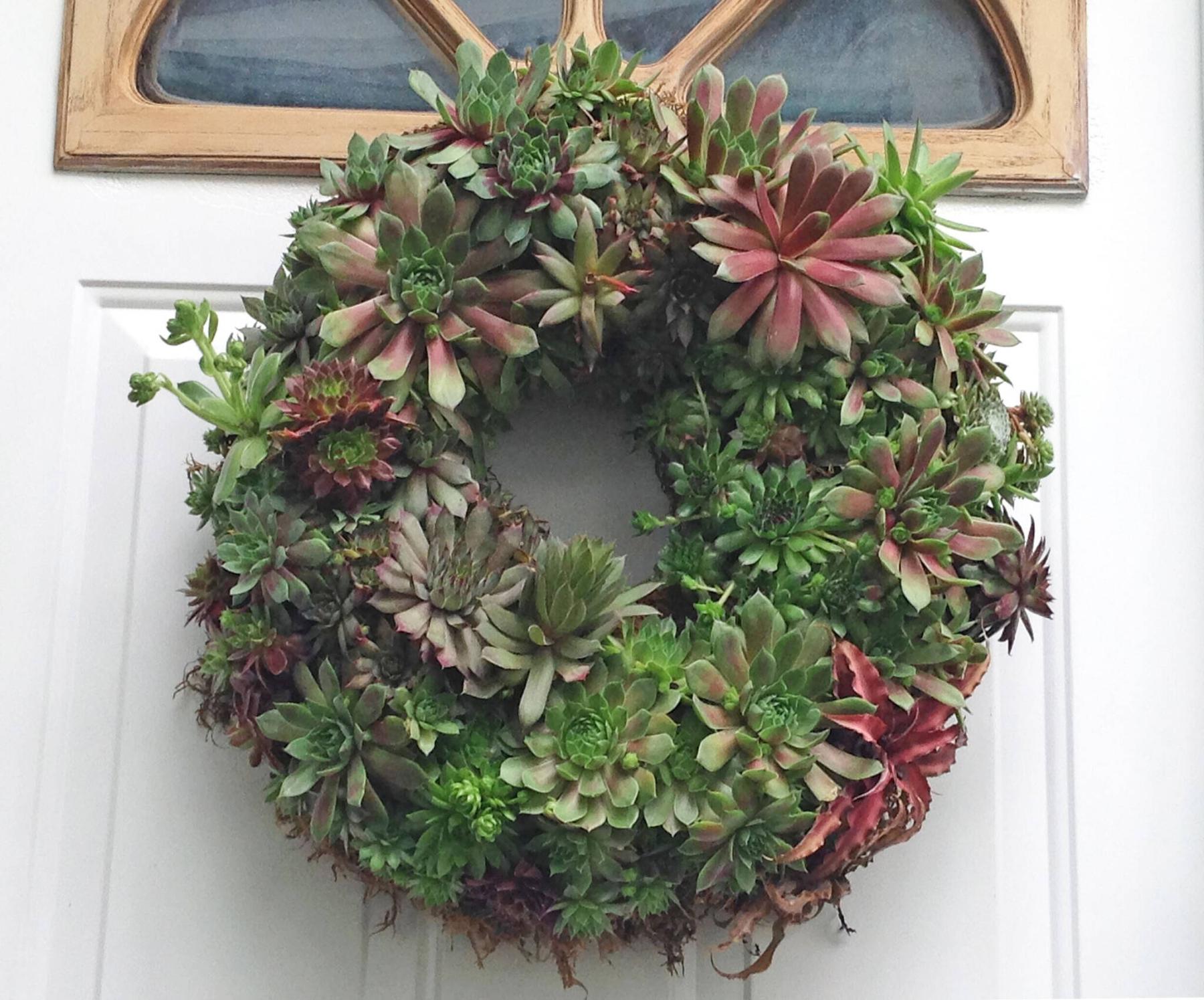
Decorated with cold-hardy hens-and-chicks, this succulent wreath is placed in the ground during winter and covered with leaves and deep snow cover.
Gwen Beam photo
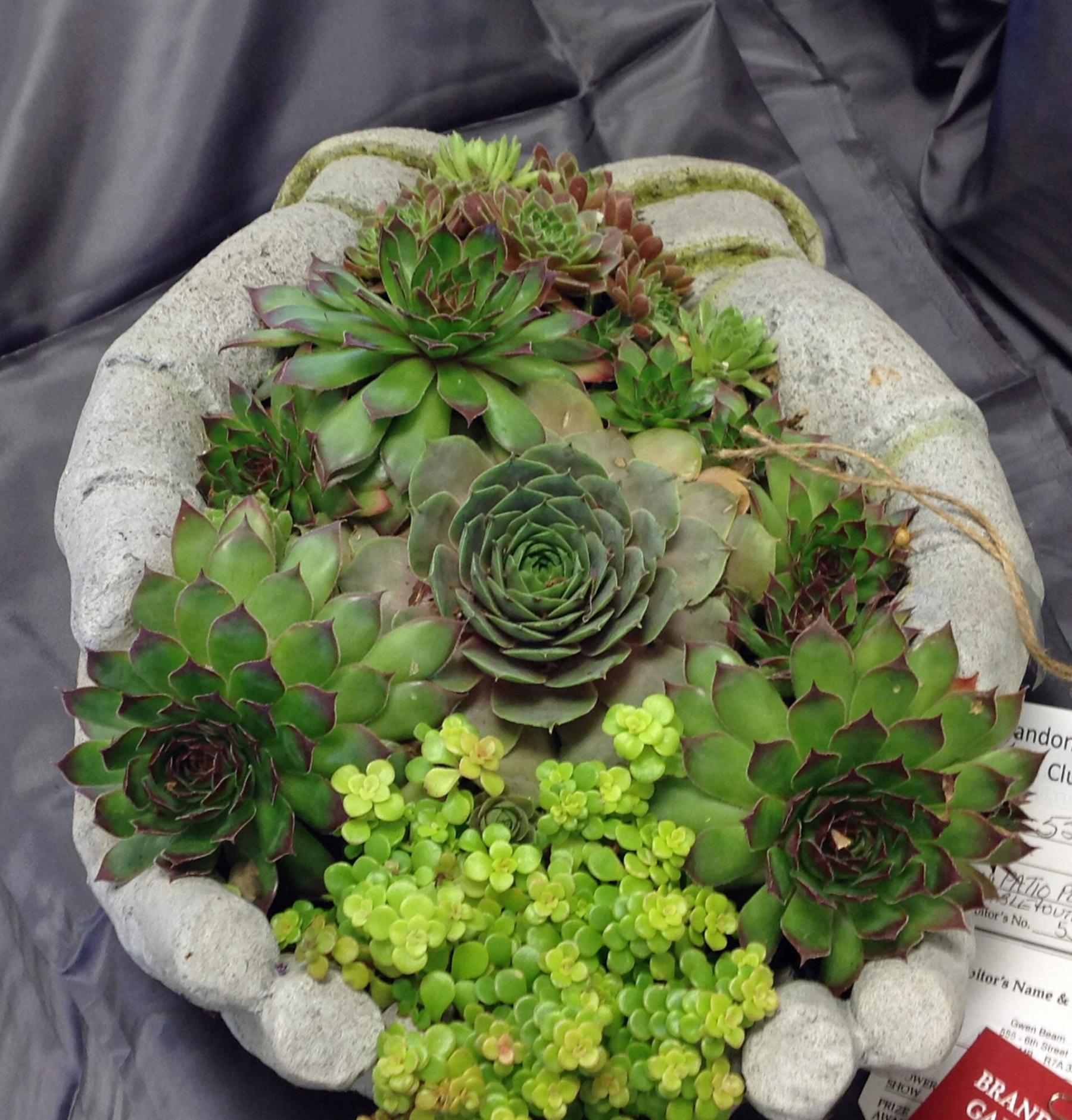
A cluster of hardy Sempervivum (hens-and-chicks) in this stone hand will survive the outdoors, but not Sedum Ogon, the trailing plant in front.
Gwen Beam photo
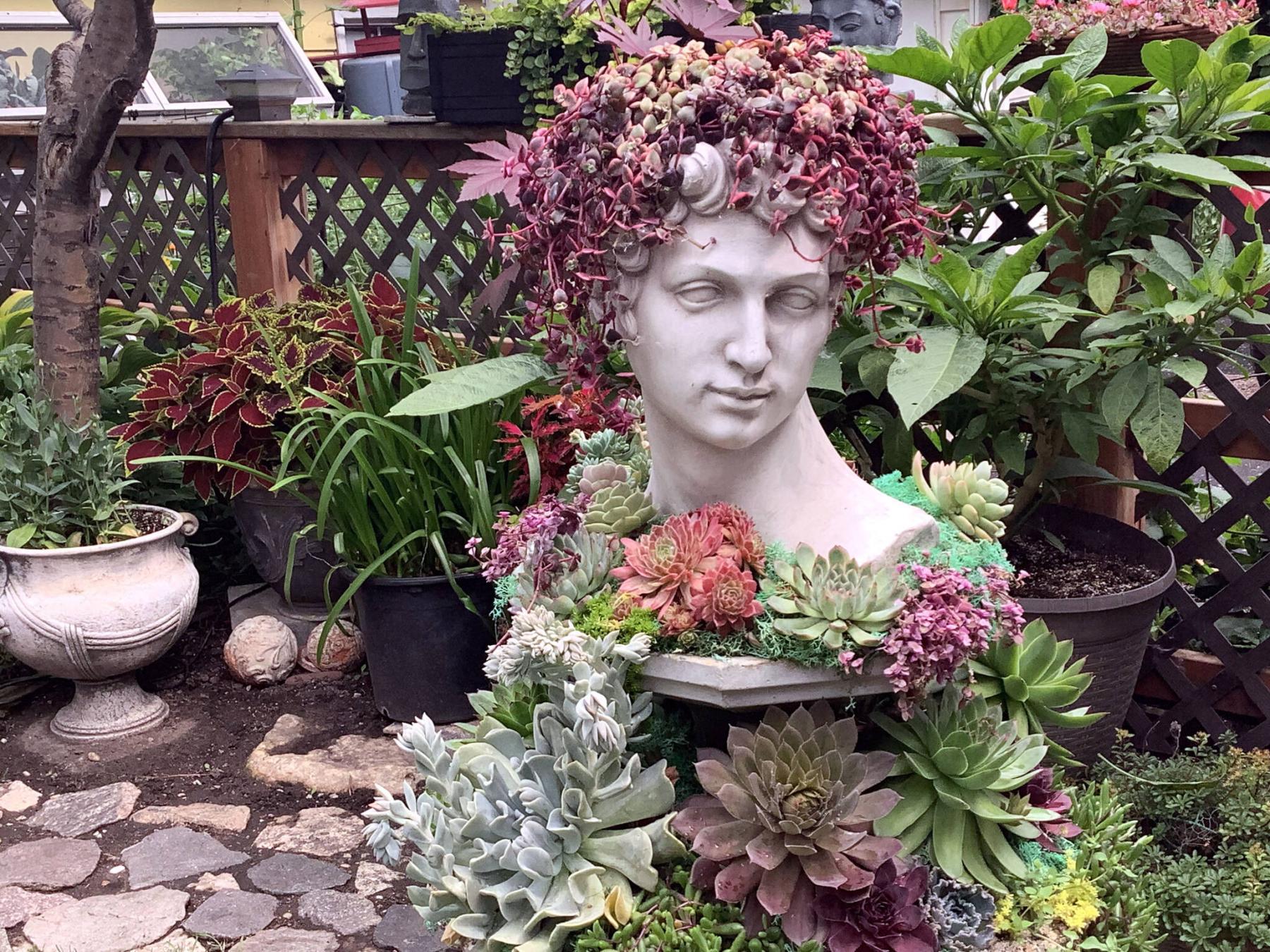
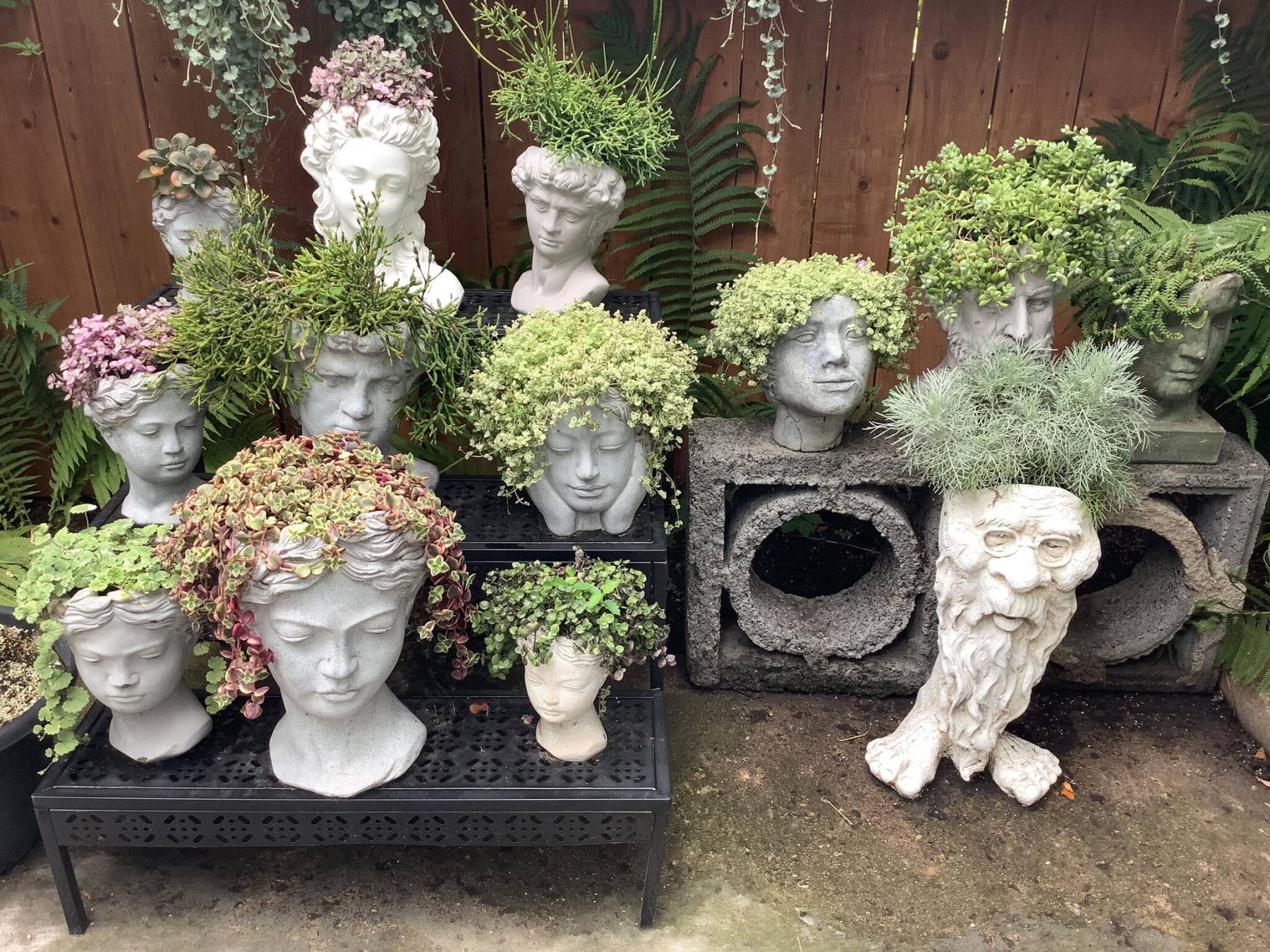
Succulents that spill and trail provide textured hair-like effects in Gwen Beam’s eclectic collection of stone bust planters.
Gwen Beam finds the shapes, colours and textures of succulents irresistible.
She has been growing, designing and teaching others how to get creative with succulents for over 20 years. Her gorgeous succulent designs decorate her garden in summer everywhere the eye looks — mounted on the outer walls and entrance-ways of the house where she lives in Brandon, spilling over fences and adorning luxurious and imaginative planter displays on patios, pedestals and walls that divide her garden into intimate outdoor “rooms.”
Her taste for the unique and unusual extends not only to the diverse succulent varieties she seeks out, but also to the eclectic stone representations of heads used as planters to display her elaborate creations.
An avid gardener and active member of the Brandon Garden Club, Beam needed to make some adjustments in her approach to gardening after experiencing heart issues in 2008. Succulents are among the lowest-maintenance plants, so they were an ideal choice.
“I became fascinated with succulents,” says Beam. “I toured Solar Gardens, an amazing nursery specializing in succulents located just outside Saskatoon. There were thousands of succulents in every colour, shape and size. The designs were fantastic. From that point on I was hooked.”
Indeed, Beam’s passion for succulents immediately became more than a summer hobby. In 2009, she began overwintering her burgeoning collection of non-hardy succulents indoors.
“There was a lot of trial and error until I started to read about succulents and understand how to properly care for them. I found books by Debra Lee Baldwin, widely hailed as the ‘Queen of Succulents,’ along with books by Robin Stockwell and Thomas Hobbs, both of whom are nurserymen and accomplished designers, to be particularly helpful.
“Understanding the light requirements of succulents overwintered indoors is very important,” says Beam. “A south-facing window provides stronger light for a longer number of hours which is what most succulents require. At least six hours of light is required when growing succulents in a south-facing window, while 12 hours of light a day is required when growing succulents under grow-lights. I use one warm and one cool light bulb for the succulents I grow on tables with grow-lights.”
Different varieties of succulents have varying light requirements, says Beam. Aloe, haworthia and sansevieria, for example, require less-intense light than aeonium, echeveria and sempervivum (hens-and-chicks) due to differences in their natural habitats, she says. “If the succulents you’re overwintering begin to stretch and lose their shape and colour, they are not receiving enough light. Try increasing the number of hours the grow-light is on or move your succulents closer to the light source.”
The watering schedule for indoor succulents during winter months is also critical for their health and growth. “In addition to inadequate light, overwatering is a primary reason for succulent failure,” says Beam. “Typically, depending on the variety, I only water indoor succulents once or twice a month, once the soil becomes dry. I water deeply and allow the excess water to drain away. In my experience, the most difficult succulents to overwinter are aeoniums and echeverias because of their watering and light requirements.” Both aeonium and echeveria have shallow and fine fibrous roots compared to the thicker, more substantial roots of aloe and haworthia, for example.
“The optimum temperature for indoor succulents is between 18 C and 24 C during the day with slightly cooler temperatures in the evening,” says Beam. “I grow my indoor succulents in my basement where the evening temperatures are slightly cooler once the grow-lights are turned off for the day.” This location also helps to protect succulents from cold-air drafts near doorways.
Soil is also an important factor for cultivating healthy succulents. “A fast-draining soil is of utmost importance to avoid root rot,” says Beam. “I use a soilless potting mix to which I add one or two handfuls of Sea Soil, an organic compost made from a blend of fish byproducts and forest fines (bark, needles, forest soil). It adds nutrients to the soil mix and promotes moisture retention.”
By mid-winter, houseplants can be affected by annoying pest infestations. I asked Beam if the same pests — mealy bugs, scale, spider mites — that plague houseplants also bother indoor succulents.
“Overwatering, poor drainage and over-fertilizing with a high-nitrogen fertilizer will cause mealy bugs which are very hard to eradicate,” she says. “In fall, prior to the first frost, when I bring my non-hardy succulents indoors, I spray them for any insects and re-pot them in fast-draining soil. If mealy bugs appear during winter, the use of neem oil or rubbing alcohol can help.”
Neem oil is a vegetable oil extracted from the seeds of the neem tree which is native to Southeast Asia. While neem oil products are available in Canada — Beam purchased her bottle at Alternative Choice Garden Centre in Brandon — they are marketed for foliage shine because they are not approved for general pest control by Health Canada. Nevertheless, if, while shining foliage, there happens to be the presence of any mealy bugs, they will be eliminated, no matter the stage of their life cycle. It’s important, however, to be aware of the restrictions on the use of neem oil.
“Aphids and spider mites can be sprayed with Wilson’s House and Garden spray,” says Beam. “Good air circulation helps to keep these pests at bay. A fan is useful. Scale insects, though, are more difficult to control as they grow beneath hard brown shells and latch onto stems. Unless the plant is valuable to you, it’s best to discard it before the infestation spreads to your other plants.”
Beam incorporates both hardy and tender succulents into her designs, such as wreaths and picture frames. “All the non-hardy succulents are placed into trays with a small amount of soil and kept under grow-lights,” she says. “My succulent wreath, picture frame and hypertufa planters, which are designed with succulents such as sempervivum (hardy to Zone 3), are placed in the ground in fall and covered with leaves in a location where they receive deep snow cover.”
Beam looks for succulent varieties with unique architectural shapes, patterns and colours. Every spring she visits several garden centres. “Some of my favourites are Secord Crowe Greenhouses in Dauphin, Our Farm Greenhouse in Portage la Prairie, and Green Spot Home and Garden and Alternative Choice Garden Centre in Brandon. I was so excited to find a huge selection of aeoniums at Secord Crowe.”
With her love for sculpted stone head planters which she skilfully displays at different heights in her garden, Beam is always on the lookout for sedum and succulent varieties that cascade, trail or spill to create textured “hair” effects. Calico Kitten Crassula, for example, is a variegated trailing succulent with tiny heart-shaped leaves that elegantly adorns one of Beam’s most spectacular stone-head planters.
Beam also likes to design with Pink Lady turtle vine, Dancing Bones Rhipsalis and Little Shimmer sedum. A wide assortment of large echeveria, including variegated, ruffled and silver-toned varieties, add drama to her artistic arrangements.
Beam is dreaming up new ideas for her garden this year. “I would absolutely love to find Monkey’s Tail cactus and Medusa euphorbia,” she says.
colleenizacharias@gmail.com