Last weekend could have been summed up as Il Buono, il Brutto, il Cattivo -- The Good, The Bad and the Ugly. The ugly, of course, was the weather; violent wind and heavy rainstorms ruined many plans --and plants. Much anticipated garden tours were a washout. Those who had been prepping and preening their yards since spring thaw to put their gardens on show found their efforts all for naught.
So were my intentions to finally finish planting my balcony containers. Securing my possessions from taking flight was the main objective on the Saturday as was taking inventory of items that had arrived by air uninvited -- presumably from other balconies.
Some bad news cropped up in my e-mail inbox from a reader named Sherri whose well-intentioned husband thought he would spread some lawn fertilizer on his wife's flower beds.
"Help. I am having a bad year this year thanks to the uncooperative weather, and now I fear my well-meaning husband has made things worse," she wrote.
"The other day while he was fertilizing the grass he decided that since I hadn't yet fertilized the garden, he would spread some lawn fertilizer on the gardens. I was not pleased but he gave me the 'fertilizer is fertilizer' speech and I hoped for the best. Unfortunately, the worst seems to have happened. Although some plants seem unaffected, many perennials and annuals have slumped over and look quite limp. Some are also developing brown spots on the leaves. Is there anything I can do to mitigate the damage? I am hoping that all the rain in the last two days may have diluted the fertilizer but I would still like to know anything I can be doing to help the plants recover."
It was only after determining the exact type, brand and strength of the product that was applied -- CIL Golfgreen 24-3-6 Weed & Feed -- that I could give her an answer.
It pays to read the label on any household product you use --particularly when applied to living things such as plants. The CIL Golfgreen Weed & Feed (and similar lawn fertilizers) are specifically formulated for use on grass because it contains systemic herbicides to kill unwanted broadleaf plants.
It's active ingredient is 2,4-D, (Dimethylamine salt, 2,4-Dichlorophenoxyacetic acid) -- the most widely used herbicide in the world. It's commonly used on lawns because it kills dicots, the group of flowering plants that have two embryonic or seed leaves (roughly 200,000 species), while sparing monocots (those flowering plants with one seed leaf). Most true grasses are monocots, while dandelions and most ornamental plants are dicots.
2,4-D doesn't differentiate between wanted and unwanted dicots -- it just kills them all. So while your onions, garlic, grasses, corn and daylilies may be safe (as they are monocots), the roses, geraniums, daisies, sunflowers and asters, among many others, may not be.
Consequently, Sherri removed what granules she could see from around her perennials and annuals and will stick with applying her preferred source of natural fertilizer in the future -- compost. Time will tell whether her plants survive.
Be sure to always read the label to determine if the herbicide or pesticide product is appropriate to use on plants and safe around humans and pets.
And finally, an e-mail with some good news from a lovely lady named Adriana O'Neil.
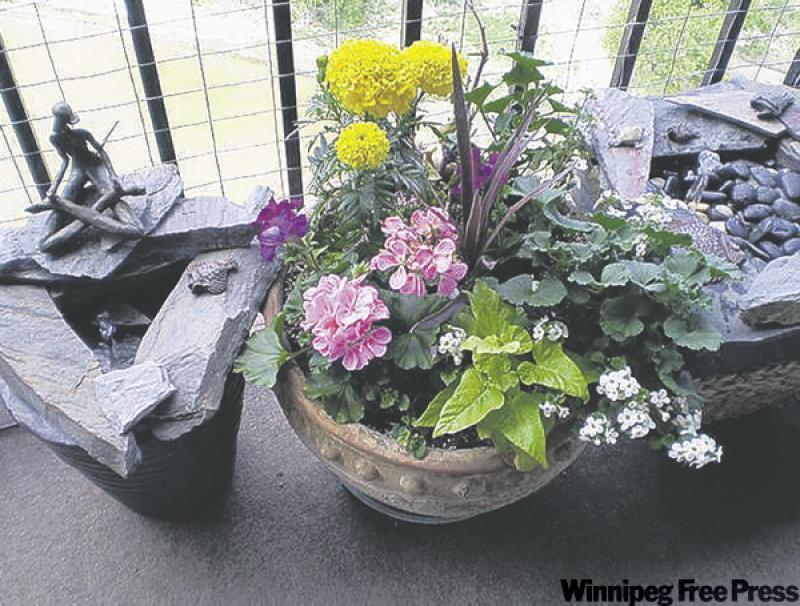
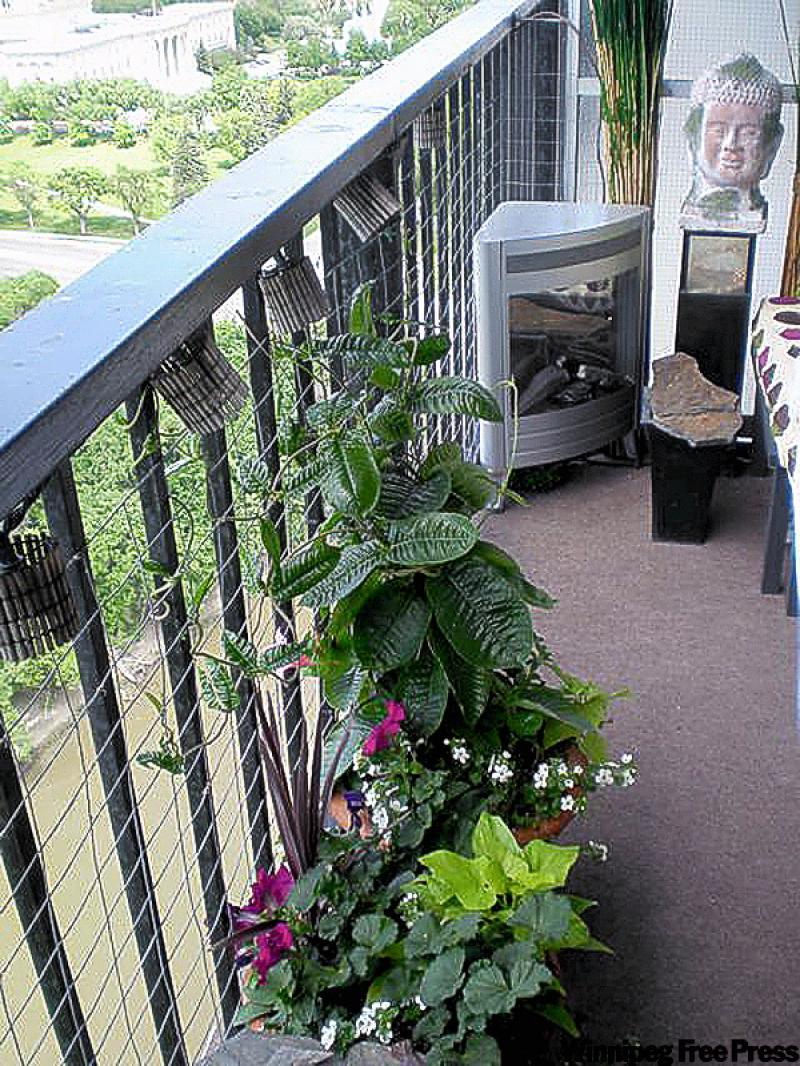
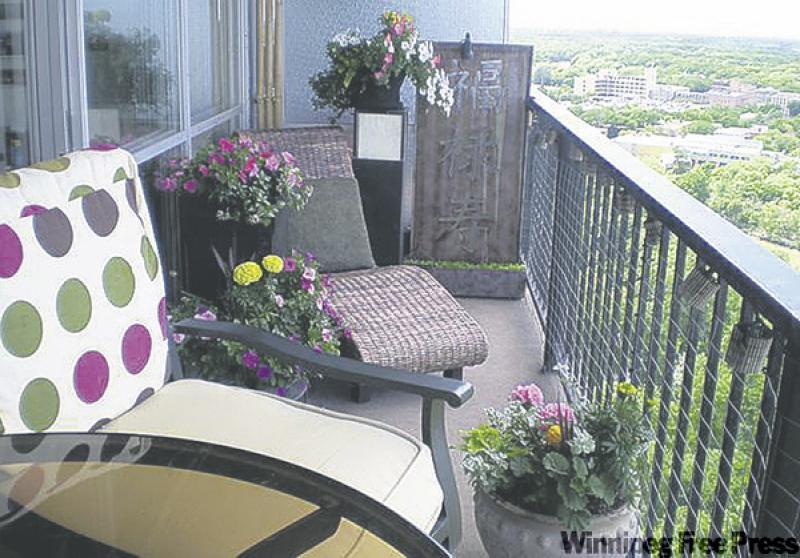
"We are what our friends jokingly refer to as "cliff dwellers." We are on the 26th floor ... and have created a garden/living-space oasis. Here are a few pics I just took. We have three water features and a fireplace."
That was last week -- before the wind and rain storm on the weekend. I was curious to see how their balcony garden fared so I took advantage of an invitation to pop by on Canada Day. Everything looked just like her pictures, except the plants looked even bigger and better.
O'Neil gardened for 20 years before moving to the northwest-facing highrise five years ago. She's tried all kinds of plants on her balcony but her favourite is Helichrysum (licorice plant) for its ability to withstand wind. She prunes an inch off each growing tip weekly to make it grow bushy and full. A cup and saucer vine (Cobaea scandens) grows about a foot a day, she says. Early on she found that plants at the edge of the balcony tended to flower over the edge and out of view. So, she's moved most of her pots back towards the walls and windows where they benefit from the extra light and heat reflected off the glass.
She feeds once in the early spring with a slow-release fertilizer at planting time. The couple of hundred dollars she spends a year on plants to is worth it, she says, to make the extra 160 square feet of precious living space appealing. With the comfy, contemporary furnishings and the addition of the ambience the homemade water features provide, it is an extension of the couple's well-appointed, stylish indoor decor.
Perhaps one of the reasons she's had so much success is her rule to never follow rules. An electric lamp is glued to the glass table it sits on so it won't topple over if the wind whips up. Many of the full-sun annuals are blooming away in much less light you'd expect them to need.
O'Neil wanted to share their "garden" with paper subscribers. Consider it done. With the extra challenges facing gardeners this year, particularly "cliff-dwelling" gardeners, I'd say she's done spectacularly.
Events:
Winnipeg Floral Design Show, July 18 and 19 at the Assiniboine Park Conservatory will feature floral designs on the theme "The Way To Go In Black and White".