
Matt Rosin for Indigo Gardens
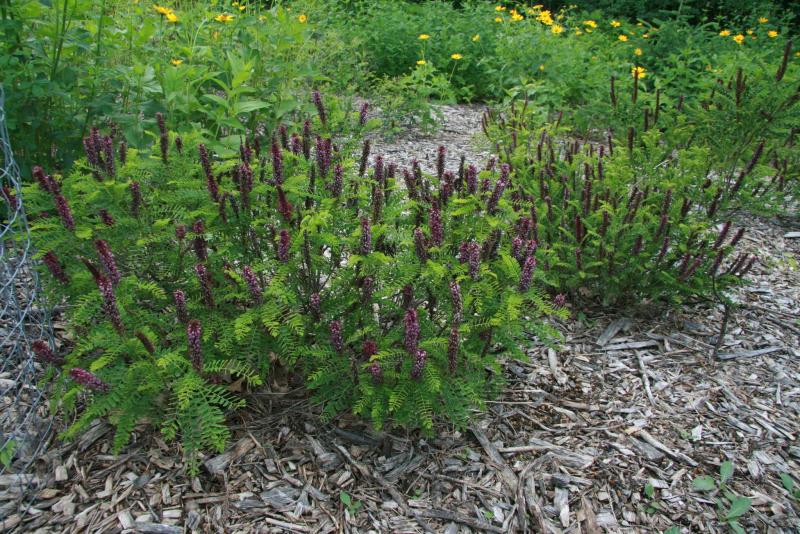
May Night salvia is drought-tolerant option for your rain garden, and it attracts pollinators, too.
Indigo Gardens
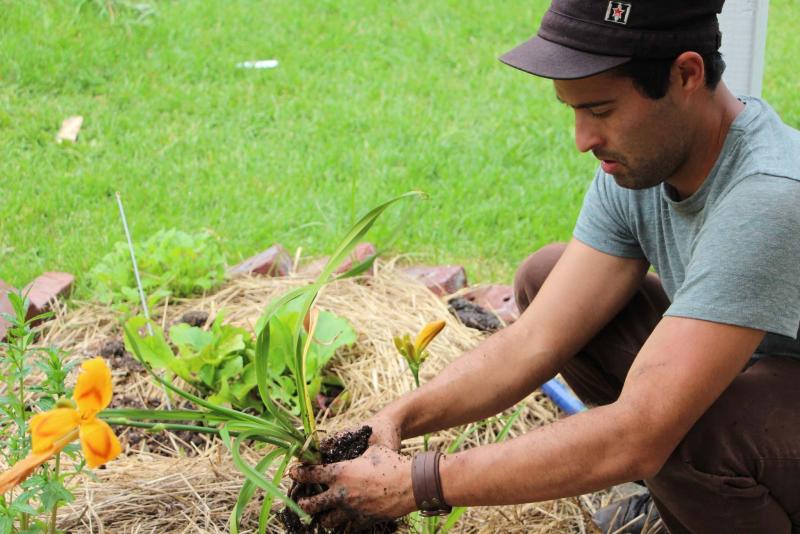
Ivan Arevalo of Indigo Gardens recommends using mulch such as straw or wood chips to promote infiltation and moisture retention.
Fort Whyte Alive
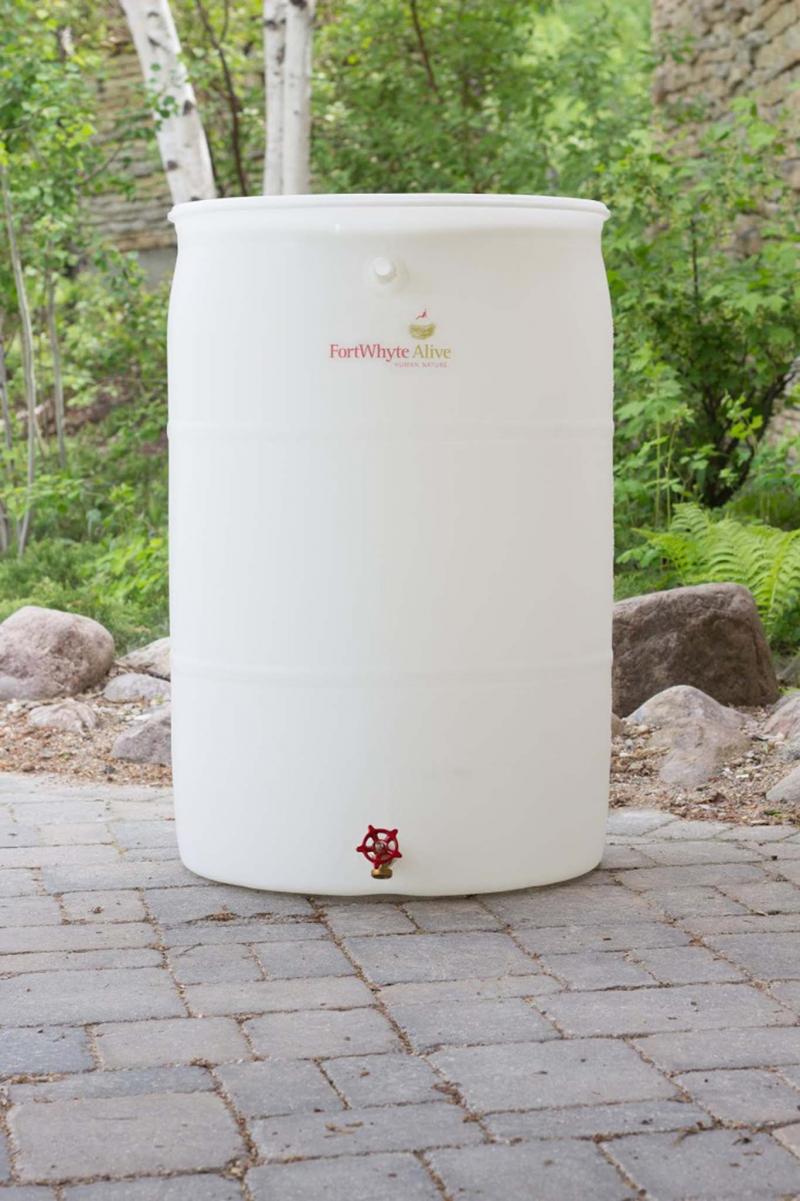
Fort Whyte Alive will be seling rain barrels made from food-grade plastic tomorrow in celebration of Earth Day. Barrels go on a first-come, first-served basis.
Shirley Froehlich
A rain garden resembles a garden bed planted with native plants but is a shallow depression in the ground. Avoid building it over buried utilities.
In spring the ebb and flow of water in our landscapes can be a powerful force.
As the frozen ground thaws and the combination of snow melt and rainwater infiltrates the soil, the rate of absorption and pattern of drainage can highlight problems that require remedies. Some areas of a property may drain quickly, while in other areas water may stubbornly collect, pooling like a clogged drain and flooding the roots of plants.
Runoff from road de-icing salts can also cause injury to the root systems of our plants but then, too, there are the negative impacts of stormwater runoff from asphalt rooftops and impervious paved surfaces. As stormwater runoff makes its way into our municipal water systems, it carries with it a toxic soup of pollutants (residues from fertilizers, pesticides, oil, etc.) that eventually flows into the watershed.
Rain gardens, rock-lined swales and rain barrels are sustainable water management systems that protect water quality, reduce water waste and place less demand on urban infrastructure.
Through better design, a water management system also enhances and beautifies the landscape.
Ivan Arevalo and Matt Rosin are co-owners of Indigo Gardens (plantindigo.com). Permaculture advocates who create and nurture sustainable and self-sufficient ecosystems that mimic nature, Arevalo and Rosin like to say that where water runs, make it walk.
Unlike a pond — which is meant to hold water — a rain garden is a shallow depression in the ground (typically 15 to 23 centimetres deep) that holds soil and plants. Designed to capture stormwater runoff and filter pollutants, it acts to slowly percolate clean water into the ground and replenish groundwater reserves. In addition to reducing runoff, Arevalo and Rosin say, a rain garden results in savings because it requires less irrigation than thirsty lawns. A rain garden also creates a habitat for pollinators.
Arevalo and Rosin refer to the forest as their teacher. A self-maintaining system, a forest has good drainage and aeration that is promoted by healthy plant roots and beneficial fungal networks. The constant recycling (breakdown of leaf and root litter) builds healthy soil that has the ability to capture and retain water, which in turn mitigates periods of flood and drought.
In our heavy clay soils, Arevalo says, rain gardens should be located approximately 2.7 to 3.35 metres from your house to ensure that water does not seep into the foundation.
Begin by observing the direction in which water flows in your landscape and determine where a low point exists. Rain gardens must be located to capture water from impervious areas such as rooftops, driveways, patios or walkways, Arevalo says. Incisions made into concrete also allow water to flow into a low spot.
Avoid building your rain garden over buried utilities such as natural gas and cable television lines. Test a site for drainage, Arevalo says, by digging a hole that is about 30 cm deep and filling it with water. If the water drains within 24 to 36 hours, you are assured of good drainage. Otherwise, you may need to select another site or improve the infiltration by amending the soil with a mixture that consists of 50 per cent sand, 20 per cent compost and 30 per cent topsoil.
If necessary, gravel can be added to the bottom of the bed. To facilitate drainage, lay a perforated pipe on top of the gravel bed. Some of the soil and turf that is excavated can be used to build a berm on the low side of the rain garden if it is being built on a slope. It’s important, too, Arevalo adds, to create an overflow spillway in the berm by making a small indentation on the downhill side of the berm. This will help direct excess water toward a drain, culvert or ditch in the event of a heavy rainfall or prolonged rainy season.
Improper drainage can result in standing water, which can promote the growth and development of mosquito larvae.
Once your rain garden is dug, select plants and arrange them in your bed. Native plants are the ideal choice for rain gardens (most any garden, actually). Adapted to our climate, they do not require supplemental watering once established. In comparison to the root systems of turf grass, native plants have deep roots that help to anchor the soil. As runoff water slowly flows into the rain garden, it is absorbed and filtered by the soil and by the deep roots of native plants, which also remove pollutants.
Arevalo and Rosin recommend a wide range of cold-hardy plant options for your rain garden including edible plants such as elderberries, strawberries, raspberries, high bush cranberries and rhubarb. All of these have deep roots. Blue vervain (Verbena hastata) and May Night salvia (Salvia sylvestris), the Perennial Plant of the Year in 1997, are two striking choices with tubular, purplish-blue flowers that attract butterflies and hummingbirds. Blue vervain is moisture-loving, while May Night salvia is drought-tolerant.
Plants must be able to thrive during high-rain periods, but also be drought-tolerant. Water tolerant plant species such as Marsh marigold (Caltha palustris) should be planted near the centre of the rain garden and drought-tolerant species, such as native grasses, should be planted near the edges. As you would for any garden, consider growth habit, exposure, moisture requirements and spacing when selecting and placing plants.
Arevalo says it is always a good idea to mulch your rain garden with shredded wood chips to promote good infiltration and moisture retention. Arevalo uses straw and compost to build the soil and promote micro-organisms.
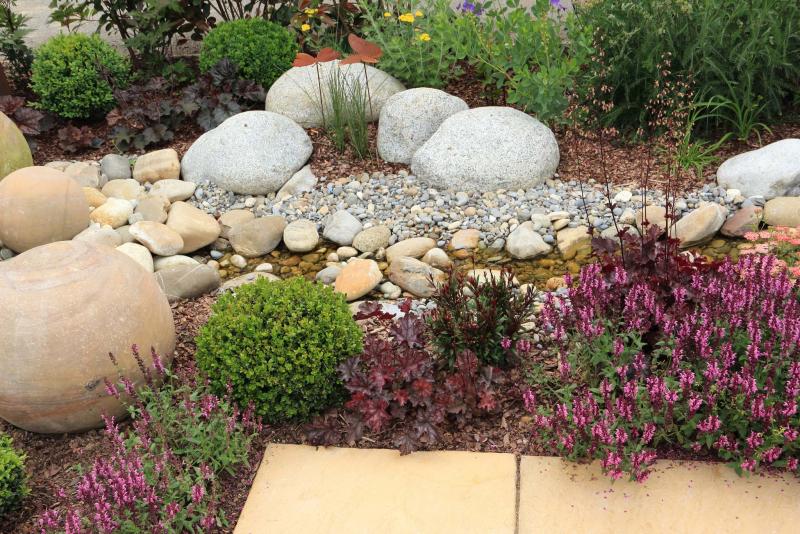
A rock-lined swale, commonly known as a dry creek bed, also slows stormwater runoff, Arevalo says, and promotes infiltration for the purposes of recharging your ground-water system. Generally larger than a rain garden, a swale is built on contour lines, Arevalo says. As rainfall causes water to flow, the swale creates a water channel, capturing the water so that it slowly percolates into the ground.
By using different types of rocks in a range of sizes, swales are visually appealing landscape features in addition to their functionality. Plantings, which can be as diverse as you choose, help to slow the flow of runoff and their long roots filter out pollution.
It may take until the second or third year before you see the full results, Arevalo says. Be patient while the root systems of plants grow deeper and relax in the knowledge that you have created something good for the planet.
Rain barrels are an excellent, affordable way to harvest rainwater. When downspouts are used to harvest water from rooftops, directing it into rain barrels, Rosin and Arevalo recommend purchasing a first-flush diverter. This device can improve water quality by flushing out the first water of a storm, which can contain roof contaminants, bacteria, sediments and chemical residues.
Tomorrow, in celebration of Earth Day, Fort Whyte Alive is selling rain barrels made of food-grade plastic. Each barrel has a capacity of 189 litres. Available in limited quantities at the Nature Shop, the early bird gets the worm. For a complete list of Earth Day celebrations including live entertainment, environmental workshops and outdoor activities, visit fortwhyte.org.
colleenizacharias@gmail.com