Photos by Marc LaBossiere / Free Press
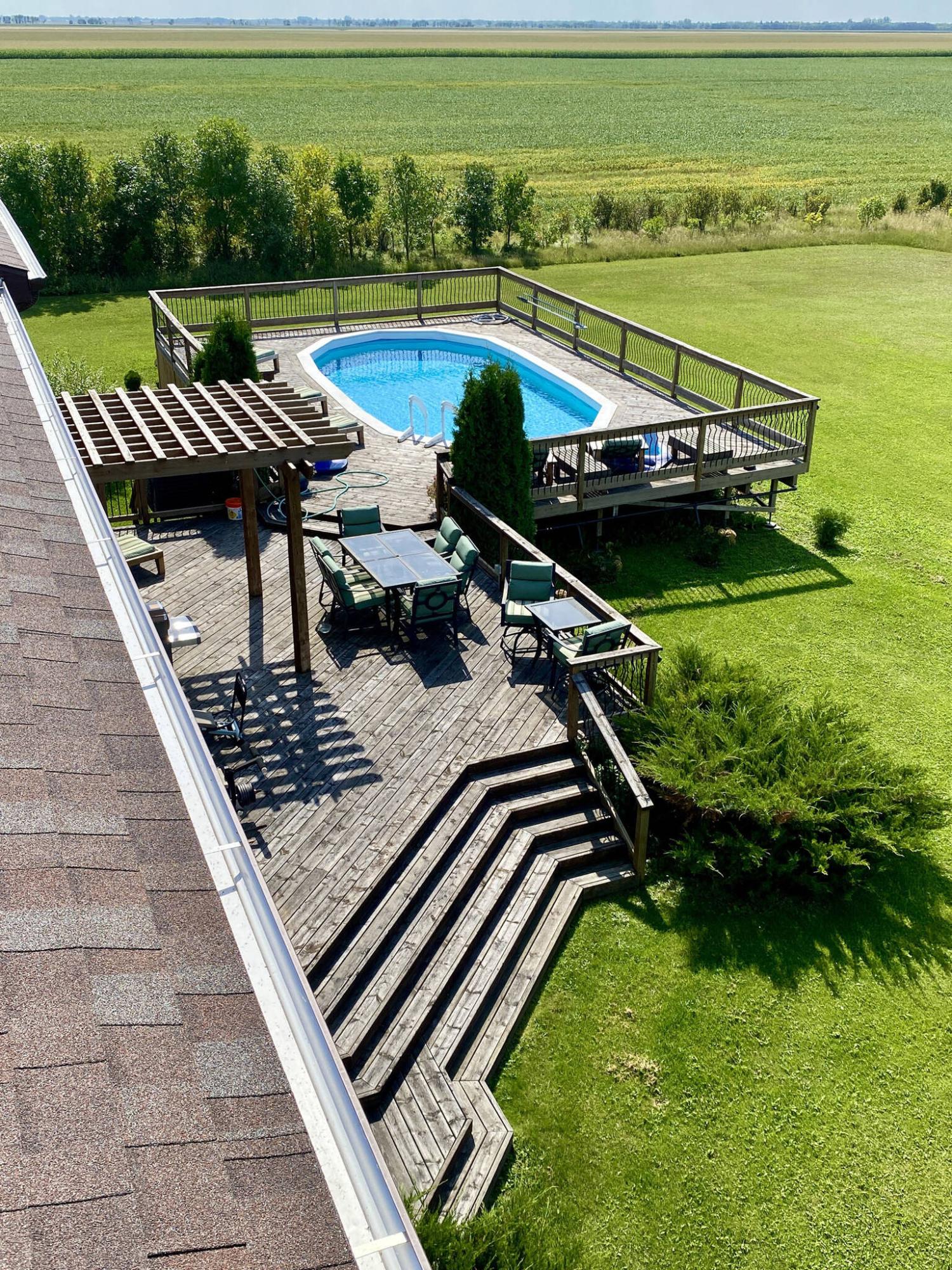
Although the top decking hue has faded slightly, the canola oil has already lasted longer than the store-bought product applied years before.
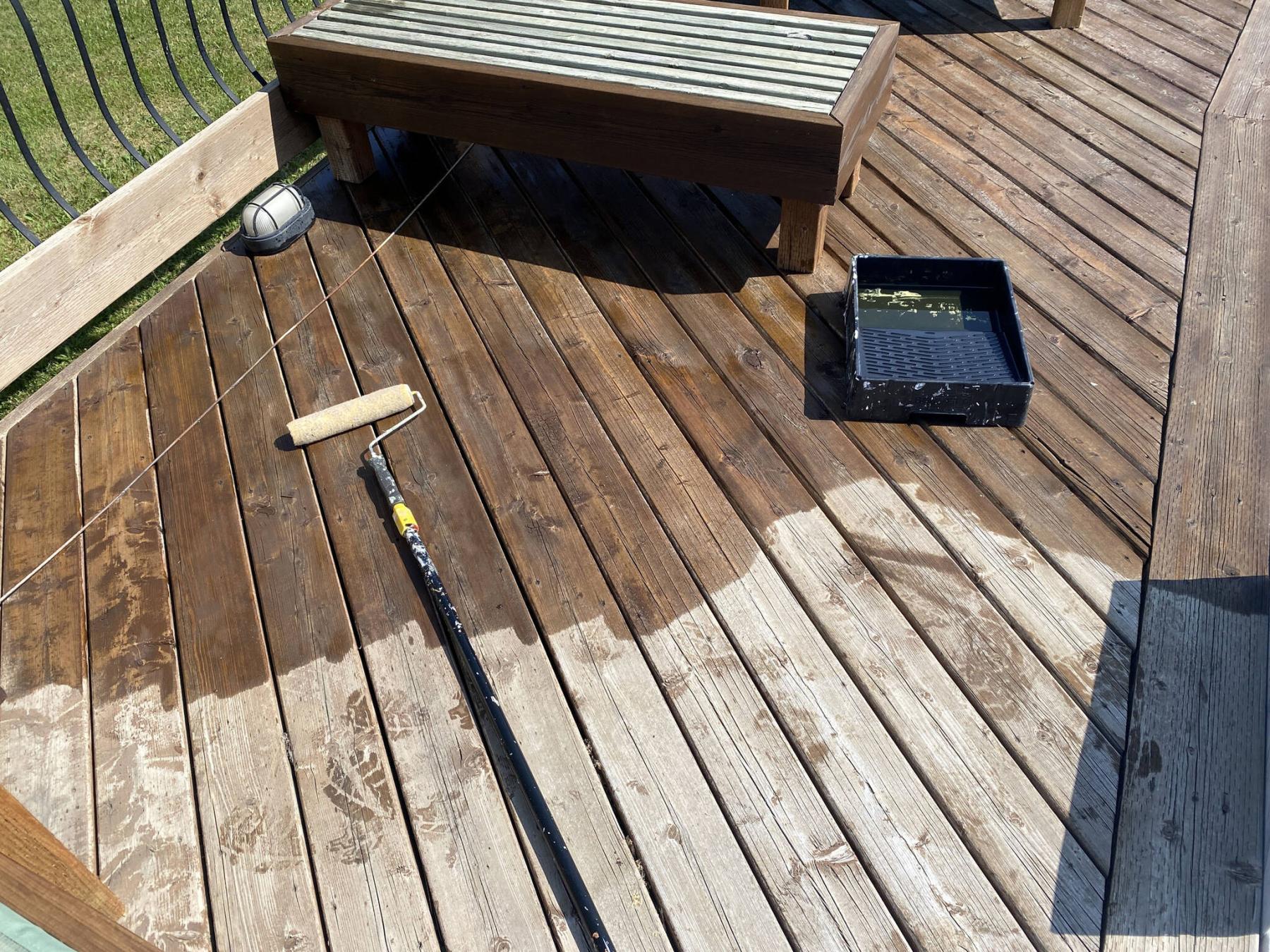
The immediate results, post-application
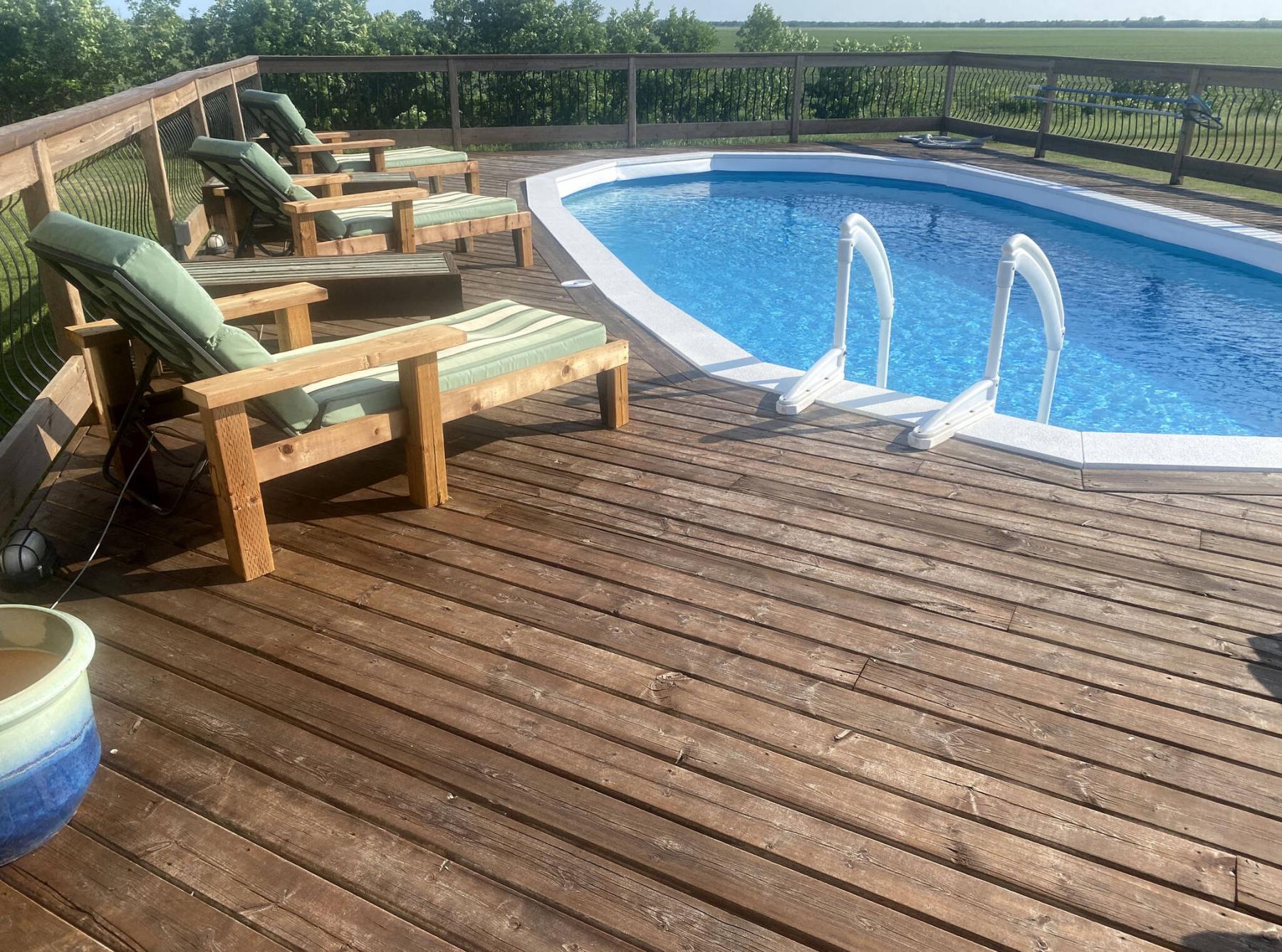
Applying the canola oil did not require moving any topside furniture, as it does not contain a drying agent as do store-bought products.
In late June of 2023, my Reno Boss column depicted an experiment using canola oil to treat my aging deck boards, and the column generated the most feedback I have ever received for any of mine to date.
Interest in the ongoing performance of the canola oil on my deck still finds my inbox with queries, on occasion. After receiving a couple of them recently, I thought it might be a good idea to revisit the experiment and discuss the results it has yielded.
The concept of using canola oil arose after having treated my front and rear decks once they began to fade. Both had been subjected to years of sunlight, and the resilience of the brown treated lumber had clearly dissipated.
My first attempt at rejuvenation involved an expensive Behr deep-penetrating oil product. The process involved clearing the entire deck surface, prepping the top decking by using a high-pressure spray wand, letting it dry and choosing an arid morning to quickly apply the expensive oil in such a manner that sequential lines of application would not reveal any overlaps.
To the best of my abilities, the process unfolded as expected with only minor overlapping strokes later in the day, when the product began to dry too quickly before the next swath of oil was being applied.
From what I recall, this procedure utilized roughly 17 gallons of deep-penetrating oil, and only lasted a couple of years before the decking faded nearly back to the appearance that had first prompted me to undertake the application of the product. The exercise really did seem futile in retrospect — laborious and costly, for only two years of satisfaction.
Slick approach
After that unsatisfying experience, I entertained a notion that had been in the back of my mind for some time — what if I used a natural oil instead?
After a series of searches and bit of investigation, I decided to perform an experiment on my again faded deck boards by using canola oil in lieu of the more-expensive deck oils or stains. I then purchased four five-gallon pails of canola oil from Costco and chose a day when the weather forecast best suited the application.
I predicted it would be much easier than using the Behr oil, in that natural canola oil would simply “soak” into the lumber decking without drying, thereby avoiding any overlap issues.
Moreover, I decided not to move any patio furniture nor the barbecue, because any oil that found its way onto something other than top-decking could be wiped away or sprayed off.
The immediate result was spectacular, surpassing any expectations. And the photos used in my 2023 column clearly indicated as much.
Since then, countless readers have reached out, wondering how well the technique has endured over the years and seasons. I will now address the most-common questions submitted.
Question: How has the canola oil held up?
Answer: Although the decking remains tinted brown indicating the ongoing presence of oil within the lumber, the sunlight has of course faded it somewhat over the past few years.
However, I can attest to the fact the canola oil has already lasted longer than the expensive store-bought product. And should I decide to re-apply, I know the effort required is worth it, having had such a successful experience the first time around with canola oil.
Plus, there is no longer the need to wait until the decking has “completely faded” to apply a remedy. A new application of canola oil will simply “merge” with the initial one within the lumber — canola oil has no drying agents.
Q: Did the canola oil make the deck surface sticky?
A: There was absolutely zero topical residue once the oil had completely penetrated the top-decking lumber. The very next day, we had quite the downpour and it was apparent the oil was doing its job as the water beaded atop the decking.
Q: Was there ever a rancid smell after the application?
A: Never, and to the contrary — once the oil had penetrated into the lumber, there was never any scent of oil whatsoever, unlike the store-bought product which resulted in a chemical smell for several days, even weeks after application.
Q: How much canola oil was required?
A: Comparatively, an equivalent number of gallons of canola was used as was Behr product, initially. However, the savings were substantial — based on the price of the store-bought product, the canola oil cost roughly 90 per cent less, overall.
The main question I love to answer, is whether I would do it again — absolutely! Not only was the application process less stressful, but the encouraging results have also, in my opinion, been a resounding success. And although I must again stress that this entire enterprise may not be for everyone, nor do I make any guarantees, I anticipate applying another round of canola oil in the near future to extend the life of my decking.
I’ve since joked often about two corporate meetings that may be occurring as a result of this revelation of canola oil as a deck-revitalization product: Costco may end up trying to figure out why there’s been such a run on canola oil, while the big-box hardware stores may be plotting how to shut the concept down!
No matter, the entirety of this process stemmed from my disillusionment after having used an expensive product for top-decking rejuvenation. I figured, what did I have to lose? If anything, the gain was exponential. And now, it seems others stand to enjoy the gain as well. Best of luck!
RenoBoss.Inc@outlook.com