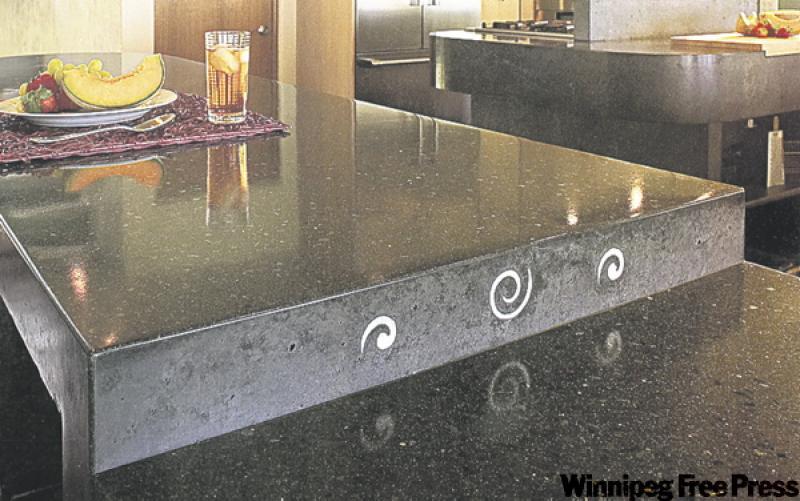
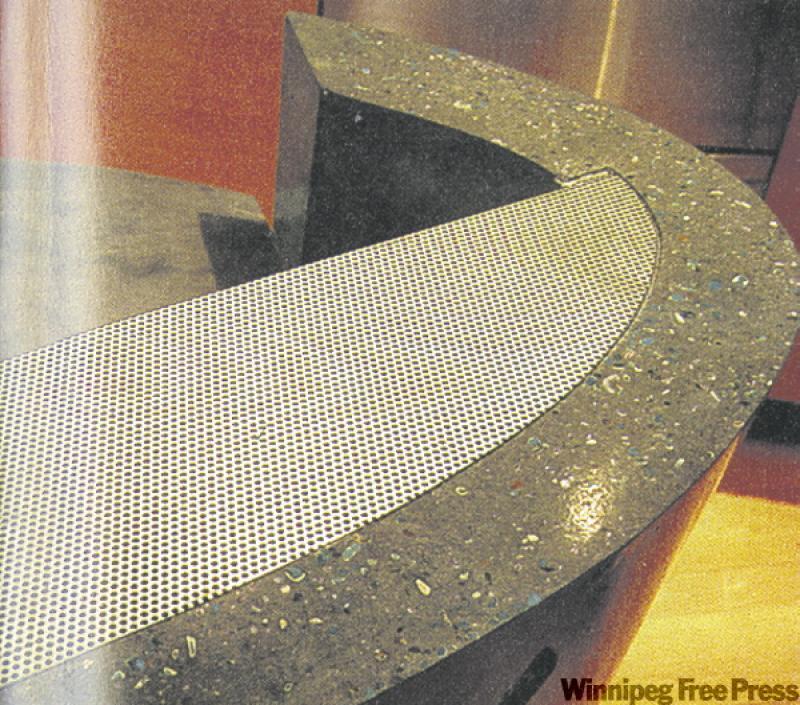
Recessions promote innovation, says the reigning master of exotic concrete counters. People have less money and more time in bad times, says Fu-Tung Cheng, a legendary expert at turning sand, crushed stone and portland cement into elegant, even sinuous counters, tables and Kohl-blue benches.
"When the money equation changes, people use their best resource -- their hands and their brains," says Cheng from his studios in Berkeley, Calif.
It was necessity and lack of money that prompted Cheng to sink his hands into sand and cement in 1975 and create a dove-grey concrete counter in the kitchen of a tiny house he had bought in Albany, north of Berkeley.
"Thousands of meals later, my family still uses it every day. We love it, and so does everyone else who sees it," writes Cheng in the introduction to his recently released book and DVD Concrete Countertops Made Simple. (Taunton Press). "The house was my laboratory," he says. "It served me well during those early cash-strapped days and still does."
A startling picture of the chunky counter, complete with offset cabinets, a funky ceramic trout for a pair of door pulls, and blond wood slung over a long, narrow window, is featured in glorious colour beside his preface to his newest guide, which gives a history of concrete, the green virtues of building with simple products, and step-by-step instructions that an amateur would understand.
"My goal back then was simple: To create something special and save money. Little did I realize that affluent homeowners would someday covet countertops made of concrete. Or that my first book, Concrete Countertops; Design, Forms and Finishes for the New Kitchen and Bath (1999), would encourage so many artisans to make concrete counters for the luxury market. The biggest surprise was that there were so many fearless homeowners willing to make countertops for themselves."
Cheng's first instructional book turned into a bestseller, propelling the son of an artist and the youngest of five brothers to set up a design studio and develop a series of specialty concrete products and designs that have earned him international honours. Cheng was recognized as one of the most influential leaders in the American housing industry by Builder Magazine at the International Home Builders' Show held in Las Vegas in January.
With the latest economic wobbles, there is renewed interest in folks making their own concrete counters, says Cheng, who attended the University of California in 1968, earning a scholarship to study in Japan. He studied Buddhism, picking up his lifelong affinity for clean, simple silhouettes.
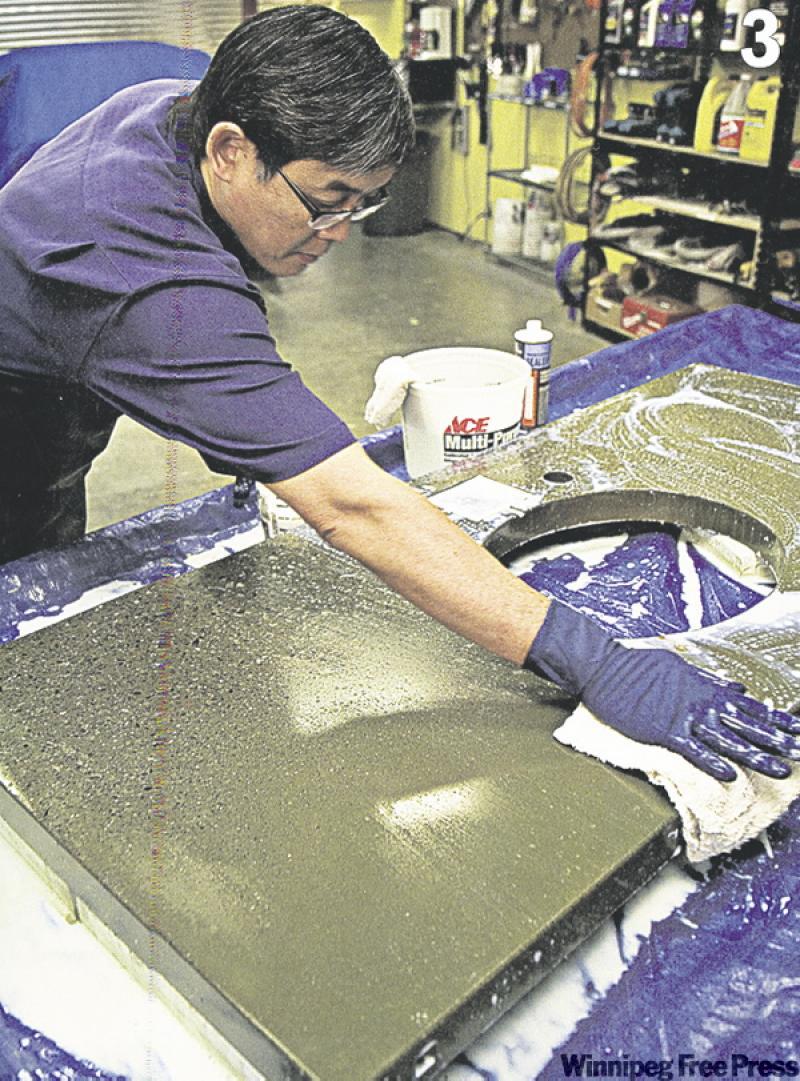
"It's not difficult, in fact, it is very much like cooking. Think of cement, sand, and rock as though they were flour, baking powder, and salt," writes the master chef. "Add water to the right blend of dry ingredients and you get concrete batter.
"Countertop making is like baking an upside-down cake in a wooden pan. You simply mix and pour the concrete batter into the smooth mould. You even get to stick your fingers in the batter (but no licking!)."
"The process is fun and affordable," he encourages. "You should be able to complete a counter in about two weekends. Not only will the result be as beautiful as anything you could buy, but you will have created it yourself."
And now that many more people across the United States and Canada have more time than money, it makes sense to try cooking with concrete, says Cheng from his studio, where he also conducts simple to advanced classes for professionals wanting to hone their cooking skills.
Concrete is not only sturdy -- designed to last for hundreds if not thousands of years -- but it fits neatly into the eco craze. The materials are available at any hardware or home supply shop, says Cheng, adding he was overwhelmed by the number of builders who stopped by his booth in Vegas.
Find out more about Fu-Tung Cheng and his classes at www.chengdesign.com.
-- Canwest News Service