Unique pleasure
"STOP and smell the roses" may be a cliché that has nothing to do with fragrance in the garden, but nevertheless, the heavenly scent of a garden in bloom is a unique pleasure.
Lynn Collicutt, a retired plant breeder from the Morden Research Station, recommends a number of fragrant plants, including trees and shrubs, that will help you create a memorable garden.
As well as the sensory benefits of locating fragrant plants near a path or sitting area, there are practical benefits as well, says June Flanagan, prairie author of Edible Plants.
"Since many pests find their target plant by smell, a mixed planting confuses their ability to hone in on particular plants," said Flanagan, in Winnipeg last week for a presentation.
"The more diverse the garden is, the better. One combination that has been scientifically shown to be effective is planting carrots near onions to deter carrot rust fly. The same sulfur compounds that make you cry when chopping onions overpower the less-pungent carrot aroma."
Ladies' night
LADIES' night at Shelmerdine Garden Centre, April 20, will put plants and fashion on display. For more information on "Hort Couture," contact 895-7203. Proceeds to Osborne House Shelter for Women and Children.
Colleen.Zacharias@gardensmanitoba.com
We usually grow flowers for their visual beauty and colour. But we can increase their impact by appealing to our sense of smell. Don't we always smell a rose after initially looking at it?
Many of the cut varieties of roses lack the typical scent we associate with roses. Due to many other production attributes the breeders must contend with, scent is usually left behind. That's where the English breeder, David Austin, stepped in and created his English garden roses. Although classified as somewhat borderline in hardiness here in Winnipeg, a little tender loving care rewards gardeners with wonderfully scented blooms during the summer.
Roses are fascinating in their wide array of different scents -- there's the heavy perfume fragrance of the damask type roses or a lighter citrus or lemony smell found in many of the yellow and orange varieties. Generally, mauve and so-called 'blue' roses have a very strong fragrance.
Our native roses and their hybrids carry the very light typical rose scent we usually associate with roses. Some of the rugosa hybrids have a clove scent. Of the Parkland Series, not generally a heavily scented group, Cuthbert Grant carries a strong perfume scent from Crimson Glory, one of its grandparents. However, Persian Yellow is an exception due to its ancestor, the species rose, Rosa foedita. A clue to the smell is the name foedita means stinking.
Within the lily group, fragrance seems sacrificed for hardiness, as the Asiatic group has no scent but is very winter-hardy. The highly fragrant trumpet lilies live through many winters but growers know they can lose them every few years. The divas of the lily group -- the Oriental lilies -- flaunt both their beauty and heady fragrance. Of course, the fragrance of the Easter lily can fill a whole house.
The flowering tobacco species, Nicotiana sylvestris and N. alata are tall, white, very fragrant plants and are well worth placing in an area you pass by at dusk. Plant them near a patio, sunroom or entrance so the evening breeze wafts the scent to you. Some of the newer intermediate-sized cultivars have a scent now, too. As for the many shorter varieties, don't bother bending over to check as you'll be disappointed.
Valerian, another tall white flower, has a very sweet scent, reminiscent of vanilla. Just be advised seedlings can pop up around your yard!
Datura and its relative, Brugmansia, commonly known as angels trumpet, develop large white or yellow-orange hanging trumpet flowers that give a heady perfume scent. Acidanthera, one of my favourites, is a late-flowering tender plant related to gladiolas. Grow it yourself or buy stems from the farmers market for a strong perfumed aroma.
Surprisingly, there are a few chocolate-scented plants -- what a fun fragrance to have in the garden! Of course, chocolate-scented mint is an obvious one, but chocolate cosmos is also a good choice.
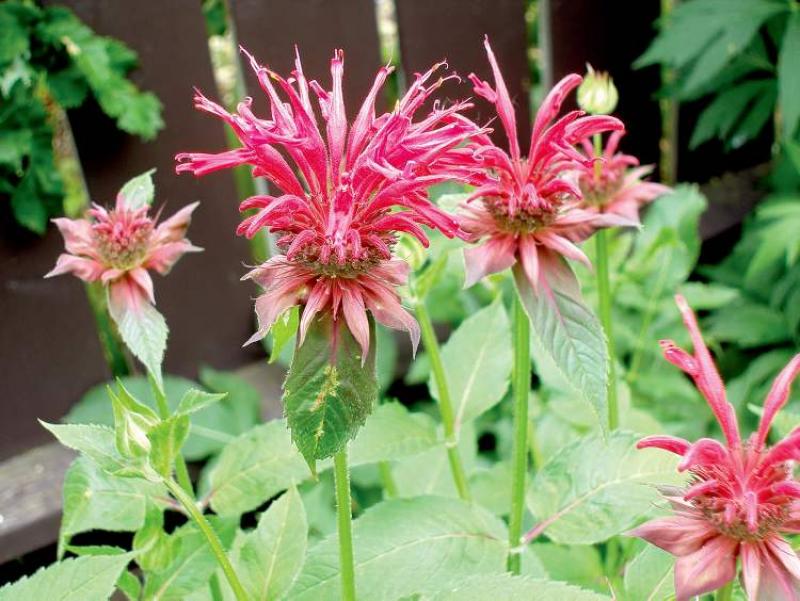
Monarda or beebalm, a member of the mint family, is grown for its wonderful flowers. The scented leaves attract butterflies. At one time there was a research program and a commercial project in Morden to produce oil from the leaves.
Geraniol oil is used commercially as a fragrance in soaps, perfumes and cleaners.
I often look for the native Agastache (hyssop) when hiking as I like the licorice scent of the leaves.
Swamp milkweed (Asclepias incarnate), a garden friendly native with scented flowers, and its cousin dwarf milkweed (Asclepias ovalifolia), has a wonderful perfume fragrance. Another native plant and weed, the pineapple weed (Matricaria matricariodes) is a fun one to show people, especially kids. Just squeeze the flower buds and a wonderful scent of pineapple wafts out.
Leaves can be fragrant too. Lemon thyme, lemon verbena, lemon balm, and rosemary are great to touch and smell when walking by and also to use in cooking. The scented geraniums are grown just for their foliage.
Very strong-smelling foliage is interesting but not too appealing other than for curiosity, Artemisias, rue and tansy fit the bill here. Of course, the wide assortment of mints and basils are fun to explore for their variation of scents. The smooth leaf of costmary, a tall perennial herb, has a peppermint fragrance.
Lavender leaves are highly scented and well-known for a calming quality. Bells of Ireland foliage have a scent reminiscent of Irish Spring soap.
Iris, for example, isn't normally associated with having a scent, but some of the purple varieties such as Six Hills Giant smell surprisingly like purple Kool-Aid! Another unexpectedly fragrant plant is Hosta plantaginea and its cultivars such as Honeybells and Royal Standard.
Of the shrubs, lilacs and mock orange reign supreme. The French lilacs have the strongest perfumed blooms, but the littleleaf and Korean lilacs are nice too. Daphnes are lesser-known, most likely due to their borderline hardiness, but are worth the extra effort to grow if only for the strong perfume they emit in spring.
Sweet peas and stocks lead the way in scented annuals. Look for the white flowered nemesia which smells like lilacs. Scents, too, have a way of reminding us of some of our favorite childhood memories -- marigolds, for example, remind me of my dad gardening.
Trees are a bit hit-and-miss when it comes to scent, but there are a few memorable ones to try and catch. Of course, apples, crabapples and plums have a delicate sweet aroma in their brief flowering period. One of my favourites is the scent of basswood flowers. I relish the time the trees are flowering. A very distinctive sweet scent is given off by Russian olive -- once you recognize it you can tell there's a tree in the area even before you see it.
When choosing your plants this year, consider the added dimension that fragrance and scent can add to your garden. Your appreciation of the diversity and attributes of plants will surely increase!