THANK you, Thomas Edison, for inventing the light bulb.
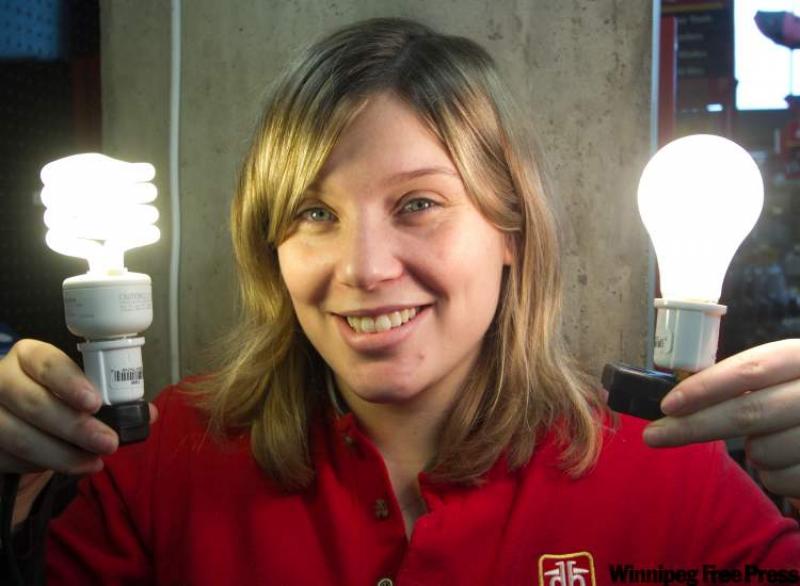
The two most common types are incandescent and fluorescent. Incandescent bulbs glow when electric current passes through a filament. All lamps with a filament are considered incandescent even when they are modified with gasses such as halogen, krypton and xenon.
Fluorescent bulbs produce light when an electric arc passes between cathodes, excites mercury and other gases, producing radiant energy. Phosphor coatings convert energy into visible light. The compact fluorescent has been promoted as energy-saving, low heat and long-lasting.
All fluorescent lamps contain mercury and need to be thoughtfully discarded. If they break, open the windows and pick up the residue with tape. Do not contaminate your vacuum cleaner!
Fluorescent lighting colour is described by the Kelvin rating. This is based on our perception of how cool or warm the light appears.
Use 2,700 kelvins or warm white, in homes, counseling offices and restaurants.
Use 3,000 kelvins or soft white, a peachy source almost like incandescent, in home furnishing stores, houses and waiting rooms.
Use 3,500 kelvins in the mid-level of warm to cool in commercial, retail stores and offices. This colour temperature is terrific, especially when used with a silver parabolic lens that brightens the flatness of fluorescent light.
Use 4,100 kelvins or cool white, only if you want the feeling of an ice palace. This is the colour temperature that is duplicated on an overcast day in the winter.
Use 5,000 kelvins in hospitals, laboratories and doctors offices where a crisp light is needed.
Use 6,500 kelvins, the bluest, in jewelry and accessory stores.
For accent lighting, torchieres and task lighting, use halogen bulbs that provide a high contrast, brilliant colour that duplicates sunlight. They provide more light than a typical incandescent. To preserve their longer life, protect the quartz casing from the skin oil on your hands, which will change the tension and cause a shorter lamp life. During installation, use a glove or a thin foam pad.
The tungsten filament redeposits onto the filament and is considered a self-cleaning bulb when the bulb is burned at full power. If the bulb is dimmed often, operate at full power occasionally to extend lamp life.
Halogen bulbs usually cost more but give more light per watt of energy used, last longer and enhance colour. They are a bargain. But it's probably not a good idea to use halogen reflectors in walkways; they seem like interrogation lights and cast shadows on your face. Halogen bulbs are wonderful over work surfaces, coffee tables, dining tables and to directionally light artwork.
Xenon gas lamps burn cooler than halogen but the colour they produce tends to be blue. The blue-tinted head lights you see at nights are xenon. They have an average lamp life of 2,000 hours, like halogen.
Make sure you use the recommended wattage. But if you always dim that lamp, start with a lower wattage. The more you dim a bulb, the more yellow the light becomes.
Know that 120-volt and 12-volt bulbs are not interchangeable.
-- MCT