Paridon Horticultural
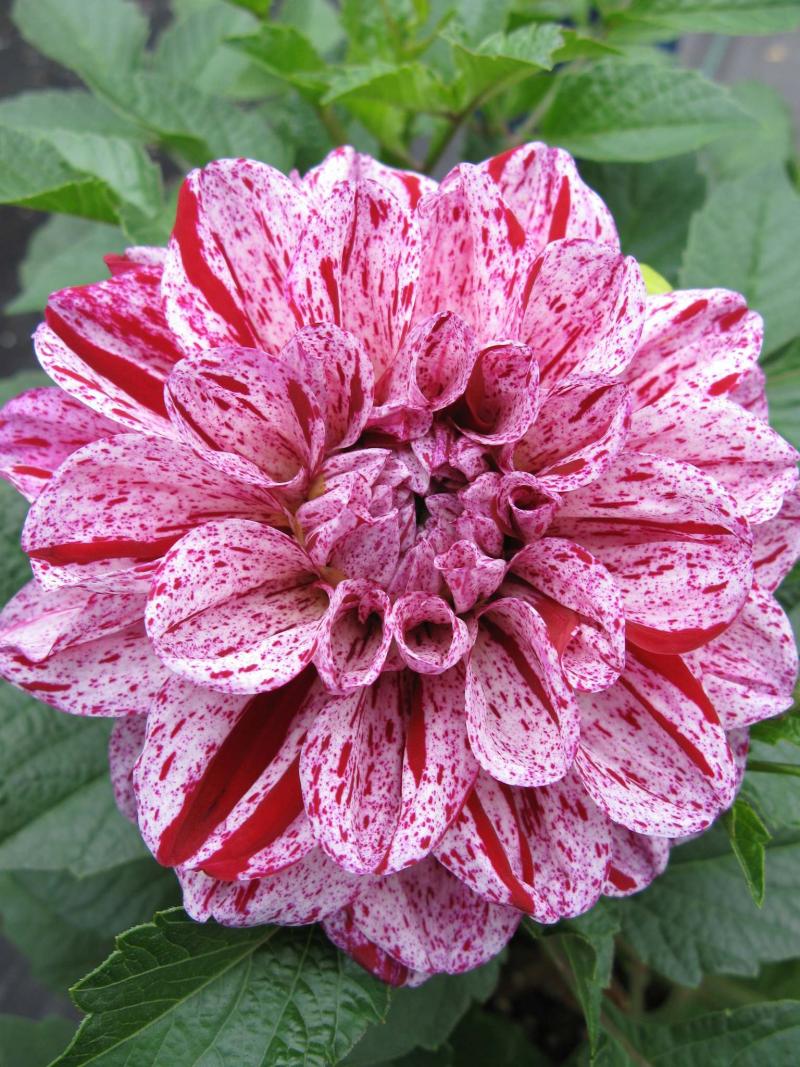
One of the GoGo series of dahlias, Speckled Pink’s deliciously pink petals sport rose red markings
TT Seeds
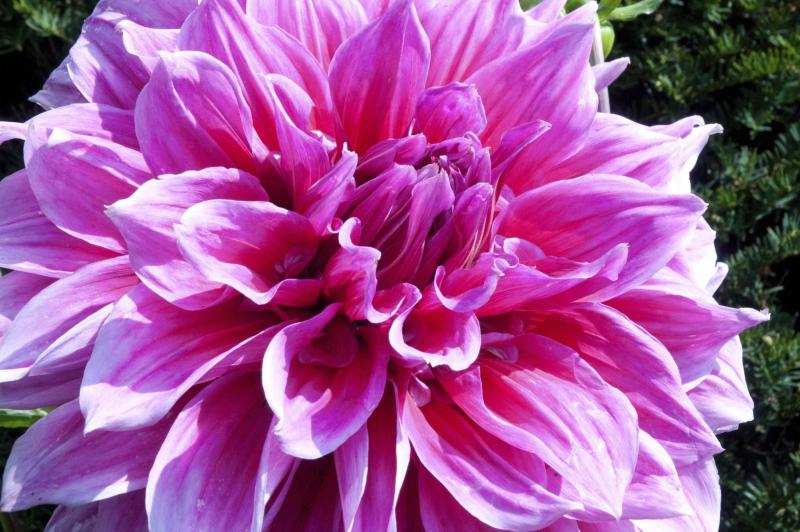
A 2014 RHS People’s Choice award winner, Emory Paul’s bright pink flowers measure up to 25 cm across.

Paridon Horticultural
A Dark Angel dahlia, the bicolour yellow petals of Star Wars have bright orange edges that contrast with dark bronzy leaves.
Paridon Horticultural
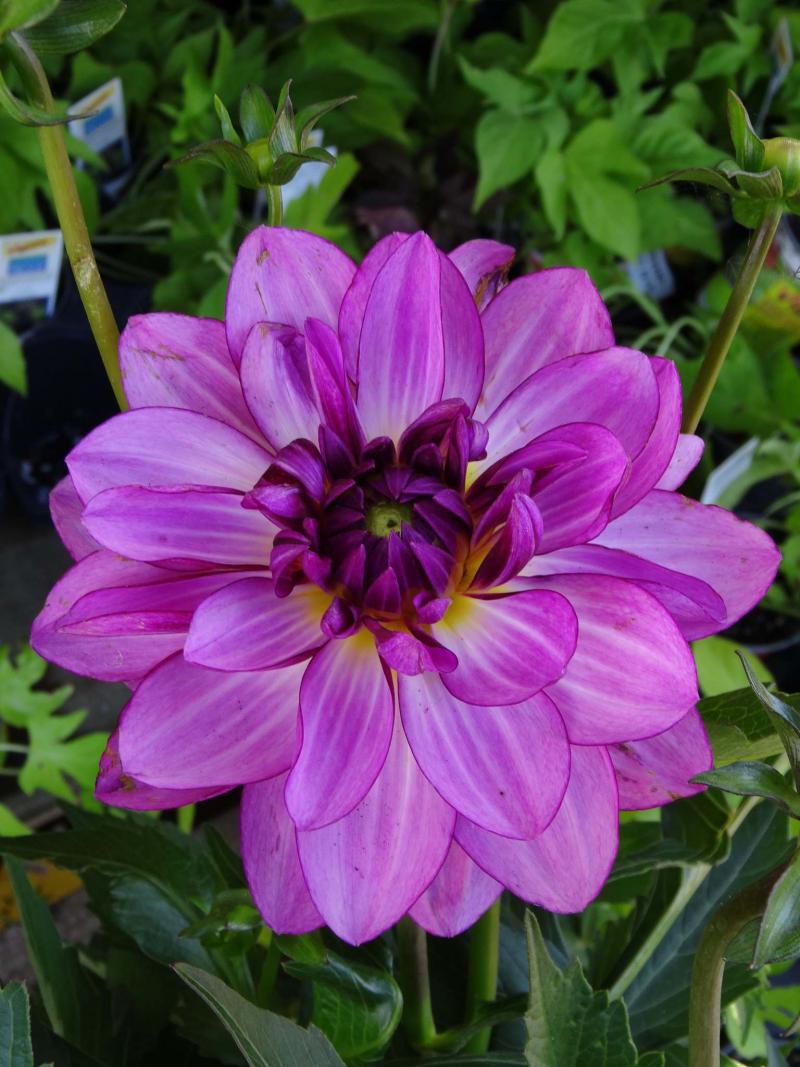
A 2015 Plant of Merit, GoGo Blue dahlia grows 35 to 50 cm tall with lavender blue double flowers measuring 35 to 50 cm.
Paridon Horticultural
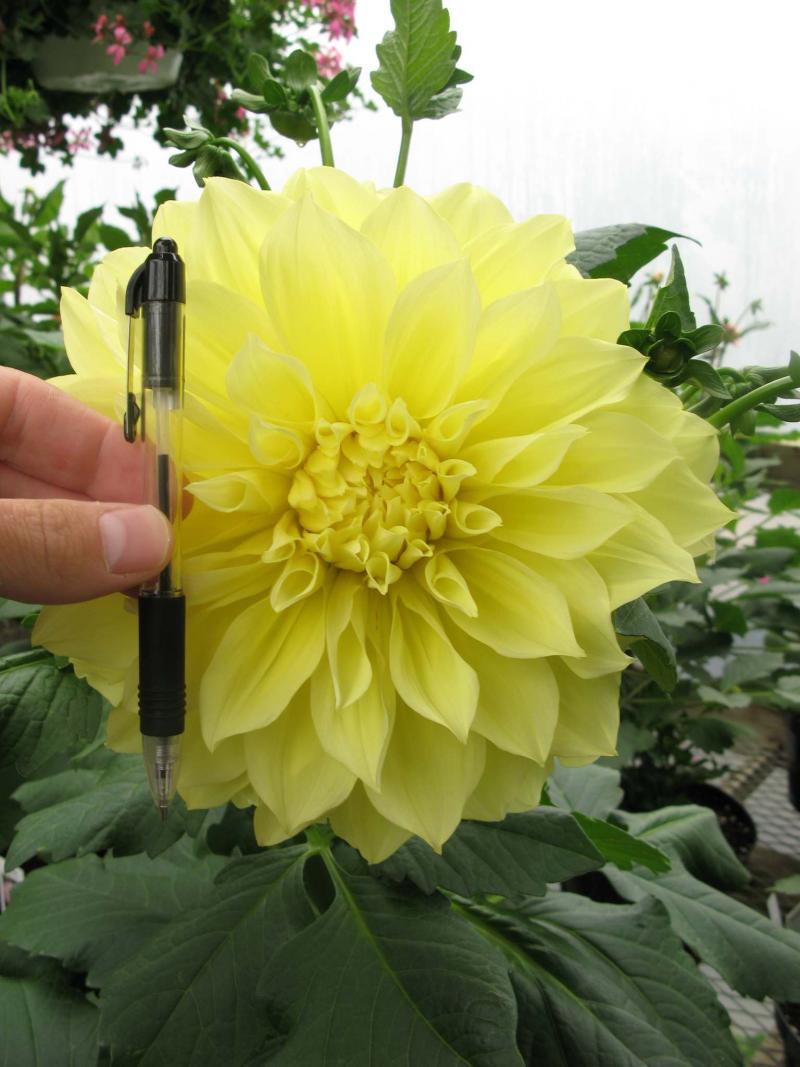
No one's sure who Kelvin is but Kelvin Floodlight dahlia with its dinner plate-sized blooms will have a glowing presence in your garden.
Colleen Zacharias / Winnipeg Free Press
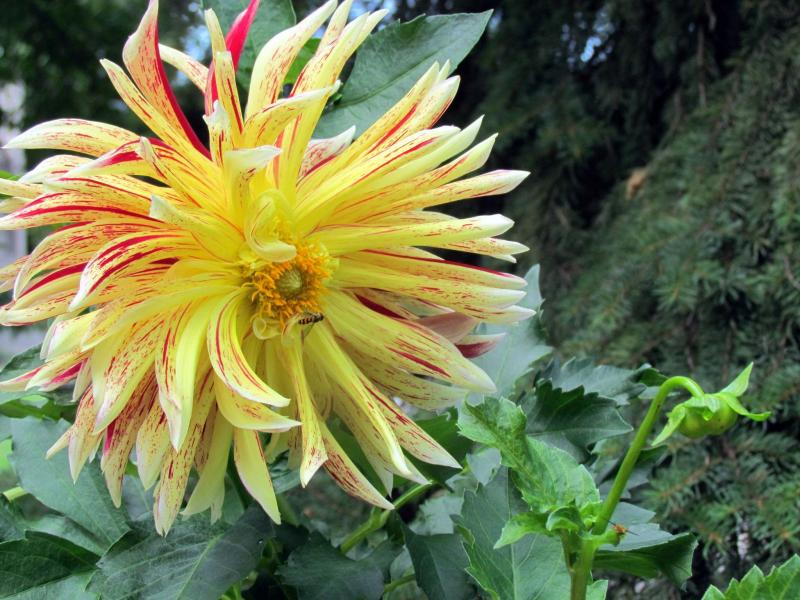
Monitor dahlias for streaking caused by thrips. Shown: Giant Cambridge cactus dahlia.
Rose Cottage Plants
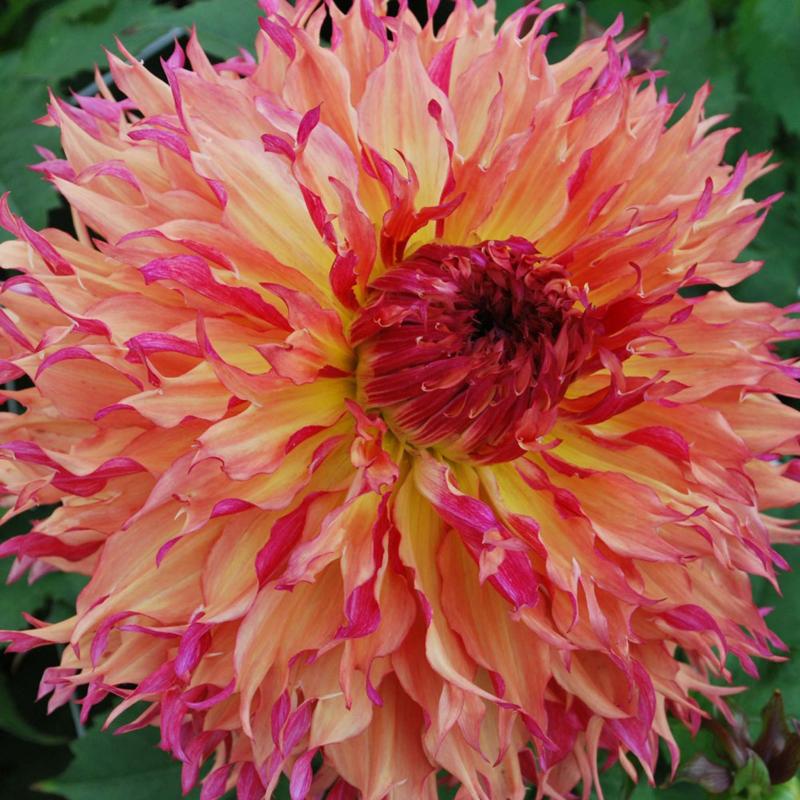
New from Florissa, the twisted, pinkish-orange petals of Myrtle’s Folly reveal a yellow centre.
J. Parker
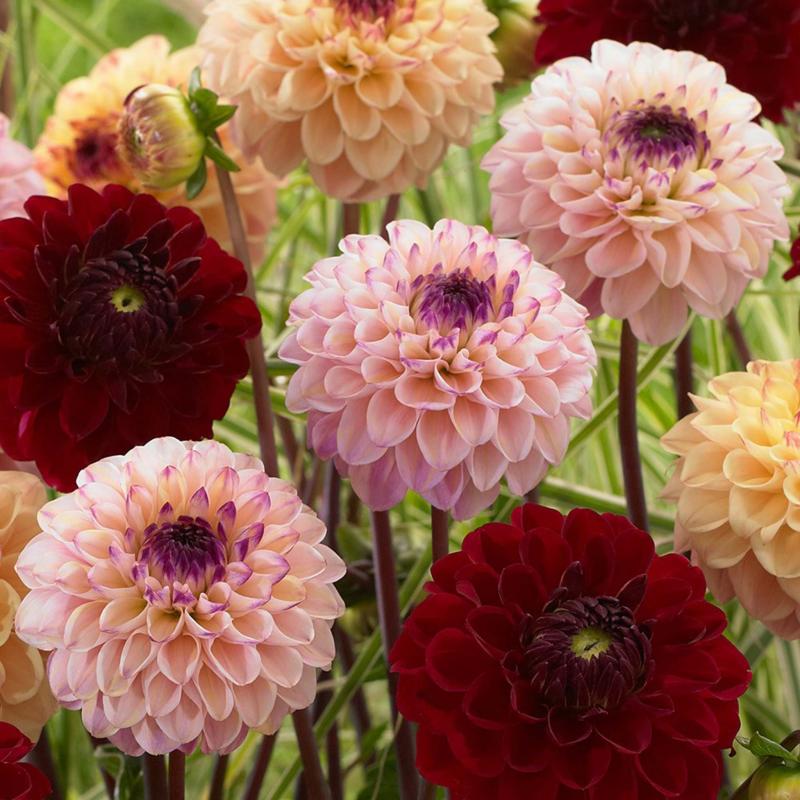
With peachy keen petals and a wine purple center, Wine-eyed Jill, a pompon dahlia, knows how to stand out in a crowd.
With the ever-increasing demand for the unusual, we sometimes go to great lengths to obtain plant specimens that will dazzle visitors to our gardens. So unfamiliar, so unpronounceable or so fussy, these conversation pieces can captivate our imaginations.
The dahlia, commonly known and grown for centuries, is both exciting and easy to grow. Pronounced day-lia or dah-lia, it is one of the most consistent bloomers in the mid-summer to autumn garden, affording amazing diversity in shape, form and colouration. Belonging to the Asteraceae family, the dahlia’s relatives include rudbeckia, chrysanthemum, coneflower, marigold and zinnias. In addition to the dahlia’s often substantial stems and large textured leaves in shades of green, bronze-flushed, purple-black or blackish red, there are numerous flower forms, each type unique.
From single and uncomplicated daisy-like blooms to more unruly, multi-petalled spiky cactus forms with narrow, twisted florets, there are also decorative or dinner-plate dahlia varieties that have double-flowered inflorescences known as formal or informal. Some of these exhibit perfect precision in the arrangement of their petals. The pompon dahlia, for example, has layer upon layer of tightly arranged, tubular petals that make up its rounded lollypop shape. It’s this type that is a particular favourite of Nico Vonderbank, greenhouse manager for Schriemer’s Greenhouses and Garden Centre as well as owner of Twin River Gardens in LaBroquerie.
Pompon dahlias are the perfect size for the cut-flower bouquets Vonderbank creates and sells to local markets such as Crampton’s Market, Vic’s Fruit Market and Jardins St-Leon Gardens. Wine-eyed Jill, says Vonderbank, who grew up in Holland where his family always grew dahlias, is one of his favourite varieties. Its five to seven centimetre, ball-shaped inflorescence with layers of peach-toned petals and a wine-purple centre doesn’t damage as easily as varieties with longer florets with a more irregular arrangement.
Decorative or dinner-plate types with top-heavy blooms are more suited to beds and containers than bouquets. With a colour burst of yellow, the large blooms of Kelvin Floodlight (hybridized in 1959) measure an impressive 25 to 30 cm across. In late June, while at Schriemer’s, I picked up Cambridge, a fully double cactus dahlia with an orange centre and pointy yellow, tubular petals with narrow red strips. Potted up in a two-litre container complete with cage to support its burgeoning size, Cambridge’s exuberant style somehow seems suited to midsummer’s sizzling-hot temperatures.
Two other notable dinner-plate varieties available locally this season include peony-flowered Emory Paul, a 2014 Royal Horticultural Society People’s Choice with voluptuous bright pink petals and Myrtle’s Folly, a vivacious, show-stopping dahlia with masses of wavy, fringed petals in deep pink and light orange.
Dahlia Bishop of Llandaff is a classic peony-flowered dahlia. A favourite dahlia of Gary Lewis, owner of Phoenix Perennials, a Canadian mail-order nursery specializing in rare and unusual plants, it was introduced in 1924. Lewis calls it the spokesmodel for burgundy-leaved dahlias. "It tops off at 60 to 90 cm with finely dissected, rich burgundy foliage which deepens to near black in full sun," Lewis describes, "and produces medium-sized, fiery red, semi-double flowers up until the first frost." Lewis suggests combining it with a shock of gold foliage such as Heuchera Lime Marmalade or Aralia cordata Sun King (Japanese Spikenard).
Karma Choc is another burgundy-leaved dahlia which, says Lewis, epitomizes luscious. "Broad leaflets give rise to 90-cm stems topped with velvety, fully double flowers that are near black at the centre grading outwards to burgundy-red on the edges," says Lewis. A decorative ball, Karma Choc makes an excellent cut flower. Lewis likes to combine it with white-flowered perennials such as Echinops Arctic Glow, Echinacea Meringue or White Swan, or Phlox David. "Verbena bonariensis," he adds, "would also look great with this combination."
Karma Choc is known as a waterlily dahlia and is characterized by distinctively broad, flat petals with slightly curved tips.
Shorter varieties such as the Dark Angel series also offer deeply coloured foliage. Vonderbank says the bronze-black foliage of Dark Angel Star Wars and Dark Angel Dracula contrasts nicely with the vividly coloured daisy-like blooms and are attractive additions to patio containers.
Vonderbank is a huge fan of the Go Go series of dahlia. Rounded, somewhat flattened petals or ray florets form a large ball-shaped bloom 10 to 15 cm in size on a medium-size plant that grows to a mature size of 35 to 50 cm. Varieties include Go Go Blues, which has lavender blue petals with a luminous yellow centre. Go Go Speckled Pink dahlia has light pink flowers with rose red spots and blotches, and Go Go Peach is apricot-peach. All three were awarded the 2015 Plant of Merit. Vonderbank grew them for the first time this year and calls them stunning.
Dahlias are heavy feeders. "Start with soil that has good organic content," says Vonderbank. "Incorporate a slow-release fertilizer followed by a weekly feed about three weeks later once the dahlia is actively growing." Vonderbank uses Nature Source, an oilseed extract, for all of his commercial growing.
Pinching out growing tips and removing side shoots as they develop results in a bushier plant. Disbudding the first terminal bud that appears on the growing plant as well as removing the smaller buds, something I habitually neglect to do, results in fewer, but larger blooms, the calibre you see at horticultural shows.
Dahlias prefer evenly moist soil. The frequent rain showers of the past several weeks have lessened the amount of hand-watering or irrigation needed to keep pots and beds adequately watered. Standing water or saturated soil risks rotting the roots of dahlia plants. Ensure soil is well-draining and pots have unobstructed drainage holes, advises Vonderbank.
By late summer, this season’s consistently high humidity can affect susceptible plants such as dahlias with fungal diseases such as powdery mildew. Over-watering (indeed overhead watering) also encourages fungal growth. Consider moving your potted varieties to a more open area if they are situated too closely to an outside wall.
When dahlia buds turn brown while they are still in the marble stage, over-watering is sometimes the culprit, although the problem may also be caused by thrips, says Vonderbank. During hot, dry weather, in particular, thrips chew their way into the developing tissue and eat it from the inside out. Look for small holes on the underside of the bud. Pull it apart, and you may see tiny, slender, pale yellow insects.
Vector insects, thrips consume plant juices, causing plant cells to collapse and die, resulting in browning and distortion. Unfortunately, says Vonderbank, thrips love dahlias almost as much as they love gladiolus and can make a mess out of dahlia blooms in no time. Remove and destroy affected portions.
To maintain healthy, unblemished blooms and foliage, regularly monitor dahlia plants. Examine leaves for white or silvery blotches and check the undersides. At the first sign of an infestation, spray plants early in the morning with a few strong sprays of water. In the event of a severe infestation, an organic insecticidal soap such as Safer may be effective (with no risk to pollinators). Thrips, however, often burrow deep inside developing blooms and leaf tissue.
Vonderbank utilizes biological controls in the greenhouse that hunt down thrips and keep the problem in check. Bio-controls won’t eliminate thrips completely, however, together with early monitoring, they help to create a balance between predator and prey.
Ladybugs feast on both aphids and thrips. To encourage ladybugs into your garden, avoid using pesticides and grow a range of pollen and nectar-rich plants. Quantities of ladybugs are also available for purchase, usually in the month of June.
In the meantime, plan on lifting your favourite dahlias this fall after the first light frost for next summer’s blooms. Tubers should be stored in a cool, dry place over winter.
colleenizacharias@gmail.com
Notices:
Transcona Garden Club hosts its 50th Annual Competition and Show August 8 and 9 at the Kildonan Place Shopping Centre, 1555 Regent Ave. West. Competition is open to all and includes flowers, fruit, vegetables, crafts and baking. Registration 7:30 to 8:30 p.m. August 7.
St. Vital Agricultural Society’s Annual Fair and Display takes place August 10 and 11, 4 to 8 p.m., St. Vital Centennial Arena, 580 St. Anne’s Rd. Featuring horticulture, baking, handicrafts, and photography displays. Entry night is August 9, 6 to 8:30 pm. Pork BBQ August 10, 5:30 to 6:30 p.m. Seniors afternoon Aug. 11, 2 to 4 p.m. For more details, call Karen at 204-256-6332 or visit www.svas.ca.