Sometimes it's easy to follow a trail of crumbs to the family member who has helped themselves to home baked treats. In the garden, too, evidence of feeding makes it easy to identify the culprit.
The leaf cutter bee, for example, uses its sharp mandibles to cut precise circular disks out of plant leaves. Rose leaves, especially, often exhibit these perfectly defined holes. Since the leaf cutter bee is a beneficial pollinator, we're usually willing to overlook a few chomps.
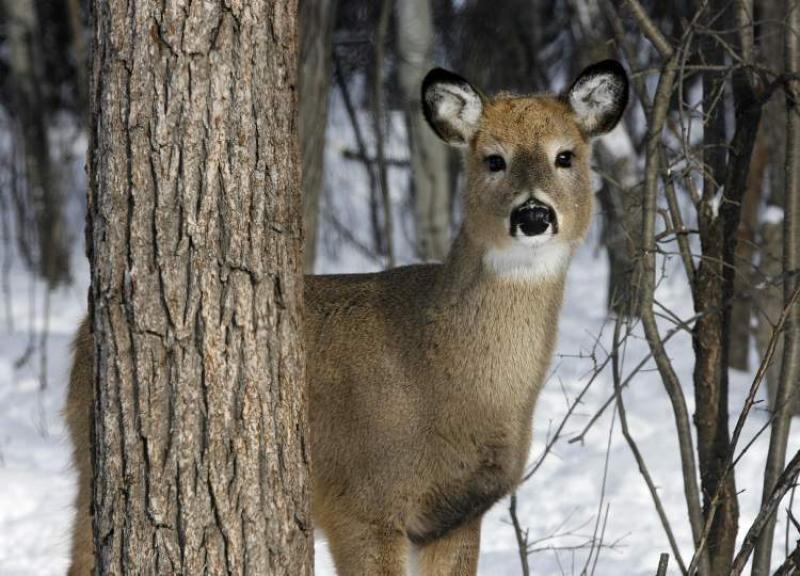
Not so much when the garden shows signs of feeding by a much larger visitor, the deer. Apart from the vast quantities of vegetation deer are able to consume in a single night while you sleep in your bed, it's the way they eat that can cause the most alarm.
Herbivores, deer like to browse and graze, but without the benefit of upper incisors that would at least permit a nice clean cut. Instead, using their lower front teeth against a calloused pad of tissue in the upper part of their mouths, deer tear twigs and branches from trees and shrubs, ripping off leaves and buds in the process and causing noticeable injury to plants. In the case of herbaceous plants such as hostas and a long list of perennials as well as fruits and vegetables, deer take anything from a nibble to eating the entire plant.
David Davidson, president of Deer Fence Canada, an Ottawa-based supplier which ships across the country, said because deer have poor depth vision, they cannot see the top of a black fence. "It must be at least two meters tall," Davidson said in a phone interview, "and as far as the deer is concerned, if the fence is black it appears as though it goes on forever."
Property owner Alan Cheung said when deer were devouring plants in his landscaped yard two or three times a week, his frustration was enormous. Especially when the deer made short work of his tulip displays in spring as soon as the flowers opened. With a deep urban property, portions of which are heavily treed, Cheung said it simply wasn't practical to use quantities of spray repellent, carbolic or deodorant soap or homemade recipes made with eggs and cooking oil. From Cheung's perspective, a fence was the best option.
Since no fence had previously separated his property from his neighbours, allowing for a seamless flow of grassy areas and flower beds in a park like setting, Cheung was initially concerned about erecting a fence that would need to be a minimum of two metres tall. The neighbours shared his concern.
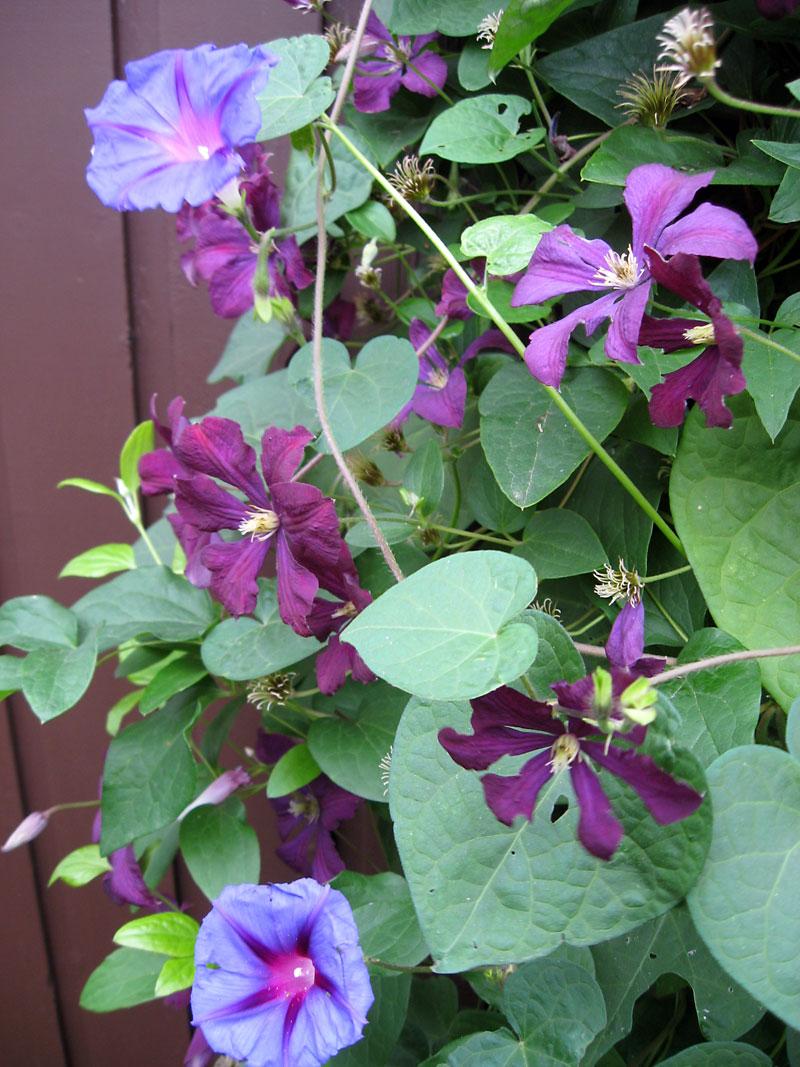
So how could the installation of a tall deer fence in a previously open area be converted into something less obtrusive? Anyone who grows clematis on thin wire greening cables suspended from the roof structure over their deck as Cheung does, is likely to have an innovative solution to address their deer problem and at the same time alleviate concerns for aesthetics.
Cheung purchased a polypropylene fence kit from Deer Fence Canada.
Using three metre-long galvanized steel conduits that he cut in half then drove 1.2 metres into the ground leaving 30 centimetres above the surface, Cheung inserted 1æ-in. black galvanized steel posts, securing them with a stainless steel bolt. This process permitted Cheung to install posts that stand two metres above ground without having to climb on a ladder and pound the post into the ground using a gas driven post driver.
In all, he installed 76 metres of fencing. What distinguishes Cheung's deer fence however is the fencing material between posts in three separate areas of his property can be drawn back similar to a curtain whenever Cheung or his neighbours want the area to be open. Cheung refers to these areas as gates. The gate between his property and his neighbour's for example can be pulled back approximately six metres.
Once folded back, Cheung is able to hook it onto a bracket at the top of a post. When pulled back into place, the fencing is secured to the posts at both the top and bottom of the posts. Cheung said the fence has proven completely effective in keeping deer out of his garden. From an aesthetic point of view, the fence has not proven obtrusive at all.
The fence cost about $1,500, a cost shared with his neighbour. Rabbits and sometimes woodchucks will occasionally chew holes in the bottom 15 cm of the fence. Repairs can be made with extra netting and electrical ties. In hindsight, so he wouldn't have had to bother with repairs to the bottom part of the fencing, Cheung said he might have chosen metal hexagrid fencing although the cost would have been about $1,000 more.
Jan Pedersen, sales representative for Bylands Nursery and former owner of Shelmerdine's Nursery, resides on river property that is also home to numerous deer. At first when Pedersen installed new plants in his landscape, it upset him to see them eaten by deer. Now that the plants have matured, says Pedersen, damage isn't nearly as noticeable and plants seem to recover quickly.
"The only real heartache," Pedersen said, "is when deer eat to the ground hosta plants that are grown for their magnificent leaves." Pedersen says it's difficult to identify any shrubs in his landscape that deer leave alone. "They even eat thorny shrubs such as barberry and roses," says Pedersen, "as well as pines and especially dogwood and flowering crabapples." While Pedersen has learned to accept most of the damage, he won't tolerate male deer rubbing the bark off trees with their antlers, a habit that often results in the death of the tree.
Why do deer do this? In addition to marking their territory and removing the velvet that has been growing on antlers during the summer, rubs leave a distinctive scent and signal readiness to breed. Pedersen lost a Japanese Tree Lilac which was stripped of bark and now wraps all 18 of his trees with 140 cm tall stucco wire. The onetime cost of $190 is worth it, he says, and the stucco wire is barely visible.
Pedersen is surprised the deer leave his Brandon cedars alone although he has noticed they have decimated some of his neighbours' cedars. Davidson says deer like to eat cedar plants in the winter because it is excellent at fermenting in their stomach which not only keeps them warm, but they can chew the cud later.
Listing plants deer won't eat is sometimes futile because deer appetite can differ in different situations. It's generally true that deer do not have a taste for ornamental grasses.
Jim Brockmeyer, owner of Bluestem Nursery, a mail order nursery in British Columbia, said he receives calls every year from homeowners around the country who want a plant that is deer resistant. Brockmeyer said his first recommendation is to grow ornamental grasses.
"Grasses are generally dry with little moisture in their stems," Brockmeyer said, "so not as tasty or easy to eat as the tender, juicy leaves on shrubs and trees." Brockmeyer said Karl Foerster Feather Reed grass is a sure-fire deer proof grass. He also recommends Miscanthus or Molinia varieties such as Miscanthus purpurascens Flame Grass which transforms to bright red-orange in the fall with gorgeous silvery tassels that appear in October or hardy Molinia Moor grass, tall or variegated.
"Besides their beauty in the landscape," Brockmeyer said, "one of the attributes of grasses is they offer sound and movement. They have been considered to be reliable landscaping in deer impacted areas."
Allison Barkley is the customer-service representative for Tree World Plant Care Products, manufacturers of Plantskydd, a deer repellent. A blood-based product made from the hemoglobin of dried porcine or bovine blood cells and combined with a vegetable oil, Barkley said Plantskydd should be applied on dormant plants while temperatures are still above freezing. It needs 24 hours to dry on the plant and should last up to six months.
The soluble powder formulation is less expensive than the pre-mixed spray. Other repellents on the market include products such as Skoot and Bobbex.
The iconic image of the deer has never been more popular. In interior decor, that is. Wood, metal, ceramic, even papier mache deer heads with painted antlers grace today's walls while frolicking deer appear on everything from cushions and wallpaper to candle holders and serviettes. But please, not in the garden.
colleenizacharias@gmail.com