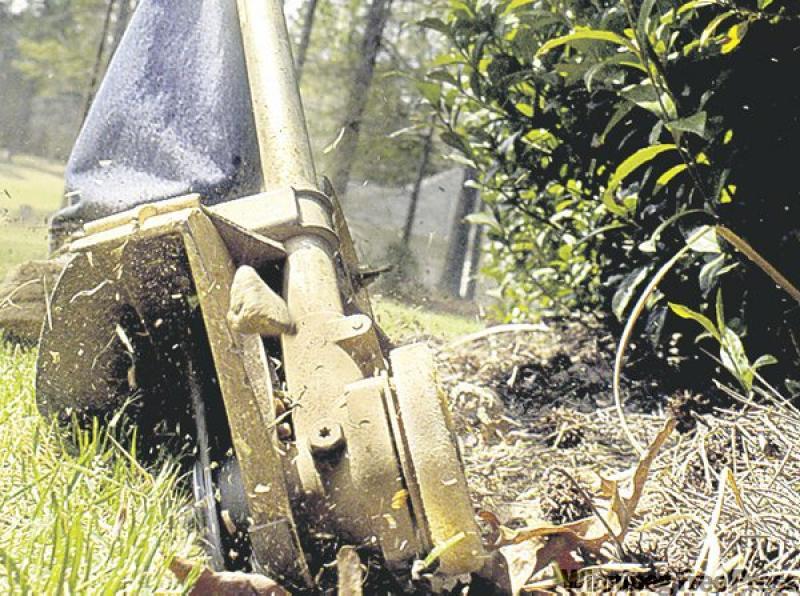
ANSWER -- I have found two methods that work well for me when I re-edge the lawn where it borders ornamental beds. I find both methods superior to using the half-moon edging tool that I inherited from my father.
My standard method for creating a clean edge on my curving lawn is to plunge the sharp, rounded blade of a digging shovel into the ground along a line that is to be the new edge. I set the shovel slightly on its side so that the blade centre points along the length of the lawn edge. This helps speed the procedure.
Another method I use sometimes is to cut along the edge with a root saw -- a short, curved saw used in dividing perennials.
The next step is to clean away the bits of grass that have been separated from the lawn. They are fine additions to a compost heap. To keep the grass from moving into the beds, at each re-edging I make sure to maintain a V-shaped space between the two.
QUESTION -- Is it true that rhubarb leaves should not be put on compost heaps?
ANSWER -- Rhubarb leaves, because they contain oxalic acid, are poisonous. But the composting process is capable of effectively neutralizing the toxicity just as long as the leaves are added to compost heaps in fairly modest amounts at a time.
For most recipes I gather only three or four large stalks at a time. Their leaves are safe to put on one compost heap.
-- Canwest News Service