Once upon a time, there were three little pigs, and they each decided to plant a garden.
When it came to making paths in them, each chose a different style. The first pig, who was ambitious and practical, built paths made of brick that led you past little brick-edged beds. It took him such a long time that he never got around to planting much, but the garden was attractive and was on the garden club tour.
The second pig liked eating more than he liked weeding, so he made large beds mulched with a thick layer of straw, and laid straw down in the paths as well. Apart from attracting a few too many slugs, the straw was a success, and he put lots of vegetables on his table.
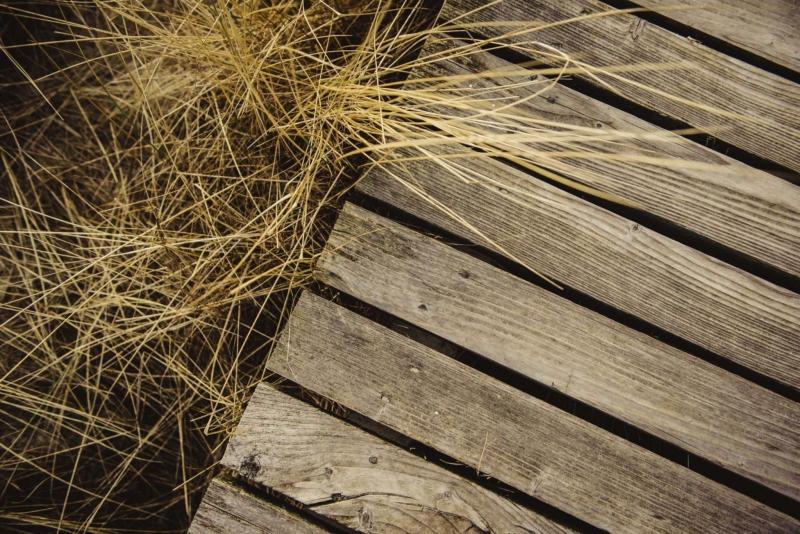
The third pig was an innovator and decided to build his paths with sticks — that is, a series of elevated wooden slats that kept his feet dry on muddy days. Because he laid the slats close together, they shaded out most of the weeds as well. The neighbors had never seen this clever solution and came round to admire it.
Technically, these wooden pathways are called duckboards. They’re similar to the boardwalks used in nature preserves that let you walk through, say, a peat bog and see the wild orchids up close without damaging the plants or sinking into the muck. I’d never seen them used in a garden until my husband showed me a photo of some he’d found on a farm in Germany in 1989, with the slats running lengthwise. But since then, I’ve discovered that a number of websites, such as Northern Tool and Plow & Hearth, sell versions with horizontal slats connected by a flexible material. The slats are close together, for good weed suppression, and the whole thing rolls up for easy storage. What a great idea!
If you like to make things yourself, it’s simple enough to nail lengths of 1-by-3-inch fir strapping to underlying supports made from the same boards. The "paths" can be stacked off to the side if the whole garden needs to be tilled. And because they’re movable, you can rearrange them from one year to the next if you want to change your garden’s layout. Why carve it in brick or stone when you might suddenly need a big space for winter squash?
Treading on wooden walkways also keeps the soil in a path from becoming quite so compact. You might ask, "Why would that matter? Won’t foot traffic inhibit weed growth?" Not really. A number of weeds — plantain, for example — can take a lot of pounding. And the more pounded the soil, the harder weeds are to dig out. Certain tools, such as the stirrup hoe, with its powerful, horizontally mounted blade, can cut beneath a hard soil surface with surprising ease. Even better is the larger wheel hoe with a stirrup attachment. You can zip down a path with it, wheeling it briskly in front of you and leaving a trail of dead weeds behind you. But with wooden walkways, you’d have fewer of them to begin with.
Grass paths can be attractive in a garden, but they must be mowed regularly and will invariably creep into the beds. Gravel paths, which seem so inert and trouble-free at first, are soon fertilized by nutritious runoff from the garden around them. Even raised, edged beds leach their contents into the gravel until it turns into a little rock garden against your will.
I try to make my paths as narrow as I can comfortably navigate and put my time into tending the beds instead. More food on the table, I say, just like that little pig.
— The Washington Post