Hazel Borys
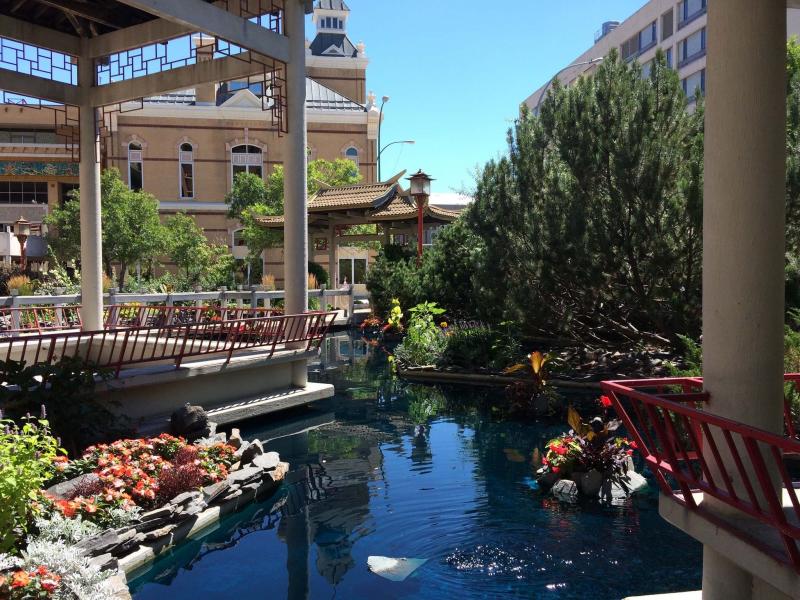
The Chinese Heritage Garden is located in Winnipeg’s historic Chinatown. Access to parks helps make our neighbourhoods and city more livable.
Hazel Borys
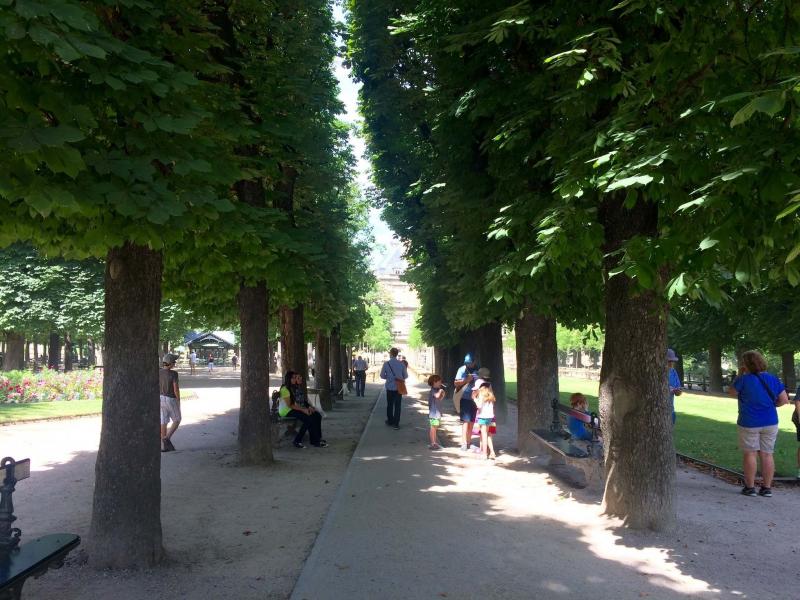
Trees please. Across the globe, urban planners recognize the need for more trees and green space, such as this tree-lined sidewalk in Luxembourg Garden in Paris, France.
DC Department of Energy and the Environment
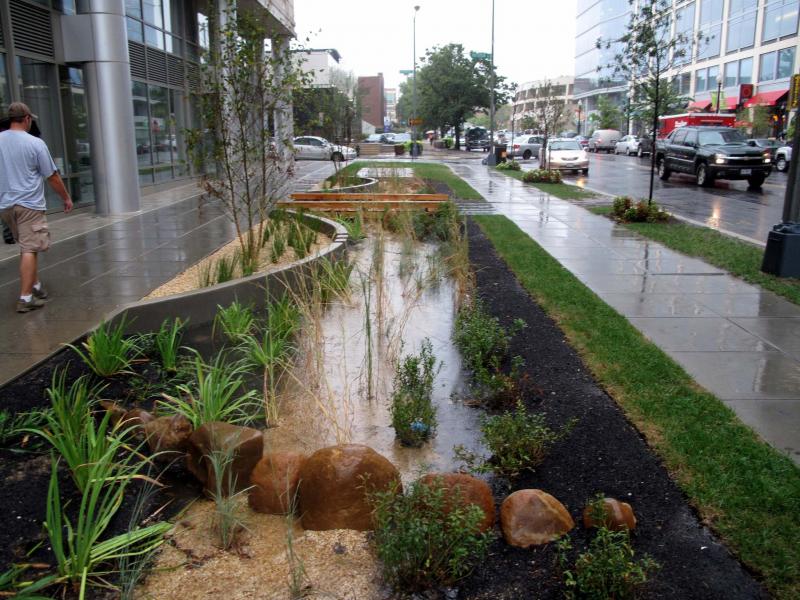
The era of climate change calls for green infrastructure solutions. This curbside rain garden in Washington, D.C., is a practical yet attractive solution for managing stormwater runoff.
Hazel Borys
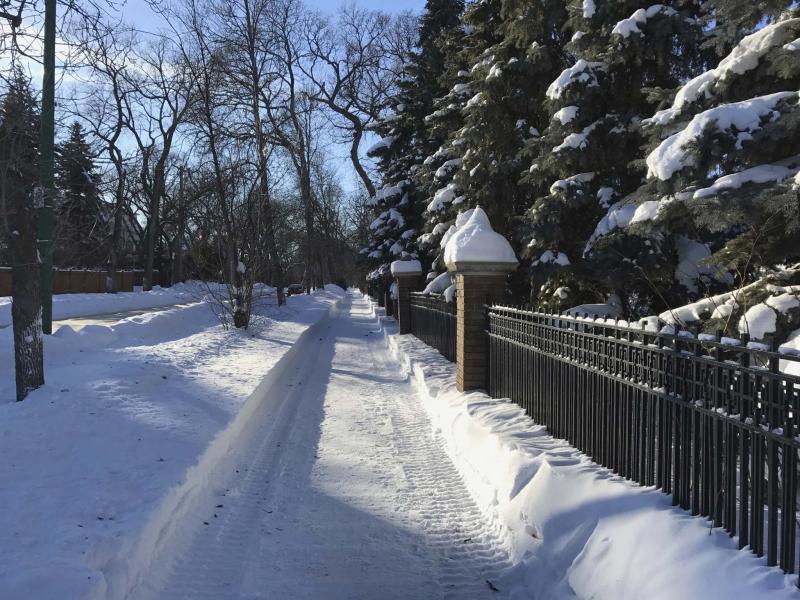
Walkable winter cities such as Winnipeg increase year-round access to nature.
Within five minutes in the trees, your heart rate goes down. Within 10 minutes, your brain resets your attention span.
At first, these statements may conjure up an image of a summer stroll along a leafy woodland path. Hazel Borys, though, is talking about the importance of being outdoors and having access to trees even in the dead of winter. The first time I heard her speak was last February at the Winnipeg Art Gallery, where she presented on nature’s healing ways in walkable winter cities.
Borys is president and CEO of PlaceMakers, an organization of city planners and urban designers with a commitment to serving communities in North America by building walkable urbanism, year-round, for more livable places. An electrical engineer with an MBA, Borys has led the education of more than 8,700 city planners globally.
Born in Huntsville, Ala., Borys moved to Winnipeg about nine years ago when her husband Stephen Borys, who was born and raised in Winnipeg, became director and CEO of the Winnipeg Art Gallery. Warm southern blood may flow through her veins but Borys, who lived in Sarasota, Fla., before moving to Winnipeg, says, "Florida is a really great place to visit, but Winnipeg is a much better place to live.
"So many of us when we move here immediately start to strategize how we can stay here for the rest of our lives," Borys says, "because Winnipeg is such a delightful place, especially in the active core, which has these very human-scale streets with an amazing set of parks, plazas, pocket parks and playgrounds."
Borys describes the five-minute walk from the centre to the edge of a neighbourhood as the pedestrian shed.
"If you can walk to most of your daily needs from edge to edge, then you’re in a really livable place," she says. Take it one step further: if the pedestrian shed is a five-minute radius of a circle, but the play shed is a two-and-a-half minute radius of a circle, you should be able to walk to a park or a community garden within two-and-a-half minutes of your house.
One of the reasons that Winnipeggers have so many social connections on a daily basis, Borys says, is that we have public places in our communities and so many neighbourhood-scale parks that bring us together and create a gathering place. The tree-lined streets in our neighbourhoods are a significant part of the public realm, Borys says, which is why urban planners attach such enormous value to planting and preserving trees.
In the winter city, she says, leafless deciduous trees let the sun shine through to warm public and backyard spaces. In summer, trees reduce the urban heat island effect, improve air quality and connect us to the natural world. Protecting our tree canopy is essential.
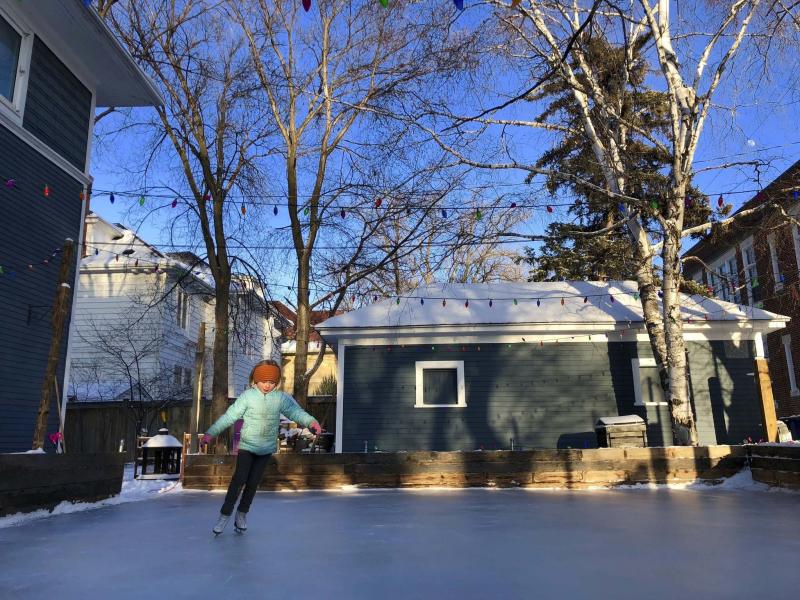
Most of our winter-embracing activities and festivals take place downtown and at The Forks. Bringing that same sort of winter-city mentality into our neighbourhoods and backyards is the next step, Borys says. How could we achieve that? Perhaps by holding more festivals at the community level, adding neighbourhood skating rinks to smaller parks, or creating an active, more playful backyard by transforming it into an outdoor skating rink.
In her travels to cities around the world where she gives talks on walkable urbanism, Borys spends time walking through neighbourhoods and parks and takes a special interest in plazas.
Montreal is a city with spacious people-oriented plazas decorated with massive container displays and potted trees, but there are also tiny plazas with only trees and picnic tables. Le Jardin du Luxembourg, or the Luxembourg Garden, in Paris, France, is a world-class green space that dates back to the 17th century. A favourite section of the garden for Borys consists of a linear walkway shaded on both sides by a row of magnificent trees, beneath which are wooden benches.
One of her favourite parks is the beautiful Chinese Heritage Garden located at 180 King St. in Winnipeg’s historic Chinatown neighbourhood with its ponds, bridges and pagodas. Another is Campus Martius, a large-scale urban park in downtown Detroit that has helped to rejuvenate that city’s core.
Borys says New York City is one of the greatest leaders in North America in community-led tactical urbanism. Basically, this is a term that describes a short-term action that, if successful, can lead to long-term change. Residents, for example, might decide to create a pop-up park in a neighbourhood that lacks a park. Through a co-ordinated effort, potted trees and plants, free library boxes, picnic tables and benches are brought in to transform a space into one that is more community-oriented, if only temporarily. "Call it a parklet, if you will," Borys says.
Borys makes the comparison to the cool and interesting activities in our winter city, such as RAW:almond creating a pop-up restaurant on the frozen Red and Assiniboine rivers in Winnipeg. "When people see a part of their public realm being used differently," Borys says, "it creates more of an understanding of what other possibilities could happen."
Borys says that wherever PlaceMakers go, they always encourage farmers’ markets. "From a business development perspective," she says, "farmers’ markets are some of the greatest ways to incubate and accelerate businesses." Community kitchens, such as Winnipeg’s Kitchen Sync, located in the heart of downtown, are another powerful connection.
At times, a project requires land use laws to be rewritten so that they are more market-responsive and able to deliver to a marketplace what it wants and needs. A good example, Borys says, is the Seattle suburb of Tukwila, which is home to one of the largest immigrant communities in the United States. It has a delightful diversity of perspectives and traditions, Borys says, but is built around a commercial strip corridor with no walkable downtown. By calming down traffic and creating a walkable main street, infrastructure can be optimized for a more livable place.
Over time as our planet continues to warm, Borys says, the need for streets and parks to do double duty as stormwater management solutions will become more and more important. Green infrastructure projects such as an innovative curbside rain garden in Washington, D.C., that is designed to manage polluted runoff are both practical and beautiful.
Globally, the interest in community-building and making cities more walkable by incorporating more high-quality green spaces has never been greater. From Winnipeg to cities across Canada, the U.S., and all around the world, greater access to greener environments, as well as the promotion of increased walkability and bikability, is recognized as essential to the well-being of both people and the environment.
Today at 12:30 p.m. at Cinematheque — 100 Arthur St. — the Manitoba Master Gardener Association will host a film, Elevated Thinking: The High Line in New York City. The film tells the story of an abandoned rail track repurposed as a public green space. A wildly successful revitalization project, the lushly planted High Line today attracts millions of visitors from around the world. Hazel Borys is part of a panel discussion that will follow. Tickets are available at the door.
colleenizacharias@gmail.com