This winter, I have received several calls and emails from property owners concerned about the deteriorating condition of their apple and crabapple trees.
Last year, there was a sharp increase in cases of fire blight on apple and crabapple trees. Virtually every tree showed signs of this potentially deadly disease. Some people thought their trees were resistant to a disease such as fire blight, but no tree is truly resistant to diseases.
Fire blight is an aggressive fungal disease that can be spread by contaminated pruning tools, pollinating insects or even small birds. Early signs of the disease can be almost invisible to most people, but that is the stage where the disease is best treated.
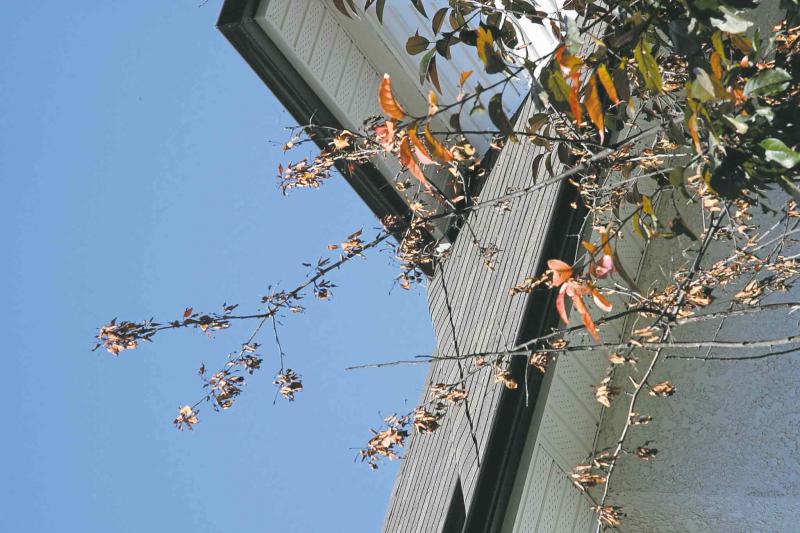
Curled reddish-brown or medium brown to dark brown leaves near the end of twigs is a classic sign of this disease. Look for it on your trees as the leaves appear from the buds in May. Early infected flowers will usually have a brownish, shrivelled appearance.
With advanced infections, the ends of the infected twigs often have a curled appearance like shepherd's crook. If any of these signs show up, you must prune out the infected areas. Make sure you do it at least 30 centimetres away from the nearest infected location, and sterilize your pruning tools with diluted bleach, methyl hydrate or rubbing alcohol after each pruning cut. This is very important, because your next cut might otherwise infect a healthy part of the tree.
If you have made a pruning cut on a small branch that is more than two centimetres in diameter, I recommend you immediately seal the cut with an approved tree-pruning sealer such as Green Earth's. This will prevent re-infection by fire blight or other diseases.
You might want to consider one or two repeat treatments about one week apart. Re-apply if there is any rain within 24 hours of treatment.
Two or three spray treatments of an approved fungicide such as a copper-based product about two to three weeks apart should be considered beginning in late May, especially if your tree has many visible signs of the disease.
If you see any premature dropping of the leaves, be sure to collect them and place them in sealed trash bags and containers for collection.
Michael Allen M.Sc.F., RPF (ret.) is a consulting urban forester, tree diagnostician and certified arborist. He can be reached at 204-831-6503 or 204-223-7709 viburnumtrees@shaw.ca. His website is www.treeexperts.mb.ca.