Rob from Ontario asks in an email if a neighbour's renovation could give him water problems in his basement. Rob's neighbour, whose house backs onto his in an ordinary subdivision, put an addition on his home. Ever since it was completed, there has been water in Rob's basement after heavy rain, and especially during spring thaw.
The short answer is: Yes, it's possible, depending on how the neighbour might have changed the grade during his renovation.
Technically, in most situations, you aren't allowed to change the grade of your lot during a renovation. When you apply for a building permit, you need to indicate the grade sloping away from the house. But a full site-plan approval -- where a change in grade would be marked and could be verified -- is usually only required for new construction. A building inspector might notice during one of the site visits, but odds are, the focus is going to be on the construction, so these things might slip by.
Even a subtle change in grade can affect how surface runoff will flow. If your neighbour excavated for a basement or crawl space under the addition, it's inevitable the grade would be altered -- even if it were put back to, more or less, where it was. The fact that their lot has now got more coverage than it did before means there is less area for water to percolate back down under the surface. It's got to go somewhere -- and, in Rob's situation, maybe it's finding its way over to his property.
Now, I don't recommend accusing your neighbour if you start to find water in your basement. It might just be a matter of a crack having developed in your foundation somewhere. That definitely does happen over time, or as a result of poor workmanship when the foundation was poured.
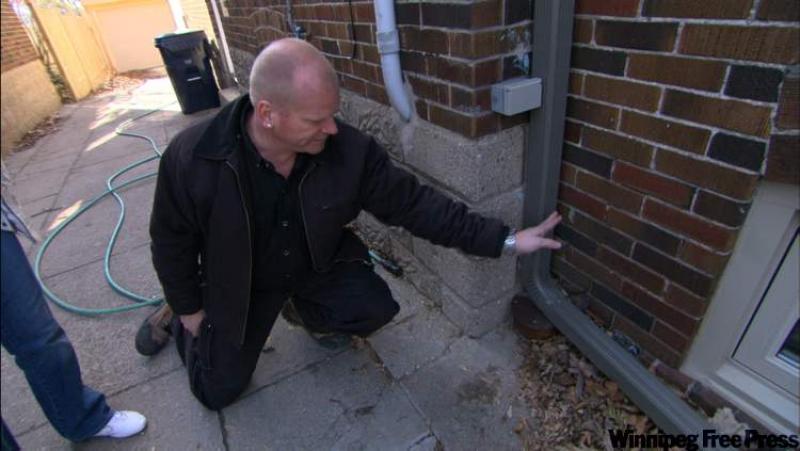
Odds are, the problem is on your side. Could your downspouts be emptying too close to your foundation? Are the eavestroughs filled with leaves and debris, so they spill over when it rains -- right alongside your house? Have you changed your driveway or patio? That could easily explain the change in drainage and account for water finding its way into your basement.
Are your downspouts connected to weeping tile at your footings instead of emptying on the surface? Is your weeping tile broken or clogged with tree roots? Do you have a sump pump, and does it discharge right outside the wall of your house? If so, find a way to channel that water away from your foundation wall or it will just find its way back in.
Or maybe you done some landscaping, say, put in garden beds next to your house? That usually causes some problems. When you dig near the foundation walls -- either to pull out old shrubs or to plant new -- you are disturbing the soil there. It's left less compressed and with more air pockets in it -- air pockets that easily let water flow through, allowing it to get in next to your basement walls.
That water might come from your irrigation system in the summer months, or from snowmelt or heavy rain. The problem isn't caused by the water; it's caused by the fact that the soil is disturbed and allows water in.
Water will always follow the path of least resistance, and it always flows downhill.
An obvious clue to check for if you suspect the problem starts on your neighbour's side is downspouts directing water onto your property. That's a definite no-no, and you should discuss it with him or her. If the problem is caused by a change in grade, then you need to redirect the water at the surface before it makes its way to your house. Dig swales -- basically, grassy ditches -- that will intercept the water flow and channel it away so your basement stays dry.
-- Postmedia News
Catch Mike in his new series, Holmes Inspection, airing Thursdays at 8 p.m. ET/PT on HGTV. For more information, visit www.hgtv.ca
Do you have a question about home renovations? Email mikemakeitright.ca