Plant preferences are, as we all know, very personal. I am, for example, not fond of most woody shrubs. I do have my favourite shrubs though. For purposes of today's article I will focus on Manitoba shrubs.
In my career I have examined thousands of woody shrubs across Canada. When clients ask me to assess the situation with their trees, I inevitably also tell them about the condition of their woody shrubs.
Understanding any problem shrubs have requires an understanding of how they are taken care of in the yard. The greatest concern with problematic shrubs is the way they respond to hedging using electric or gas-operated sheers. I see a great deal of damage to the hedge twigs because the blades have not been kept sharp. Ideally, you will want to sharpen the blades regularly if you are doing a lot of trimming. More often than not, I see cut shrub twigs damaged (ripped and crushed mostly) by dull blades. You can go online and find great demonstration videos on how to sharpen the blades. Using hand sheers does a far better job in terms of maintaining the health condition of the shrub than electric sheers as long as the blades of the sheers are kept sharp.
The most problematic shrubs, in my experience, in southern Manitoba are silver variegated dogwood, varieties of pink flowering spirea, Sorbaria or false spirea, cotoneaster, European varieties of highbush cranberry, and Dart's Gold ninebark.
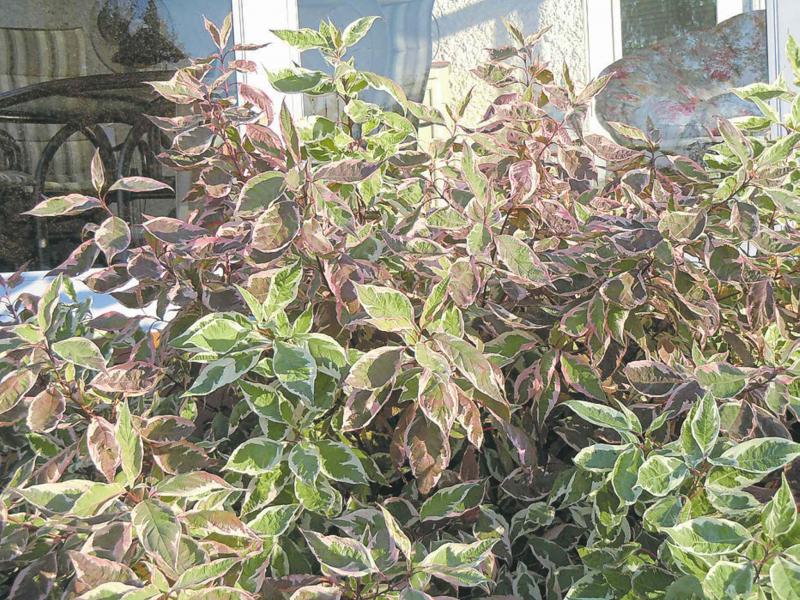
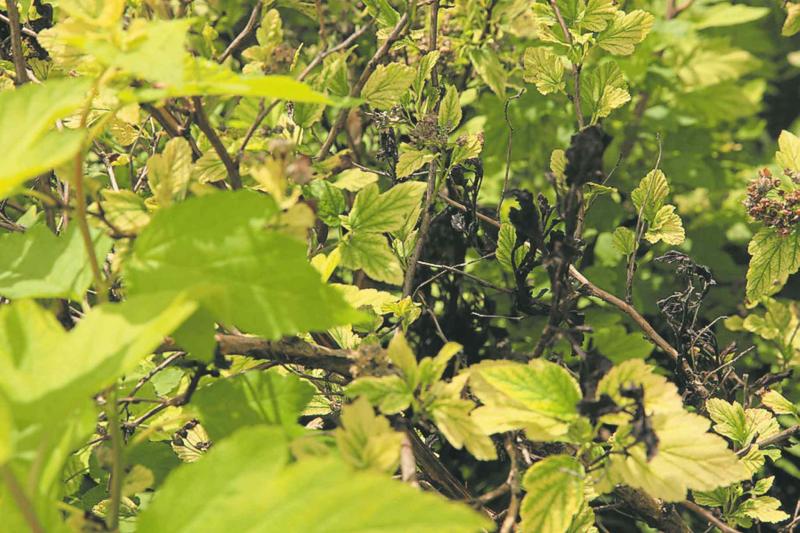
Silver variegated dogwood is often prone to dogwood twig blight when sheered during the summer. The disease infects the exposed ends of the cut stems. Shearing the shrub simply results in more problems. The shrub will slowly die. There is no fungicidal control for this disease. Prune the shrub in the fall and allow it to grow naturally during the summer.
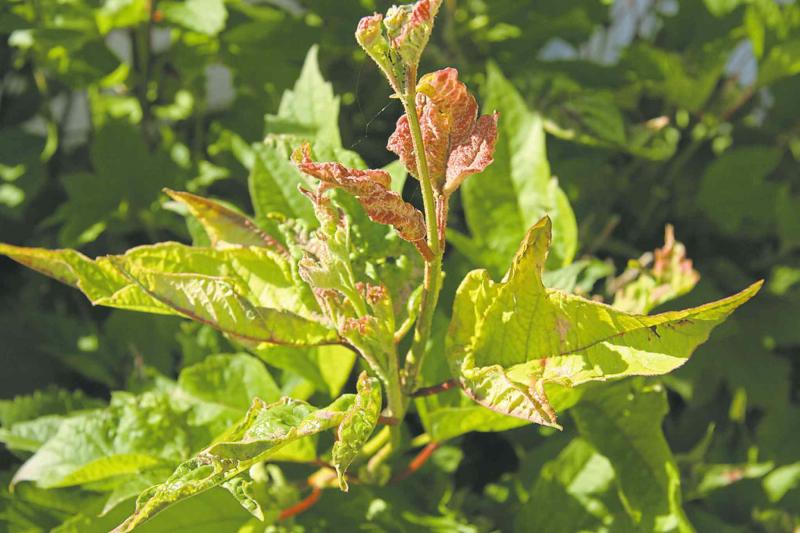
European high bush cranberry shrub when sheered during the summer is subject to infestation by leaf and twig Erineum gall mites. The leaves appear to bubble up and develop a felt-like coating on the surface. The twigs tend to die in clusters. Spraying the twigs in April (no leaves on the plant) with dormant oil helps to control the mites by smothering the extremely tiny eggs. Prune the shrub in the fall and allow it to grow naturally during the summer.
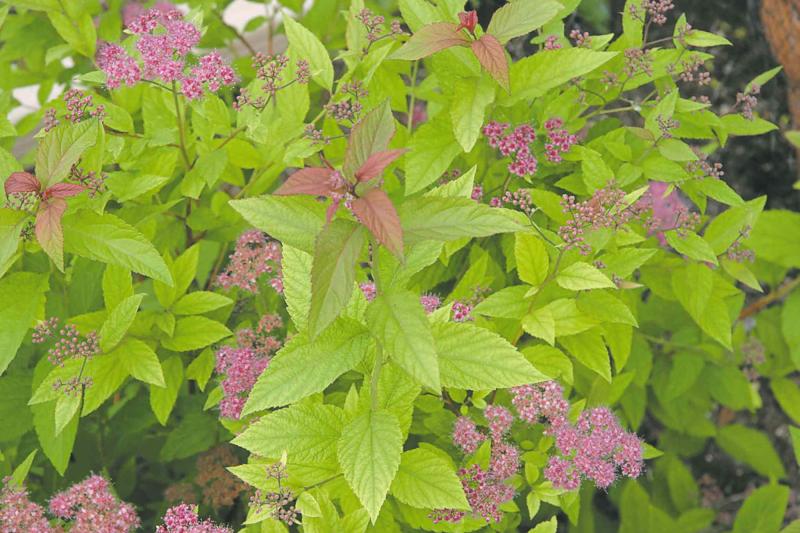
Pink flowering spirea comes in a number of varieties. Ideally they should be planted in acidic soils. The alkaline soils in many areas of southern Manitoba cause the leaves to develop a nutrient condition called chlorosis. The leaves turn yellow with prominent green veins. This is a reaction to inadequate available soil nitrates and iron oxides characteristic of many clay loam soils. Proper fertilization in the spring and fall will help this plant. This is usually a high maintenance plant. Fertilizing treatments should be sustained over three years.
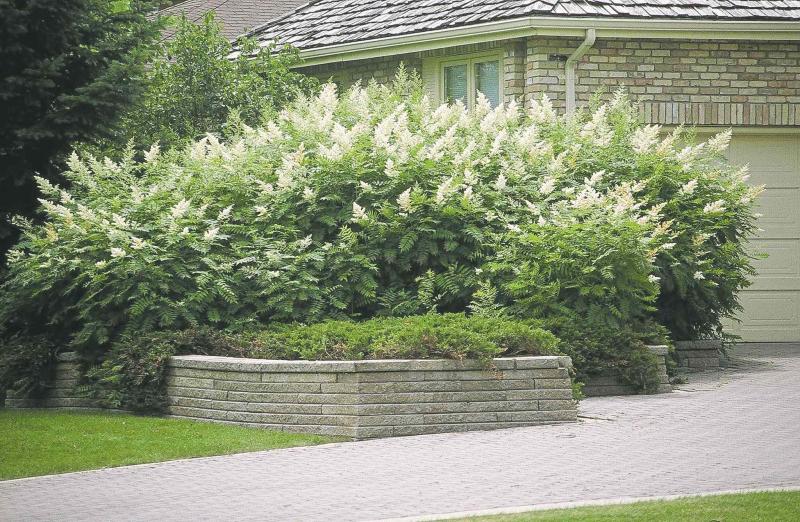
False spirea or Sorbaria has the annoying habit of spreading just about anywhere through its prolific root system which constantly sends up new shoots. It can be a difficult shrub to eradicate once it gets firmly established. As a flowering shrub, however, it is quite beautiful.
The Dart's Gold bark is very susceptible to the chlorosis problem as well as fire blight.
Some of my favourite shrubs are the hydrangeas such as pinky winky, black choke berry, Japanese barberry, rose glow, nannyberry, arrowwood, and saskatoon berry.
I offer an adult education course for people who want to learn how to take care of their shrubs. The course is held in spring and fall through the Louis Riel School Division continuing education department. You can contact them online, or call or email me, and I will tell you how to register. If you have problem shrubs I have not mentioned here please contact me for further information.
Michael Allen M.Sc.F., RPF (ret'd) is a consulting urban forester, tree diagnostician and certified arborist. He owns Viburnum Tree Experts. He can be reached at 204-831-6503 or 204-223-7709. His latest book, Dr. Tree's Guide to the Common Diseases of Urban Prairie Tree, provides detailed information about prairie tree problems.