Question: I read an interesting article you wrote a few years ago about heating a cottage in winter and what to do about the water supply. I thought of a fourth option and would like to get your opinion on it.
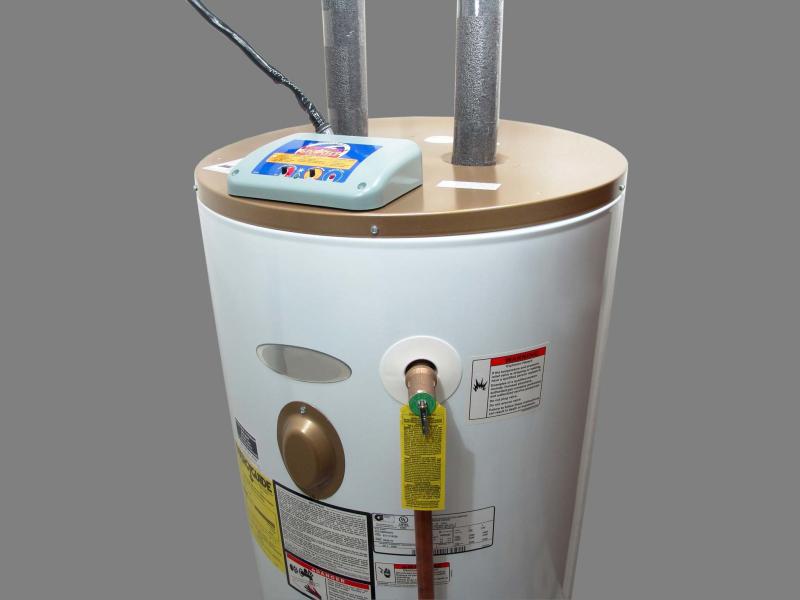
How about this scenario? I shut off the incoming water supply, and shut off the water going to the water heater, but do not drain it. Instead, I leave it powered up. It is a highly insulated Marathon 105 gallon heater. I am thinking that it should be quite efficient, thermally. And even if it’s not, the heat that will escape will tend to keep the surrounding area a little warmer, which is all right. So, now if I drain the pressure tank and all downstream piping and pour plumbing antifreeze into drain traps, etc., I should be fine, wouldn’t you think?
What I want to get away from is the need to drain the big water heater in the middle of the winter when I want to leave the cabin, after the weekend. And, according to the water heater directions, you need to drain it cold. So you need to first drain all of the hot water through a faucet and then drain the tank out the door with a hose, creating an ice slick. I think by comparison, draining the pressure tank will only be 20 to 30 gallons, with no special precautions.
I am also thinking that a three-valve bypass may be needed to tie the downstream hot water lines to the cold water lines, so that the water heater is completely isolated. Would this be all right to do, and does this sound reasonable?
Thanks for your input.
— Randy Rysavy, N. Wisconsin
Answer: Trying to find shortcuts for draining the water supply on a seasonal home, that is periodically used in winter, may be futile. There are too many things that could go wrong with a remote building, which can cause major water damage to the building, water pipes or water heater.
Ill-conceived ideas like yours, to save a small amount of inconvenience, can cause major headaches if something fails.
While it may seem like a bright idea to drain all the water from the supply pipes for your seasonal home, except the water heater, it likely won’t work.
Not only are you risking major damage to the heater if the power fails, but it may also be much more difficult to drain all the pipes without draining the tank. There may still be some water in the supply pipes coming in and out of the heater, unless you do a very good job with your "three-valve bypass" system.
Regardless, if the power goes off due to an unforeseen issue, for an extended period of time, the water in the tank will freeze and rupture it from expansion of the ice.
This is even more of a possibility with the water in the supply pipes entering and exiting the unit.
Even with the high-tech, Wi-Fi remote systems now available to monitor a remote building, failure is highly likely over a long winter. Wind and ice storms may cause power failures due to downed power lines, or other mechanical failures.
These may go undetected, with no side effects, on a totally winterized cottage. But, if you have water in your plumbing lines or water heater, a prolonged failure may still not be detected until the weather warms and the frozen tank bursts, flooding that part of the building.
Also, any potential leaks in the pipes attached to the water heater may partially drain the tank, causing instant burnout of the electric heating elements. Either way, a loss of power for more than a day or so could spell disaster.
I am also curious about the reason the water heater manufacturer has recommended draining only cold water from the unit.
There should be no damaging effects of heated water on the components of the appliance, as it is designed for this purpose. My guess is that it is more of a safety issue, where they are worried about scalding from the sudden release of very hot water from the tank. If that is the issue, careful release of the water through the drain near the bottom of the heater should pose no serious problem.
Also, if you are worried about ice formation at the exterior where the drain empties, the majority of the water could be emptied down your waste system, as long as it is not subject to freezing. That would eliminate or minimize the amount of ice buildup and reduce your waiting time while the tank empties.
In my view, filling and emptying the water heater is not that much extra work on top of draining all the supply piping system.
In your plan, you will still have to recharge the pressure tank, supply pipes, toilet tanks and other plumbing fixtures every time you want to use your cottage in the winter. On top of that, draining the entire system — even without the water heater — is the bigger part of the job and will still be required in your scenario. So, to me, the risk is much greater than the reward of having a potential catastrophic failure versus having a nice warm water heater full of water when you head out for a winter excursion.
Planning items to save on maintenance or time when using seasonal homes or cottages may normally be prudent, but only if they will not result in major issues if they fail. Leaving only your water heater full and powered, while the building is unoccupied in the dead of winter, is not reasonable due to the probability of failure and the devastating consequences should that occur.
Ari Marantz is the owner of Trained Eye Home Inspection Ltd. and the past president of the Canadian Association of Home & Property Inspectors — Manitoba (cahpi.mb.ca). Questions can be emailed to the address below. Ari can be reached at 204-291-5358 or check out his website at trainedeye.ca.
trainedeye@iname.com