Colleen Zacharias photo
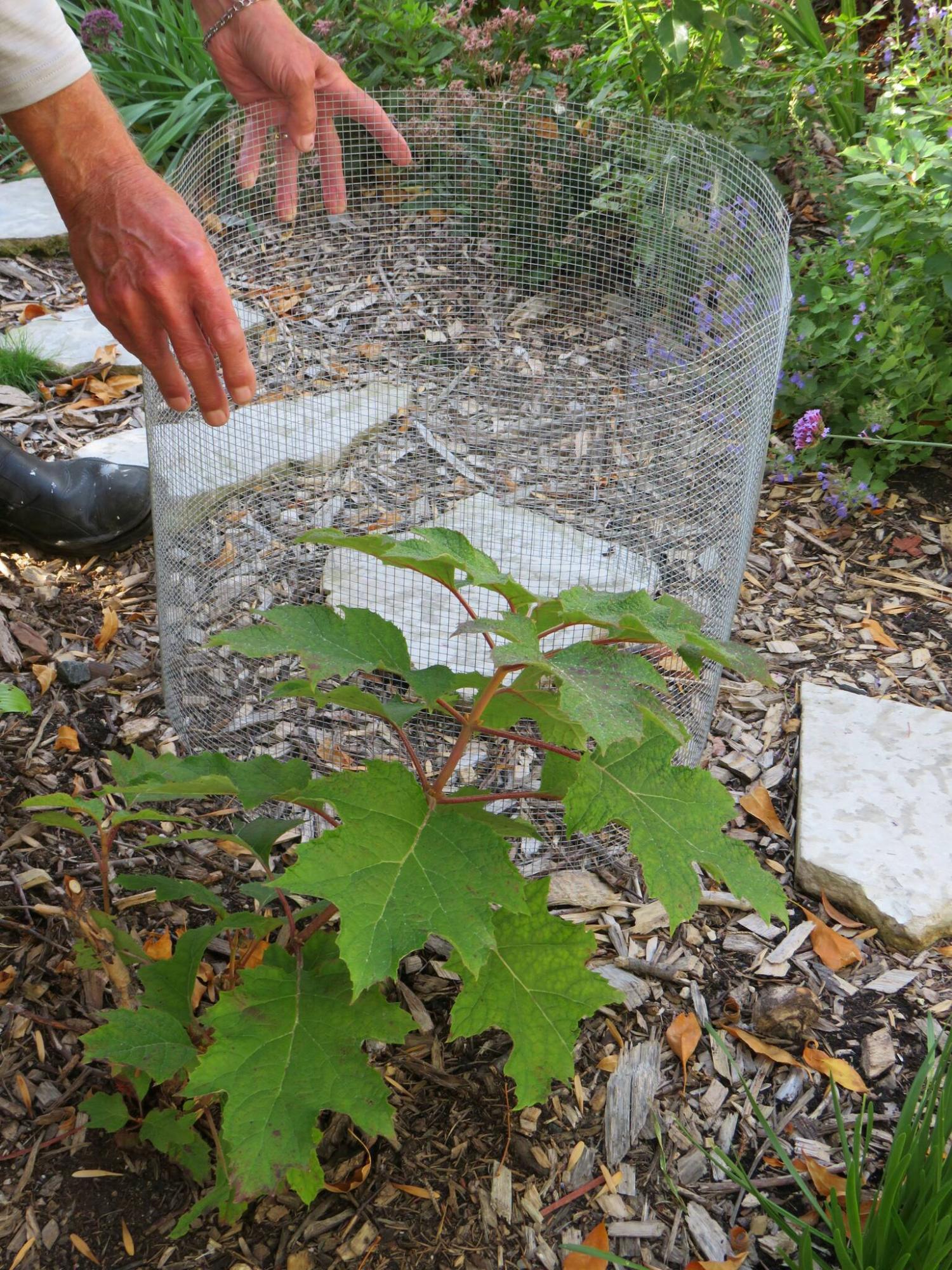
For added winter protection, place a cylinder made from hardware cloth fencing around a tender plant and fill it to the top with leaves.
Colleen Zacharias photo
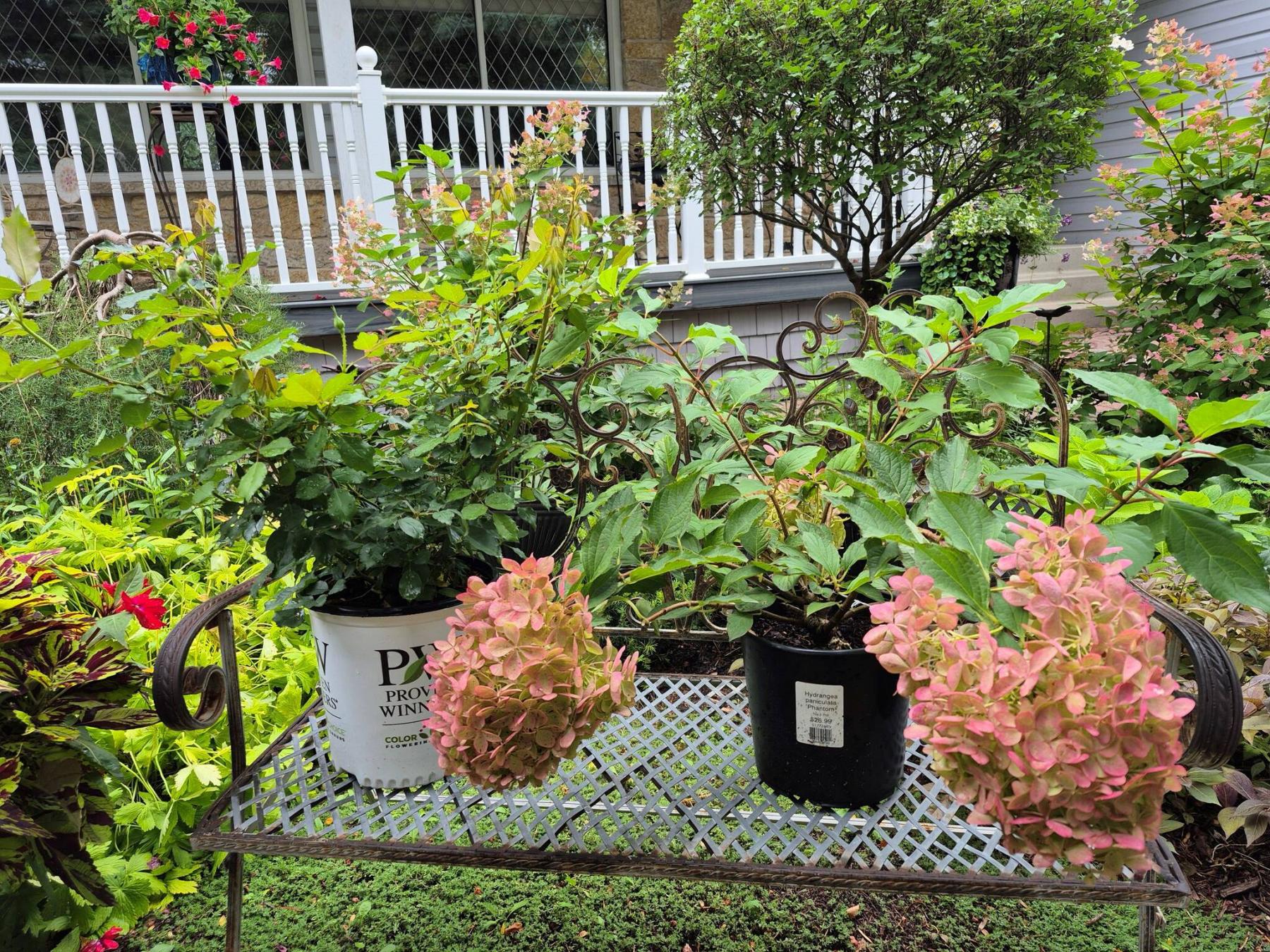
It’s time to get potted plants into the ground even if it’s a temporary location until next spring.
Bill Gillanders photo
Are your plants showing signs of a nutrient deficiency? Stop guessing and do a soil test.
Colleen Zacharias photo
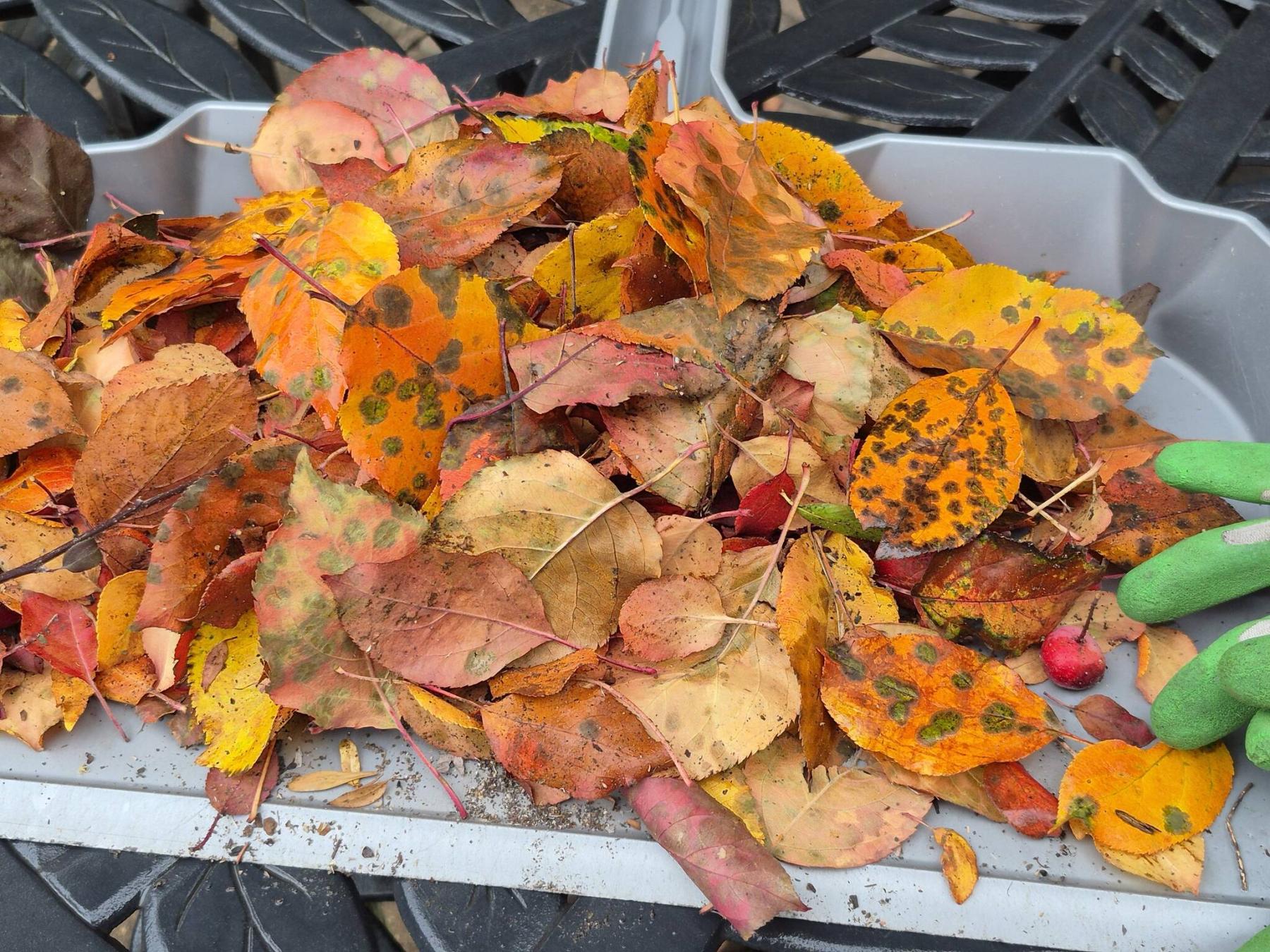
Save your leaves, but not leaves like these. Leaves with apple scab fungus should be destroyed.
September is as pivotal a time for the garden and landscape as early spring.
Admittedly, it feels different. Spring is all about anticipation and the excitement of sweeping away winter and transforming the garden. But autumn presents opportunities as well.
The weather this year has been a mixed bag that has meant misery for some and joy for others. Closing the garden for the season may mean a greater cleanup burden if recent storms caused fallen trees, broken branches or damage to your property.
But with predictions for a milder-than-normal winter by Environment and Climate Change Canada and other meteorologists, it’s important to prepare the garden. Milder temperatures in winter can mean less snow cover, and less snow cover can lead to drier conditions next spring. In addition, milder conditions do not exclude the possibility of extreme cold snaps that, without the benefit of a deep snowpack, can be a killer for plants.
This is where fallen leaves come in. A layer of shredded leaves provides valuable winter insulation for plants and soil. Gather leaves in the fall, spread them out and run over them with your lawn mower once or twice. A mulching mower blade chops leaves into small pieces. Store shredded leaves in bins or bags until the ground begins to freeze. In late fall, after a hard frost, apply an 8 to 10 cm layer of the leaves around your plants.
If you have an abundance of leaves, use them to make a nutrient-rich leaf mould. One option is to add shredded leaves to a clear plastic bag, add a small amount of water and toss in a bit of soil which will help speed up decomposition. Loosely tie the bag closed and punch holes in the sides for air movement and drainage.
Another option is to build a wire leaf cage with hardware cloth fencing (heavy-duty wire mesh). Wearing gloves, create a cylinder and secure the ends with zip ties. Anchor the bottom wire rim to the soil with U-shaped galvanized steel landscape staples to keep the wire cage from blowing over. Dampen the leaves and add a bit of soil. In a year or less, the leaves will turn into a beautiful crumbly mixture that can be used to build healthier soil in your garden beds.
Do not use fallen leaves infected with apple scab, which overwinters in infected leaves. Apple scab was prevalent locally due to June’s wet weather. If your tree was affected, remove and destroy as many of the fallen leaves as possible. Affected leaves exhibit circular lesions that turn dark brown to black.
Hardware cloth fencing is stronger than chicken wire and has multiple uses. It can be used to protect shrubs and trees from winter damage by rabbits, voles and deer. Wire cylinders can also be placed around borderline hardy plants and filled with leaves for added winter protection.
Planning to plant spring-flowering bulbs this fall? What’s more frustrating than having them dug up by squirrels? Using tin snips, cut a piece of hardware cloth slightly larger than the length and width of the area where you have planted bulbs. Fold down all four sides of the mesh so it resembles a box lid and lay it on top of the planted area. Secure the mesh by sinking the sides into the ground. Cover the top with a layer of soil or shredded leaves.
Do you have potted plants that still need to get into the ground or perennials in window boxes waiting to be transplanted? If you can’t decide where to put them, set them into the ground in a temporary area of your garden which receives reliable snow cover. Ensure they are regularly watered. Prior to a hard frost, cover with a deep layer of mulch. Next spring, transplant them to a permanent location.
If you’re waiting for bulb orders to arrive this fall or are planning to attend the Manitoba Regional Lily Society’s fall bulb sale on Oct. 10 at St. Vital Shopping Centre, it’s a good idea to pre-dig holes while the soil is still warm.
Many gardeners this summer observed iron chlorosis in plants such as hydrangeas. Leaves turn yellow but retain dark green veins. “Our soils are hardly ever deficient of iron, it’s just not in the correct form that roots can absorb,” says Carla Antonation, ISA certified arborist and co-owner of Trilogy Tree Services. One remedy is to apply Growers 7 per cent Iron Chelate, which is available at many local garden centres. Mix with water for a foliar spray or apply as a soil drench according to label directions. Early spring, before trees break bud, is a good time to treat iron chlorosis.
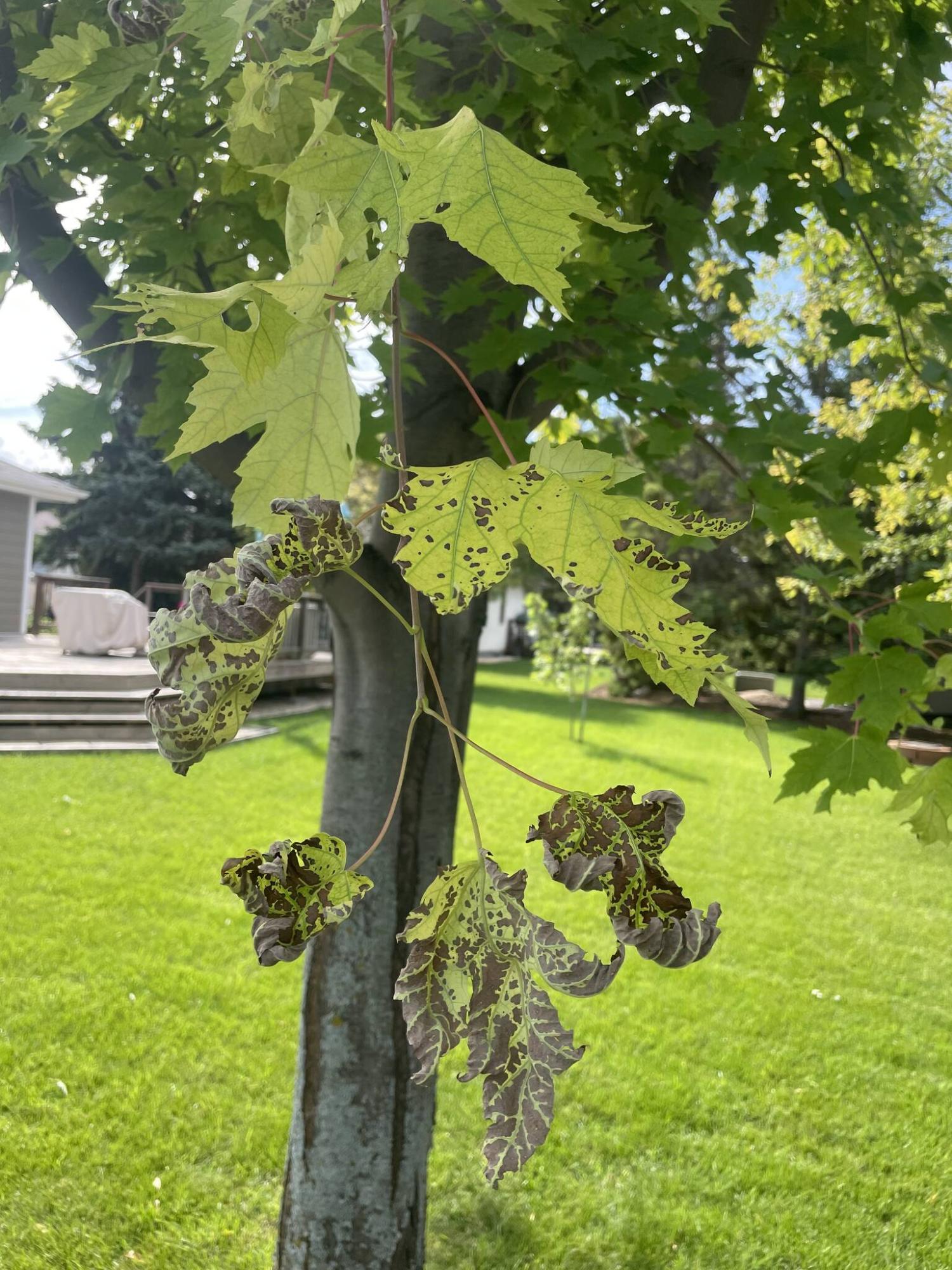
Bill Gillanders’ silver maple tree is at an advanced stage of chlorosis where leaf tissue has died and turned brown. While an application of iron chelate may be helpful, it could also be a short-term fix if other problems are at play. When plants show signs of continued stress, consider doing a soil test.
Corvian Labs, 1357 Dugald Rd., offers soil testing for your lawn and garden. It’s as easy as collecting a 454-gram (1 lb) sample of soil from 15-cm depth from various parts of the area you want tested. Place the sample into a clearly labelled plastic bag and be sure to include a soil submission form which you can download from the company’s website. Drop off the soil sample in person or mail it to the company’s address. Soil analysis costs less than $50.
A garden is a deeply personal space. September’s garden can look overcooked and overgrown. Try looking at it objectively. Some serious editing may be needed. If it is too much of a jungle right now, pruning shrubs or dividing perennials can always be postponed until next spring. Take photos of areas where you want plants cut back, divided or removed, and insert waterproof garden markers into the soil before it freezes. Now you can spend the winter dreaming about your garden and the changes you’d like to make.
Celebrate the changing season with a flourish. How about one last garden tour of the year? Todd and Lisa Braun live on a five-acre, tree-framed site east of Altona. Known as Elemental Stone, it is the outdoor gallery for stonemason Todd Braun’s exceptional art and monumental collection of rocks from around the world in a lush setting filled with fascinating garden rooms, stone bridges and pathways.
Guided tours, about two hours long, are available for groups of visitors from now until mid-October, weather permitting. A minimum of 10 people is required per group at a cost of $20 per person. Email elemental@sdnet.ca to arrange a time.
colleenizacharias@gmail.com