With today's real estate being such a seller's market, many prospective homebuyers are opting not to have a home inspection done on a house they want to make an offer on.
That's understandable. Write the inspection in as a condition, and it's highly likely the seller will toss your offer out. However, there is a way to get around this: Do a pre-inspection of the home you're thinking of buying. Get your agent to contact the vendor's agent to arrange for the inspection in advance of the offer date.
As someone who's in the market to buy a starter home in the $150,000 to $200,000 range -- the most competitive segment in the resale homes marketplace -- my agent recommended that I do a pre-inspection for a simple reason: It might reveal potential problems that could transform a cute starter home into a money pit after one repair turns into another, and so on.
On the other hand, the pre-inspection could well confirm that the home is solid and that it's worth making a generous offer. Either way, you get peace of mind, which is why, when I found a potentially solid starter home in Winnipeg's west end, I arranged for a pre-inspection.
After it was over, let's just say I was glad I spent the time and money to have it done. Although the inspector said the home's structure was solid, there were a number of issues that needed to be dealt with right away:
-- The ceiling in the master bedroom was sagging downward from moisture issues caused by a roof that had been inadequately vented or that had allowed water in at some point. It would be a messy, inconvenient repair that would cost in the $700 to $800 range -- possibly more -- depending on what other issues might be revealed once the ceiling was torn out.
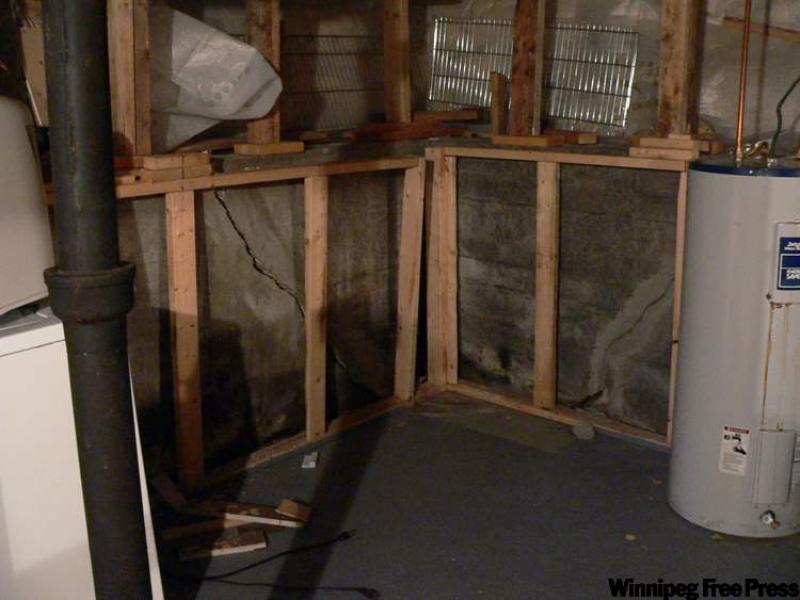
-- An innocuous-looking vertical crack in the stucco at the corner of the house, where moisture had been going because the downspout had a leak and didn't have an extension to drain rainwater away from the home, needed to be filled with resin, then covered with a waterproof membrane. If I decided to dig out the area myself, that would have saved labour costs. Still, the bill would be in the $300 range -- providing the crack, which didn't appear to go down to the footing, according to the inspector -- wasn't worse than it appeared. If it was, the bill could be much higher.
-- The roof on the garage was shot. Holding a re-shingling party with friends would cost about $400, not including the cost of pizza and beverages.
-- There was a severe leak in the cast-iron plumbing (the home was built in the mid-1920s) that had to be repaired immediately. The inspector also recommended replacing the rest of the plumbing with PVC fittings (most of it had already been replaced with modern PVC pipe). This would have to be done by an experienced plumber and the tear-out and replacement wouldn't be cheap, he said.
-- Although most of the wiring had been updated, old knob-and-tube wiring comprised about 25 per cent of it. The inspector recommended replacement for safety reasons. Not cheap to do.
-- Eavestroughing needed to be replaced, as water had leaked into the soffits, damaging the wood. It's likely the soffits and fascia would need to be replaced at the same time.
-- The outlet by the bathroom sink wasn't grounded. As a potential electrocution hazard, it needed to be replaced immediately.
-- All sides of the house had to be graded to ensure rainwater drained away from it instead of collecting around the foundation. Longer downspouts were also required on all four corners.
There were several more items on the list, but you get the picture: No matter how move-in-ready a home appears, there are always potential issues to deal with. If you're on a thin budget to begin with, as many young couples or singles are, these hidden costs can result in serious financial stress. My repair bill would have been several thousand dollars -- providing we didn't find other pressing issues during the fixes.
And that's hoping an old furnace can last another few years, the electrical panel doesn't need upgrading (cost: about $1,500), the roof doesn't need replacing and the ancient hot water tank doesn't blow (there goes another $1,000-plus for replacement and installation).
So if at all possible, have a pre-inspection done on the home you're thinking of buying. If the seller won't allow it, move on, which is what I did. It could potentially save you a tonne of money and heartache.
lewys@mts.net