
David and Steven Cummings are a bit of an anomaly in their neighbourhood.
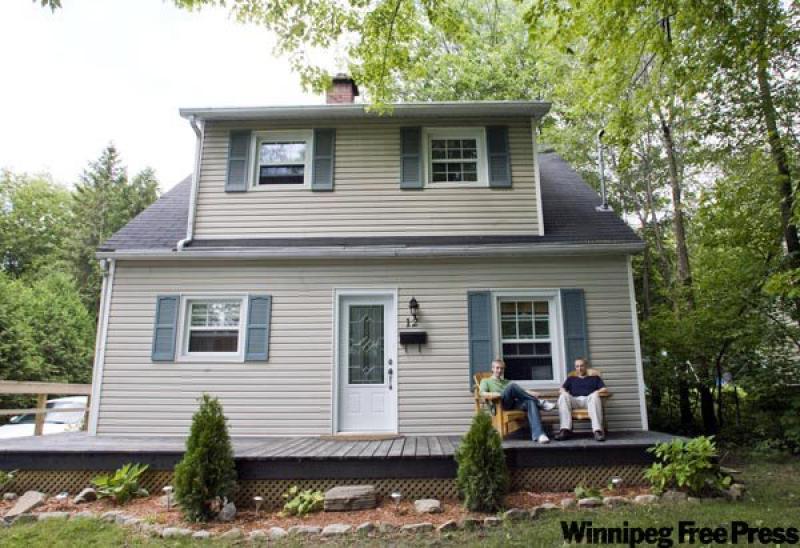
The two brothers share a three-bedroom house on a manicured, tree-lined street in Pointe Claire, just west of Montreal. It's the kind of area people choose when they want to put down roots and raise a family.
But Steven, 25, and David, 28, are not typical suburban homeowners. They're part of a growing trend among members of Generation X and Y -- people in their 20s and 30s -- who are not waiting for marriage or romantic cohabitation to buy property. They're teaming up with friends or family members to buy houses and share them as their principal residence.
According to Statistics Canada, about 70,000 young Canadians bought houses in 2006 by sharing the costs with friends or family.
"We couldn't have had a better arrangement," David said. "No one would understand me better than my brother."
The Cummings men say their childhood of being moved around the world as their father worked on various aeronautical programs abroad caused them to forge a very close relationship, which endures and has made their joint home ownership a pleasant experience.
"The one thing we've done best since we started sharing the house is that we've always put our relationship first," David said. "We would always talk if there was an issue. Money is a silly thing to fight about, so we don't argue over money."
But anyone entering into a home-buying arrangement with a friend or family member should be aware that the issues the Cummings brothers have found easy to work out might be somewhat more difficult in a relationship that's not as close.
"More and more people are teaming up to buy property in this way because of the cost of real estate," said Bruno Therrien, a financial planner and regional director of Investors Group's office in Sherbrooke, Que.
"It's becoming increasingly difficult for single people to afford housing and people who go to university are finishing their studies later than they used to. They want to own property when they start out in their careers."
Therrien says homebuyers fall into three categories. The main group is married people.
"This is an easy arrangement because they decide things as a couple," he said.
Unmarried, cohabiting couples are the second group.
"But the most complex arrangement is people who are not romantically attached but who come together to buy a house or condominium. It's like a business arrangement," he said.
The notion of accruing equity in a property rather than paying rent was what persuaded Steven and David Cummings to buy their house, a modest, postwar cottage in the Valois neighbourhood of Pointe Claire.
In 2002, David, who had a degree in computer science, was working in Thetford-Mines south of Quebec City. Steven, too, had been studying computer science at Concordia University when his brother urged him to join him in Thetford Mines.
"We were both working there for the same company and were renting an apartment," Steven said. "We returned to Montreal in 2003 and thought of renting, but we knew that by purchasing a house, we'd be paying ourselves."
David agreed that renting "seems like a lot of money going to someone else."
They pooled their savings along with some money their parents had given them to finance a 25-per-cent down payment and, in 2004, bought the house for $205,000.
"We had a hard time getting a pre-approved mortgage," said Steven, a project manager with Bell Sympatico. "I had just started my job at Bell and David was working on contract. Interestingly though, we had no debt."
Both were working in downtown Montreal but opted to buy a house in the 'burbs.
"It's a nice little community and our house is close to the train station," Steven said.
In the four years they've owned the house, the brothers have rented out one of the bedrooms to a series of friends.
"It enabled us to pay down the mortgage," David said.
At the beginning, he said, there was no official written document about how the arrangement would work.
"We just sat down and figured out what was fair and unfair," he said.
"For instance, while I was in Paris, working for two years, I was paying the mortgage and insurance, but a lot less for the heating."
While the Cummings brothers have found it easy to be roommates, dual home ownership can strain a friendship. So a solid contract that spells out parameters is a must, said Therrien.
"You can have a situation in which one person wants to sell the house and the other doesn't or cannot afford to buy the other out. Or, there's an important repair to do and the two owners have to split the cost and one cannot afford it. All of these considerations have to be taken into account."
The best way, Therrien said, is through a notarized agreement that covers all potential scenarios.
"Usually, the buying of a house is emotional. It's a dream. And the rational side can be forgotten. If one person defaults on his side of the mortgage, the other becomes responsible. The bank doesn't care who pays the mortgage as long as it's paid."
The Cummings brothers' real-estate agent, Laurie Macdonald, of Royal LePage Elite in Beaconsfield, Que. said people buying houses the way her clients did must discuss even the most trivial details of home ownership before signing on the dotted line.
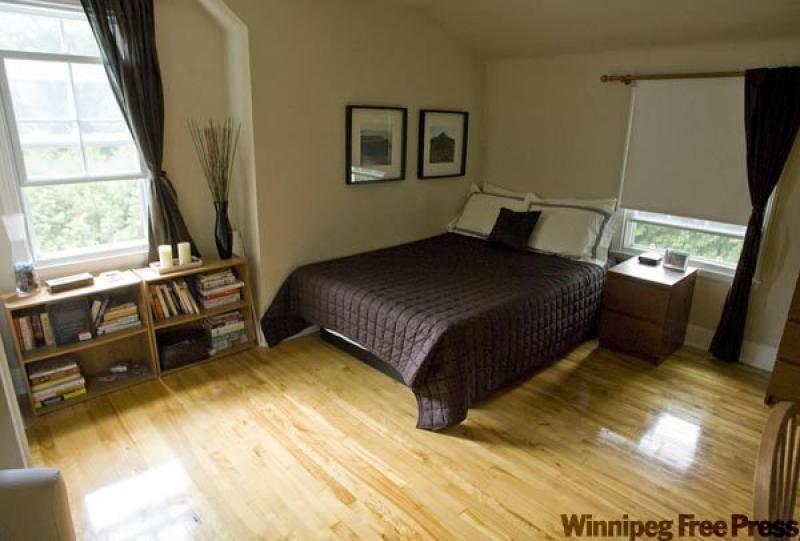
"They need to discuss such things as who gets the master bedroom," she said. "They need to be clear and have a terrific relationship to begin with. Everyone's needs and wants should be addressed before the transition so there's no animosity afterwards."
In many ways, she said, the arrangement is similar to that of roommates who rent, but there's the added complication of joint ownership.
Steven and David Cummings are currently wrestling with the question of what to do with their cosy bachelor pad. David is engaged to his girlfriend, Sarah Bernard Mimeault, and they'll move into a home of their own once they're married.
"We've been trying to figure out the best way to proceed," Steven said. "There's a possibility that I can buy David out or we'd keep the house as an investment. We're flexible. We might decide to keep it as a rental property. We'll look at all the possibilities."
Whatever the outcome, the brothers are happy with their experience.
"It's going to be difficult for young people to buy houses because of the credit crunch," David said. "We think that's why you'll see more and more people buying homes together the way we did."
Canwest News Service